
Quick Summary: Choosing the right fraud investigation services company requires evaluating their industry expertise, investigative credentials (especially former federal agents), technology capabilities, and proven track record. The best firms combine forensic accounting skills with digital forensics expertise and maintain strict confidentiality protocols while offering transparent engagement terms and pricing structures.
Fraud is increasing in volume and significance across every sector. When businesses face suspected financial misconduct, embezzlement, or compliance violations, choosing the right investigative partner becomes critical.
The wrong choice can compromise evidence, expose sensitive information, or fail to uncover the full scope of fraudulent activity. The right firm protects organizational integrity while building defensible findings.
Understanding Fraud Investigation Services
Fraud investigation services encompass forensic accounting, digital forensics, background investigations, and evidence preservation. These specialized firms work across financial services, insurance companies, government agencies, and corporate security departments.
Corporate investigative services address internal issues ranging from employee theft to complex financial crime schemes. The scope extends beyond discovering fraud—investigators help organizations comply with pertinent laws and regulations while mitigating ongoing risks.
Financial crime solutions have become increasingly sophisticated as threats often cross international borders. Fraud, bribery, corruption, money laundering, and other misconduct pose serious threats that can lead to significant financial losses, regulatory penalties, and reputational damage.
Critical Credentials and Experience Factors
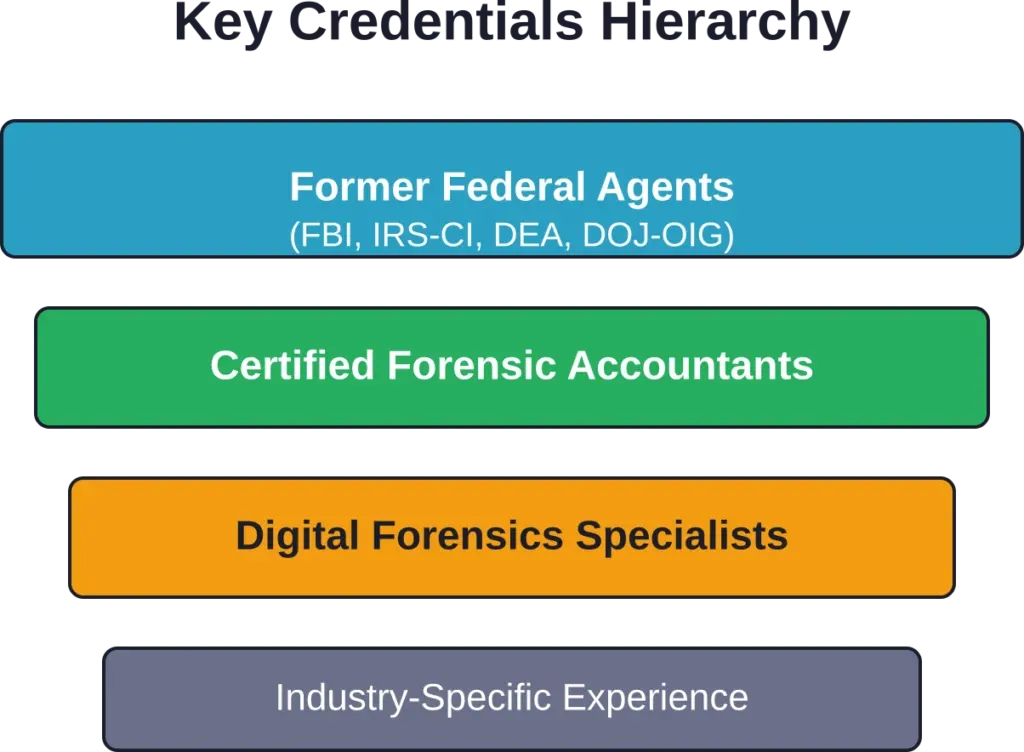
The investigative team's background separates exceptional firms from mediocre ones. Former federal agents bring specialized training and real-world case experience that civilian investigators rarely match.
Look for firms staffed by former FBI, DEA, IRS Criminal Investigation, DOJ-OIG, or HSI special agents. These professionals spent careers building complex cases, testifying in court, and navigating federal investigative protocols.
But credentials alone don't tell the whole story. Combined experience matters significantly—firms advertising 100 years of combined investigative experience demonstrate depth across multiple specializations.
Forensic Accounting Expertise
Forensic accounting forms the foundation of most fraud investigations. Firms should demonstrate tactical approaches to financial analysis, tracing money flows, identifying concealed assets, and reconstructing incomplete records.
Forensic accountants with CPA credentials and CFE (Certified Fraud Examiner) certifications bring specialized knowledge. These professionals understand both accounting principles and investigative methodologies, allowing them to identify irregularities invisible to standard auditors.
Digital and Computer Forensics Capabilities
Modern fraud leaves digital footprints. Email communications, deleted files, database manipulations, and electronic fund transfers all require specialized recovery and analysis.
Highly skilled digital forensics experts can preserve electronic evidence according to legal standards, ensuring findings remain admissible in court or regulatory proceedings. This capability becomes essential when investigating complex financial crime or insider threats.
Essential Service Offerings to Evaluate
Comprehensive firms provide integrated services rather than single-point solutions. Effective investigations often require multiple disciplines working in coordination.
| Service Category | Core Capabilities | When Essential |
|---|---|---|
| Forensic Accounting | Financial analysis, asset tracing, expert testimony | Embezzlement, financial statement fraud, asset misappropriation |
| Digital Forensics | Data recovery, email analysis, database examination | Electronic evidence, insider threats, IP theft |
| Background Investigations | Employment verification, credential checks, asset searches | Due diligence, pre-employment screening, vendor vetting |
| Compliance Support | Internal controls review, policy assessment, training | Regulatory requirements, prevention programs |
Background investigations provide clear pictures of individuals involved in suspected fraud. Open-source intelligence programs, asset searches, and credential verification help establish patterns of behavior and financial motivations.
Business intelligence and due diligence services make a difference when vetting potential partners, acquisition targets, or high-risk vendors. These proactive services help prevent fraud rather than simply responding after incidents occur.
Review Fraud Investigation Needs With Acumon
Fraud investigation work often needs a clear look at records, controls, transactions, and the processes behind the numbers. It may involve finance teams, directors, auditors, insurers, legal advisers, or internal stakeholders, depending on the issue. Acumon supports businesses with audit, accounts, risk assurance, tax, and advisory work, which can help when a suspected fraud issue needs financial review and practical follow-up.
They are a UK-based firm of chartered accountants, auditors, and advisors with 90+ professionals. Their audit, risk assurance, and advisory services can support businesses that need to understand what happened, where controls may have failed, and what should be improved next.
Considering Your Fraud Investigation Options?
Acumon can help with:
- Reviewing financial records and transactions
- Checking supporting documents and audit trails
- Looking at internal controls and risk areas
- Supporting wider audit and assurance work
- Connecting findings with finance, tax, or governance next steps
👉 Contact Acumon to discuss your fraud investigation requirements and the right next steps.
Technology and Methodology Standards
Investigation firms should employ recognized methodologies and current technology platforms. Ask about their approach to evidence preservation, chain-of-custody protocols, and data security measures.
According to SEC guidelines, organizations must maintain robust compliance programs. Investigation firms supporting these efforts should understand regulatory frameworks including the Foreign Corrupt Practices Act, healthcare fraud statutes, and securities regulations.
Compliance and ethics alertlines operated by reputable firms typically maintain availability around the clock, allowing anonymous reporting of suspected violations. This infrastructure demonstrates institutional commitment to thorough investigations.
Confidentiality and Ethics Protocols
Investigations handle sensitive information. Firms must maintain strict confidentiality protocols and demonstrate understanding of privilege issues when working with legal counsel.
Established firms operate under comprehensive codes of business conduct and ethics. These standards govern conflicts of interest, document handling, witness interviews, and reporting relationships.
Non-retaliation policies protect individuals who report suspected misconduct. SEC whistleblower programs offer protections and awards between 10 and 30% of monetary sanctions collected in actions brought by the SEC and related actions brought by certain other regulatory authorities.
Investigation firms should articulate their ethical framework clearly and demonstrate compliance with professional standards established by organizations such as the Association of Certified Fraud Examiners.
Evaluating Firm Reputation and Track Record
Past performance indicates future capability. Research the firm's history handling cases similar to the suspected fraud type.
Look for indicators of credibility including published case studies (within confidentiality limits), client testimonials, industry recognition, and media citations. Firms frequently cited as expert sources in financial crime reporting typically maintain strong professional reputations.
But avoid firms making unrealistic promises. Reputable investigators acknowledge that not every case produces definitive proof of fraud—sometimes investigations clear suspected individuals or find insufficient evidence.
Industry Specialization
Fraud schemes vary significantly across industries. Healthcare fraud differs fundamentally from securities fraud, insurance fraud, or procurement fraud.
Firms with industry-specific experience understand relevant regulations, common fraud typologies, and industry terminology. This knowledge accelerates investigations and improves finding quality.
Pricing Models and Engagement Terms
Investigation firms typically bill hourly, though some offer fixed-fee arrangements for defined-scope projects. Hourly rates reflect investigator seniority and specialization.
Request clear fee structures upfront. Understand what services fall within quoted rates versus additional charges for travel, technology tools, expert testimony, or expedited timelines.
Many firms offer free initial consultations with senior investigators. These conversations help assess firm capabilities while providing preliminary guidance on investigation approach and estimated costs.
| Pricing Factor | Typical Approach | Clarification Needed |
|---|---|---|
| Hourly Rates | Tiered by investigator level | Ask for rate cards by position |
| Retainers | Upfront deposit against fees | Clarify refund policy for unused amounts |
| Expenses | Pass-through at cost | Request expense estimate and approval thresholds |
| Expert Testimony | Premium hourly rate | Confirm rates for deposition and trial testimony |
Questions to Ask Prospective Firms
Thorough vetting requires asking specific questions that reveal capabilities and approach. Start with these essential inquiries:
- What percentage of your investigators are former federal agents, and which agencies?
- How many cases similar to ours have you handled in the past three years?
- What forensic technology platforms and methodologies do you employ?
- How do you maintain evidence integrity and chain of custody?
- What are your confidentiality and privilege protocols when working with counsel?
- Can you provide references from clients with similar investigation types?
- What is your typical investigation timeline for cases of this scope?
- How do you communicate progress and findings during active investigations?
The quality of responses reveals professionalism and expertise. Evasive answers or reluctance to discuss methodology should raise concerns.
Red Flags to Avoid
Certain warning signs indicate firms that may not deliver quality investigations. Be cautious when encountering these red flags:
Firms guaranteeing specific outcomes before beginning investigations make unrealistic promises. Legitimate investigators acknowledge uncertainty inherent in fact-finding.
Companies lacking specific credentials or unable to name key team members may outsource work to unknown subcontractors. This creates quality control and confidentiality risks.
Real talk: if a firm can't clearly explain their investigation methodology or seems unfamiliar with relevant regulations, keep searching. Technical expertise separates effective investigators from those who simply interview witnesses and write reports.
Unusually low pricing often signals inexperienced investigators or corner-cutting on essential investigation steps. Quality investigations require time and expertise—both cost money.
Making the Final Decision
After evaluating multiple firms, compare them systematically across key criteria: credentials, relevant experience, service capabilities, technology, reputation, and pricing.
The lowest-cost option rarely provides the best value when investigating complex fraud. The highest-priced firm doesn't automatically deliver superior results either.
Select firms demonstrating strong alignment between their proven capabilities and the specific investigation requirements. Cultural fit matters too—the investigation will require close collaboration under potentially stressful circumstances.
Trust remains essential. The chosen firm will access sensitive information and potentially uncover uncomfortable truths about trusted employees or partners. Confidence in their discretion and professionalism enables full cooperation.
Frequently Asked Questions
The strongest investigators combine former federal agent experience (FBI, IRS-CI, DEA, DOJ-OIG) with professional certifications such as CPA, CFE (Certified Fraud Examiner), or digital forensics credentials. Look for firms with 100 years or more of combined investigative experience across team members.
Investigation firms generally charge hourly rates ranging from several hundred to over a thousand dollars per hour depending on investigator seniority and specialization. Total investigation costs depend on case complexity, duration, and scope. Many firms offer free initial consultations to provide cost estimates.
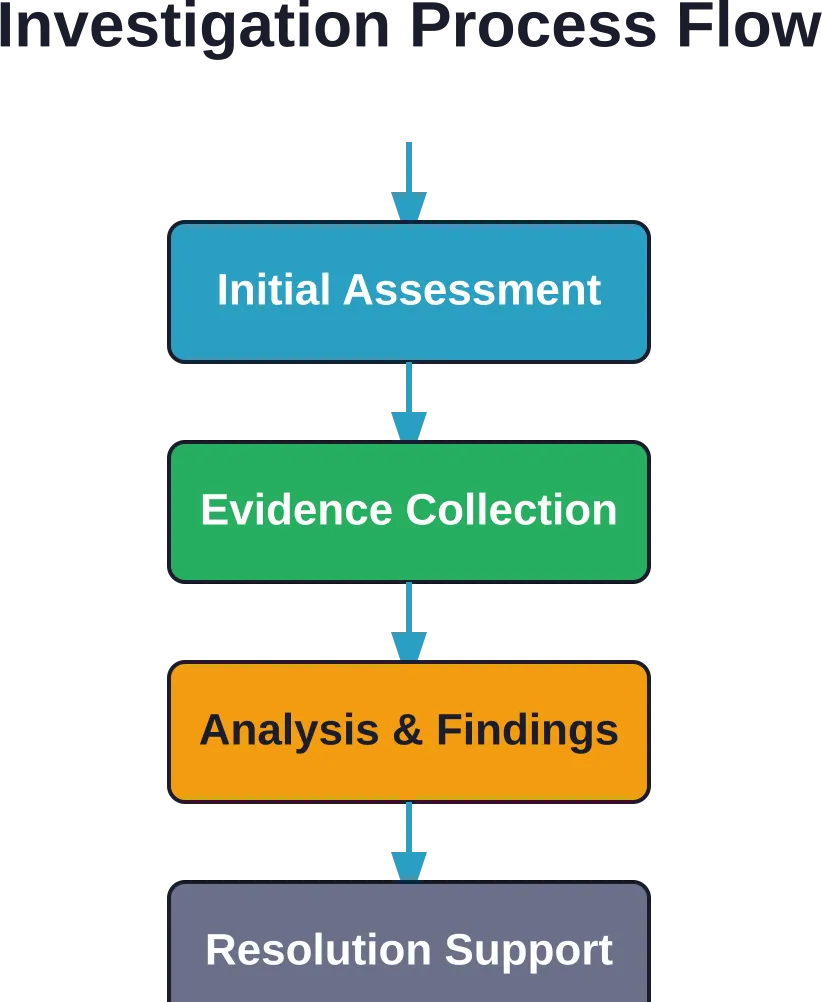
Investigation timelines vary significantly based on fraud complexity, evidence availability, and cooperation from involved parties. Simple cases may conclude in weeks, while complex financial crime investigations spanning multiple jurisdictions can take months. Reputable firms provide timeline estimates after initial case assessment.
External investigation firms provide objectivity, specialized expertise, and credibility that internal teams often lack. Independent investigations carry more weight with regulators, insurance carriers, and courts. However, internal teams may handle preliminary inquiries before engaging external investigators for formal investigations.
Forensic accounting focuses specifically on financial analysis, examining records to identify irregularities, trace assets, and quantify losses. Fraud investigation encompasses broader activities including witness interviews, background checks, digital forensics, and evidence gathering beyond financial documents. Most comprehensive fraud investigations incorporate forensic accounting as one component.
Reputable firms operate under strict confidentiality protocols and codes of business conduct. They understand attorney-client privilege when working with legal counsel, implement secure document handling procedures, and limit information access to essential personnel. Firms should articulate their confidentiality framework clearly during engagement discussions.
Experienced investigators frequently serve as expert witnesses, providing testimony about their findings, methodologies, and opinions. Former federal agents bring particularly strong courtroom credentials given their extensive testimony experience. Firms should disclose expert testimony rates upfront, as these typically exceed standard investigation hourly rates.
Conclusion
Selecting the right fraud investigation services company requires careful evaluation of credentials, experience, capabilities, and reputation. Prioritize firms staffed by former federal agents with relevant industry expertise and comprehensive service offerings.
Look for transparent engagement terms, robust confidentiality protocols, and demonstrated track records handling similar cases. The investigation firm becomes a critical partner in protecting organizational integrity and achieving resolution.
Take time for thorough vetting—the stakes are too high for hasty decisions. Schedule consultations with multiple qualified firms before making final selections.
When fraud threatens business operations, choosing the right investigative partner can mean the difference between successful resolution and prolonged exposure to financial and reputational damage.