
UK SOX services help businesses prepare for upcoming regulatory reforms to internal controls reporting and financial governance. Though not yet mandated, UK SOX-style requirements are emerging from FRC reforms to the UK Corporate Governance Code, requiring enhanced internal controls over financial reporting (ICFR) similar to US Sarbanes-Oxley Act requirements. Professional services firms offer compliance software, advisory, testing, and assurance services to help organizations implement robust control frameworks ahead of these regulatory changes.
The UK's regulatory landscape is shifting. After high-profile corporate collapses including Carillion, BHS, and Patisserie Valerie, the Financial Reporting Council (FRC) launched significant reforms to audit and corporate governance standards.
These changes are pushing UK businesses toward something resembling the US Sarbanes-Oxley Act. While not officially called "UK SOX," the term has stuck as shorthand for emerging internal controls over financial reporting requirements.
Here's what businesses need to know about UK SOX services and how they're preparing for these regulatory changes.
What Are UK SOX Services?
UK SOX services encompass a range of professional offerings designed to help organizations establish, test, and maintain robust internal controls over financial reporting. These services have emerged in response to proposed regulatory reforms that would require enhanced accountability for financial controls.
According to the Financial Reporting Council's consultation 'Restoring Trust in Audit and Corporate Governance,' the UK government is considering strengthening the internal control framework similar to requirements under Section 404 of the US Sarbanes-Oxley Act.
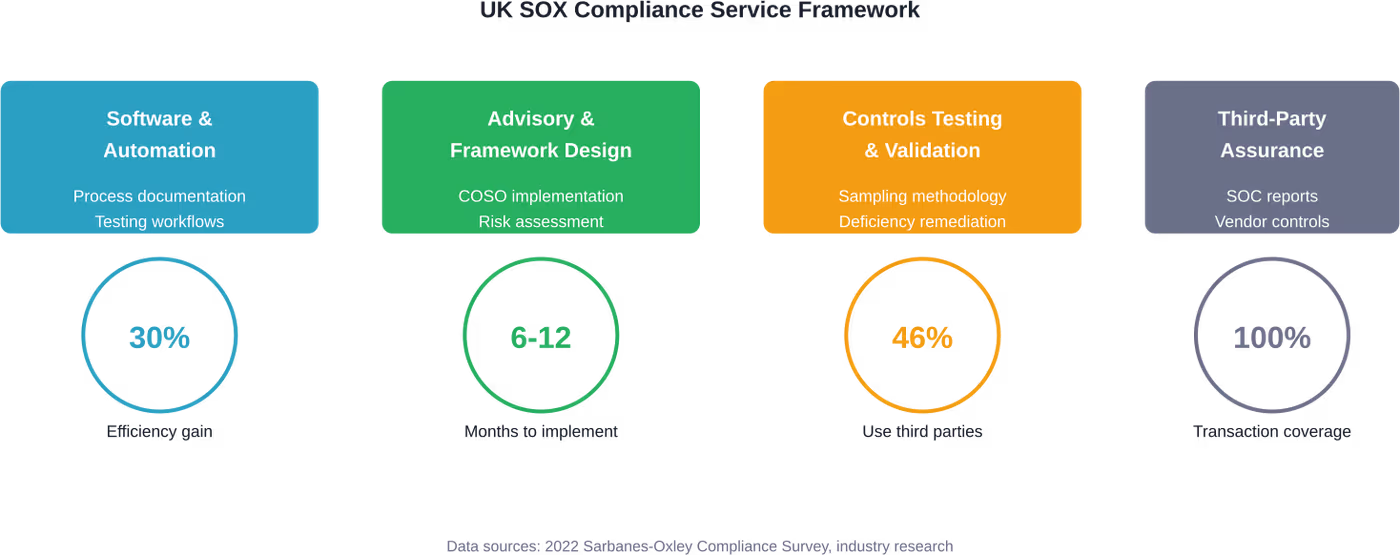
Service providers typically offer four main categories of support:
- Compliance software and automation platforms
- Advisory services for framework design and implementation
- Controls testing and validation
- Third-party risk assurance and SOC reporting
The Regulatory Context
Jon Thompson, chief executive of the FRC, told delegates at ICAEW's Financial Reporting, Audit and Assurance Conference to expect some form of SOX-style safeguards in the UK. The 2024 UK Corporate Governance Code introduced a new Principle C and a strengthened Provision 29, requiring the board to provide a declaration in the annual report stating that they have monitored and reviewed the effectiveness of the material controls and whether the board considers them to have operated effectively as at the balance sheet date.
But here's the thing—these requirements are evolving. The US Sarbanes-Oxley Act Section 404(a) mandates management's assessment, while Section 404(b) mandates external auditor attestation, but the latter applies only to accelerated filers, not all companies.
Core UK SOX Service Offerings
Compliance Software Solutions
Software platforms designed for UK SOX compliance help organizations automate internal controls management. These solutions typically support process documentation, control testing workflows, issue remediation tracking, and compliance reporting.
The platforms enable enterprises to establish embedded controls cultures rather than treating compliance as a periodic exercise. Real talk: automation significantly reduces the manual burden of controls testing and documentation.
Controls Advisory Services
Advisory firms help businesses design and implement control frameworks aligned with regulatory expectations. This includes gap assessments comparing current controls against proposed UK SOX standards, framework selection (typically COSO or UK Code-based approaches), and process mapping to identify key controls over financial reporting.
Advisory services also address scoping decisions. Which controls are truly material to financial reporting? How should businesses prioritize remediation efforts?
Controls Testing and Validation
According to the Protiviti 2022 Sarbanes-Oxley Compliance Survey, 46% of organizations use a co-sourcing or outsourcing model for their SOX internal audit and testing activities. Testing services typically include design effectiveness evaluation, operating effectiveness testing through sampling, deficiency identification and classification, and remediation support.
One significant consideration: testing coverage can dramatically increase audit workload. Some testing approaches require 100% transaction coverage rather than sampling-based methods, particularly for automated controls.
Third-Party Risk Assurance
The revised 2024 UK Corporate Governance Code may drive increased demand for assurance over activities and material controls performed by third-party providers for critical services. Service Organisation Control (SOC) reports provide standardized assurance on service providers' control environments.
Organizations can obtain SOC 1 reports (focused on controls relevant to financial reporting) or SOC 2 reports (covering security, availability, processing integrity, confidentiality, and privacy).
Target Audience and Scope
Who needs UK SOX services? While regulatory requirements aren't finalized, emerging reforms target larger private companies with over 750 employees and £750 million turnover, as well as public interest entities and companies applying the UK Corporate Governance Code.
UK companies with securities listed in the US already face Section 404 requirements. For these dual-listed entities, UK SOX services help harmonize compliance approaches across jurisdictions.
| Organization Type | Current Requirements | Anticipated UK SOX Impact |
|---|---|---|
| FTSE 350 companies | UK Corporate Governance Code compliance (including Provision 29 enhancements) | Enhanced ICFR reporting and potential auditor attestation |
| Large private companies (750+ employees, £750M+ turnover) | Voluntary best practice adherence | Likely mandatory internal controls framework and reporting |
| US-listed UK companies | Full US SOX Section 404 compliance required | Alignment of UK and US requirements, potential streamlining |
| Smaller listed companies | Basic UK Code provisions or AIM rules | Proportionate requirements under consideration |
Implementation Challenges and Considerations
Establishing a UK SOX-compliant controls environment isn't straightforward. Organizations face several key challenges:
Resource and Skills Requirements
Section 404 compliance is highly complex. It requires specialized skills in control design, risk assessment, process documentation, and testing methodologies. Many organizations lack sufficient internal resources and turn to external service providers.
Framework Selection
Multiple frameworks exist for internal controls over financial reporting. The COSO Internal Control—Integrated Framework is widely used in US SOX compliance. The UK Corporate Governance Code provides UK-specific guidance. Organizations must decide which framework best suits their needs and regulatory obligations.
System and Process Integration
Effective controls require integration across finance systems, ERPs, consolidation tools, and reporting platforms. Legacy systems can make control automation challenging. Organizations often need technology upgrades alongside controls implementation.
Third-Party Dependencies
Modern businesses rely heavily on outsourced service providers for critical financial processes—payment processing, payroll, accounting services. Obtaining adequate assurance over third-party controls adds complexity and cost.
Choosing the Right Service Provider
Not all UK SOX service providers are created equal. When evaluating potential partners, consider:
- Regulatory expertise: Does the provider understand UK-specific requirements and how they differ from US SOX?
- Technology capabilities: Can they provide integrated software solutions or only advisory services?
- Industry experience: Do they have experience with organizations in your sector?
- Resource availability: Can they scale to meet your implementation timeline?
- Ongoing support: What post-implementation support do they offer?
The short answer? Look for providers with demonstrated UK Corporate Governance Code expertise, not just US SOX experience. The regulatory contexts differ in important ways.

Get Control Over Financial Reporting
Stronger control over financial reporting is becoming a priority for many UK organisations. Controls need to be clearly defined, applied consistently, and supported by proper oversight. Acumon is an ICAEW-registered audit firm in London with FRC authorisation, working with regulated and multi-entity organisations where governance, audit, and reporting need to stay aligned.
Fix Control Gaps and Governance Issues
Acumon focuses on the areas that affect financial control and compliance in practice:
- Review of control environments linked to financial reporting
- Internal audit delivered alongside wider audit and governance work
- Support for organisations operating under regulatory scrutiny
- Experience with group structures and cross-jurisdiction arrangements
Contact Acumon and review your financial controls and reporting.
Benefits Beyond Compliance
While UK SOX services initially focus on regulatory compliance, many organizations find additional value in strengthened control environments. Improved operational efficiency comes from documented, standardized processes. Enhanced risk management identifies and addresses control gaps proactively. Better financial reporting quality reduces restatement risk.
According to FCA Financial Lives survey research, 81% of adults would like the way their money is invested to do some good as well as provide a financial return. Robust governance and controls can support ESG objectives and investor confidence.
That said, compliance shouldn't be the only driver. Organizations that view controls as business enablers rather than regulatory burdens tend to extract more value from their investments.
Preparing for UK SOX Requirements
Even without finalized legislation, organizations can take practical steps now. Conduct informal gap assessments comparing current controls against anticipated requirements. Document key financial reporting processes and identify critical controls. Evaluate control automation opportunities to reduce manual testing burden.
Engage with professional service providers early to understand options and timelines. Organizations that start preparation before regulatory deadlines face less rushed, more strategic implementations.
Look, the regulatory landscape is uncertain. But waiting for absolute clarity before acting can leave organizations scrambling when requirements are finalized. Proactive preparation reduces risk and positions businesses to respond efficiently when rules crystallize.
UK SOX services provide the expertise, technology, and assurance capabilities to navigate this evolving regulatory environment. Whether through software platforms, advisory support, testing services, or third-party assurance, professional service providers help organizations build sustainable, compliant control frameworks that extend beyond regulatory checkboxes to deliver genuine business value. With 97% of FTSE 350 audits undertaken by just 4 audit firms according to government research, the concentration of audit expertise underscores the importance of having specialist advisory support for compliance implementation.
Frequently Asked Questions
No, "UK SOX" isn't the official name of any legislation. It's shorthand for emerging regulatory reforms that would strengthen internal controls requirements similar to US Sarbanes-Oxley Act Section 404. The FRC has proposed reforms through updates to the UK Corporate Governance Code, but comprehensive legislation comparable to US SOX hasn't been enacted as of 2026.
Companies subject to the UK Corporate Governance Code—primarily FTSE 350 organizations—face enhanced internal controls requirements. Large private companies with over 750 employees and £750 million turnover are likely targets for future requirements. UK companies with US securities listings already must comply with US SOX Section 404 and can benefit from harmonized approaches.
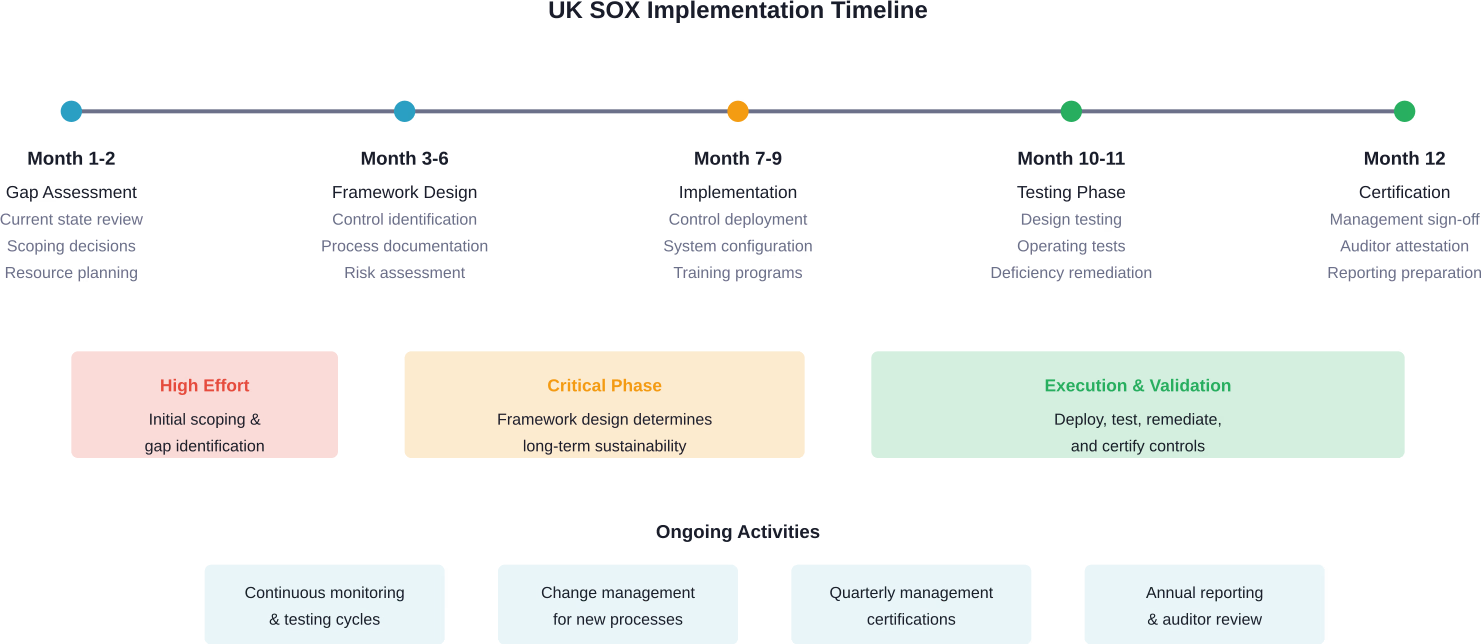
Typical implementations require 6-12 months for initial framework design, control documentation, testing, and certification. The timeline varies based on organization size, complexity, existing control maturity, and resource availability. Organizations should begin preparation well before regulatory deadlines are finalized.
US SOX Section 404 mandates specific management assessments and external auditor attestation on internal controls over financial reporting. UK reforms are still evolving and may offer more flexibility in implementation approach. UK requirements may be more principles-based compared to the rules-based US framework, though convergence is possible as reforms develop.
Costs vary widely based on organization size, scope, existing control maturity, and service provider selection. Check provider websites for current pricing structures. Generally speaking, larger organizations with complex operations face higher implementation and ongoing maintenance costs. Software licensing, consulting fees, and internal resource allocation all contribute to total cost of ownership.
Some organizations with strong internal audit functions and controls expertise can manage significant portions of UK SOX compliance internally. However, according to the 2022 Sarbanes-Oxley Compliance survey, 46% of organizations use third-party providers for testing efforts. Most organizations benefit from at least some external support, particularly during initial implementation.
Most UK SOX service providers use the COSO Internal Control—Integrated Framework, which is widely recognized and aligns with US SOX requirements. Some providers also work with UK Corporate Governance Code principles and sector-specific guidance. Framework selection should consider regulatory expectations, international alignment needs, and organizational culture.