
Public sector audit services ensure government and public organizations maintain financial accountability, comply with federal regulations, and operate transparently. These specialized audits follow rigorous standards like GAGAS (Yellow Book) and include financial audits, single audits, and performance reviews to help public entities manage taxpayer dollars responsibly.
Government and public sector organizations operate under intense scrutiny. Every dollar spent comes with accountability expectations that extend far beyond typical corporate requirements.
That's where public sector audit services come in. These aren't just box-checking exercises—they're comprehensive evaluations that help governmental entities maintain public trust while navigating complex regulatory frameworks.
The stakes? Higher than most people realize. Public sector audits affect everything from municipal bond ratings to federal grant eligibility. Get them wrong, and organizations face serious consequences.
Understanding Government Auditing Standards
According to the U.S. Government Accountability Office, auditors use Government Auditing Standards—commonly called GAGAS or the Yellow Book—to perform audits and produce reports. These standards form the backbone of public sector accountability.
The Yellow Book contains standards for financial audits, attestation engagements, and performance audits, as well as specific requirements for individual auditors and audit organizations.
But here's the thing—these standards don't exist in isolation. The AICPA Auditing Standards Board performs functions vital to the public interest by creating requirements that enable consistent, thorough audit and attest engagements. This collaboration ensures standards remain relevant as governmental operations evolve.
The International Perspective
Beyond U.S. borders, the International Organization of Supreme Audit Institutions (INTOSAI) provides global standards. INTOSAI is an autonomous, independent, professional organization with 196 full members, 5 associate members, and 2 affiliate members.
INTOSAI's Framework of Professional Pronouncements draws on collective professional expertise to provide official statements on audit-related matters. These pronouncements help standardize public sector auditing worldwide.
Key Types of Public Sector Audits
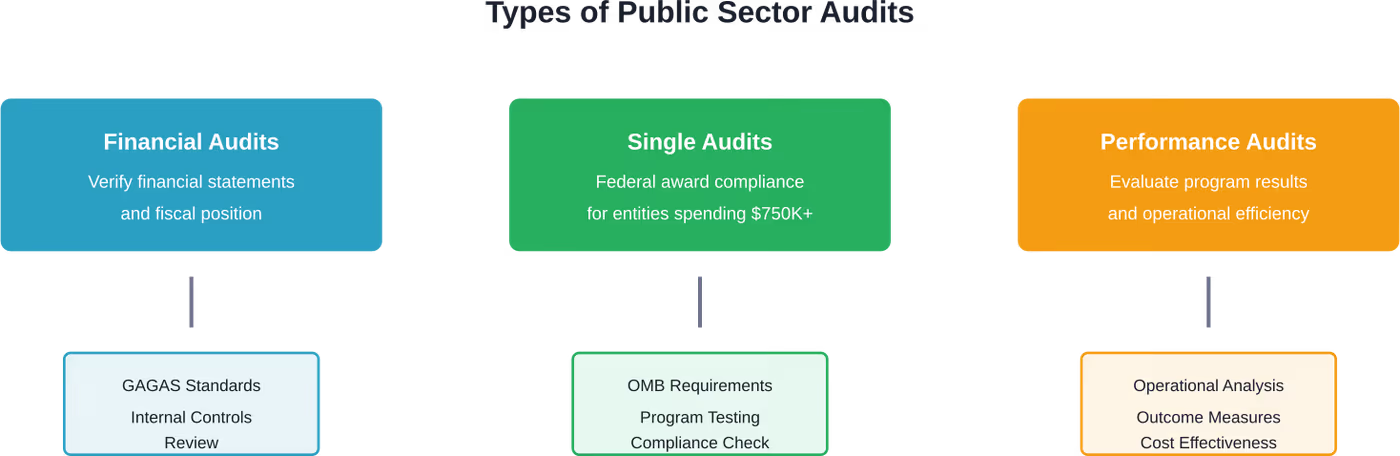
Public sector audit services encompass several distinct audit types, each serving specific oversight functions.
Financial Audits
Financial audits examine whether financial statements present fairly an organization's financial position and results. These audits verify that public entities maintain sound financial management and internal controls.
Sound familiar? It should. Financial audits are what most people picture when they think of traditional accounting work. But in the public sector, these audits face additional layers of regulatory requirements.
Single Audits
Here's where things get interesting. Single audits apply to entities that expend $750,000 or more in federal awards annually. According to industry reports, leading firms perform audits covering more than $9 billion of federal expenditures per year.
Single audits evaluate both financial statements and federal award compliance. They assess whether organizations follow specific program requirements attached to grant funding.
Performance Audits
Performance audits go beyond numbers. They examine whether programs achieve intended results, operate economically and efficiently, and comply with applicable laws.
Real talk: performance audits often uncover the most actionable insights. They identify operational improvements that can save significant taxpayer dollars.
Compliance Requirements and Federal Regulations
Public sector organizations face layered compliance obligations. Federal rules and reporting requirements tax public sector leaders working to achieve mission-focused goals with limited funding.
The U.S. Department of the Treasury provides comprehensive guidance through various directives. Treasury Directive 40-03 establishes policy for audit management, finding resolution, implementing corrective actions, and audit closure within Treasury departments.
Treasury Directive 76-06 designates the Treasury Office of Inspector General as the focal point for obtaining contract audit services. This centralized approach ensures consistency across federal audit procurement.
The Single Audit Process
Organizations receiving federal awards must navigate specific requirements. Treasury has expressed intent to vigorously monitor recipients' methods of obligating funds by required deadlines, with reports covering obligations due at specific intervals.
Treasury remains committed to recouping funds used in violation of State and Local Fiscal Recovery Fund rules and guidance. That's not a hollow threat—it's active enforcement policy.
| Compliance Area | Key Requirements | Oversight Body |
|---|---|---|
| Financial Reporting | Annual financial statements, GAAP compliance | State auditors, independent firms |
| Federal Awards | Single audit when expenditures exceed $750K | Federal agencies, OIG |
| Internal Controls | COSO framework implementation | Management, external auditors |
| Performance Measures | Program outcome tracking and reporting | Oversight agencies, legislature |
Selecting Public Sector Audit Services
Choosing the right audit partner matters enormously. Public sector organizations need firms with specific expertise in governmental accounting and regulatory requirements.
Look for firms with demonstrated experience conducting single audits. According to industry reports, leading firms conduct the second most single audits in the nation annually. That volume translates to deep expertise in federal compliance requirements.
Experience with the Certificate of Achievement for Excellence in Financial Reporting program signals commitment to quality. Some firms have conducted more than 750 Annual Comprehensive Financial Reports that achieved this certification.
What to Expect from Quality Audit Services
Quality audit services go beyond compliance checking. They help identify opportunities for enhanced revenues or cost reductions. Audit teams should bring technical knowledge that strengthens organizational operations.
The best audit relationships involve proactive communication. Auditors should help organizations maintain a state of audit readiness rather than creating crisis situations during fieldwork.

Fix Your Audit With the Right Partner
Audit in high-scrutiny environments leaves little room for weak controls or unclear reporting. Acumon is a London-founded audit firm serving clients across the UK and internationally, working with regulated organisations, charities, and complex group structures, with a focus on how governance, controls, and audit processes operate in practice.
Bring Structure to Audit, Controls, and Oversight
Acumon helps organisations strengthen audit readiness and governance with a practical, risk-based approach:
- Review of control frameworks and governance structures
- Support during regulatory or funding scrutiny
- Experience with multi-entity and international structures
- Direct work with finance teams and boards
If your audit is under pressure or starting to show gaps, contact Acumon and discuss how to bring your controls, reporting, and audit approach into a more stable position.
Current Trends in Public Sector Auditing
Digital transformation is reshaping government and public sector operations. Organizations increasingly face challenges related to cybersecurity, data management, and technology implementation.
The Treasury Office of Inspector General has published numerous audit and evaluation reports addressing cybersecurity and information technology concerns. As of March 2026, these audits continue highlighting vulnerabilities requiring attention.
Now, this is where it gets interesting. Auditors increasingly evaluate how public sector organizations use technology to improve service delivery and operational efficiency. Traditional financial audits now routinely incorporate IT controls assessment.
Best Practices for Audit Readiness
Organizations don't need to wait passively for audit season. Maintaining continuous audit readiness reduces stress and improves outcomes.
Strong internal controls form the foundation. Organizations should implement controls based on the COSO framework and document them thoroughly. Auditors will test these controls, so proactive evaluation prevents surprises.
Documentation matters more than most organizations realize. Maintain organized records of financial transactions, grant expenditures, and compliance activities. Missing documentation creates audit findings even when underlying compliance is solid.
Internal Audit Functions
Establishing internal audit capabilities provides ongoing oversight. Internal audits identify issues before external auditors arrive, allowing time for remediation.
But wait. Internal audit isn't just about finding problems. It's about continuous improvement. Internal auditors help optimize processes and strengthen controls proactively.
Addressing Complex Accounting Issues
Public sector organizations face unique accounting challenges. New Governmental Accounting Standards Board standards regularly introduce complex requirements.
Revenue recognition for government entities differs significantly from private sector rules. Grant accounting involves specific requirements for recognizing revenue and tracking expenditures against allowable costs.
Pension and other post-employment benefit accounting creates particular complexity. GASB standards require extensive actuarial calculations and detailed note disclosures.
| Challenge Area | Common Issues | Resolution Approach |
|---|---|---|
| Grant Accounting | Allowable cost determination, time tracking | Detailed policies, staff training, regular reconciliation |
| Revenue Recognition | Complex GASB requirements, multiple funds | Expert consultation, systematic review processes |
| Capital Assets | Depreciation schedules, infrastructure reporting | Fixed asset systems, regular physical inventories |
| Pension Liabilities | Actuarial calculations, disclosure requirements | Professional actuarial services, technical expertise |
The Role of Professional Standards
Professional standards provide the framework for quality audits. The AICPA publishes guidance specifically for governmental accounting and auditing through regular updates addressing new GASB standards and changes to federal audit requirements.
The Government Audit Quality Center provides additional resources. As of April 2026, the GAQC continues publishing alerts addressing emerging issues in governmental auditing.
Auditors must maintain continuing professional education specific to governmental auditing. This specialized knowledge ensures they understand the unique requirements facing public sector organizations.
Moving Forward with Confidence
Public sector audit services provide essential accountability mechanisms that protect taxpayer interests and strengthen public trust. Organizations that embrace these audits as improvement opportunities rather than compliance burdens gain the most value.
The landscape continues evolving with new standards, emerging technologies, and changing federal requirements. Staying current requires ongoing attention and often benefits from expert guidance.
Partnering with experienced audit professionals helps navigate this complexity. Look for firms demonstrating deep governmental expertise, proactive communication, and commitment to helping organizations achieve their missions while maintaining accountability.
Strong audit practices don't just satisfy compliance requirements—they build organizational resilience and public confidence. That's worth the investment.
Public sector audit services are specialized auditing and assurance services designed for government and public organizations. These services include financial audits, single audits for federal award recipients, performance audits, and compliance reviews that follow Government Auditing Standards established by the GAO.
Organizations that spend $750,000 or more in federal awards during a fiscal year must undergo a single audit. This includes state and local governments, nonprofit organizations, and other entities receiving federal grant funding. The single audit examines both financial statements and compliance with federal award requirements.
GAGAS stands for Generally Accepted Government Auditing Standards, also known as the Yellow Book. Published by the U.S. Government Accountability Office, these standards establish requirements for audits of government entities and organizations receiving government funding. GAGAS covers financial audits, attestation engagements, and performance audits.
Public sector audits follow stricter standards and include additional compliance testing beyond financial statement audits. They assess adherence to federal regulations, grant requirements, and governmental accounting standards. Public sector audits also emphasize transparency and accountability to taxpayers rather than private shareholders.
Most governmental entities require annual financial audits. Organizations receiving federal awards and meeting the $750,000 threshold must complete single audits annually. Some jurisdictions mandate more frequent reviews or specialized audits depending on organization type and funding sources.
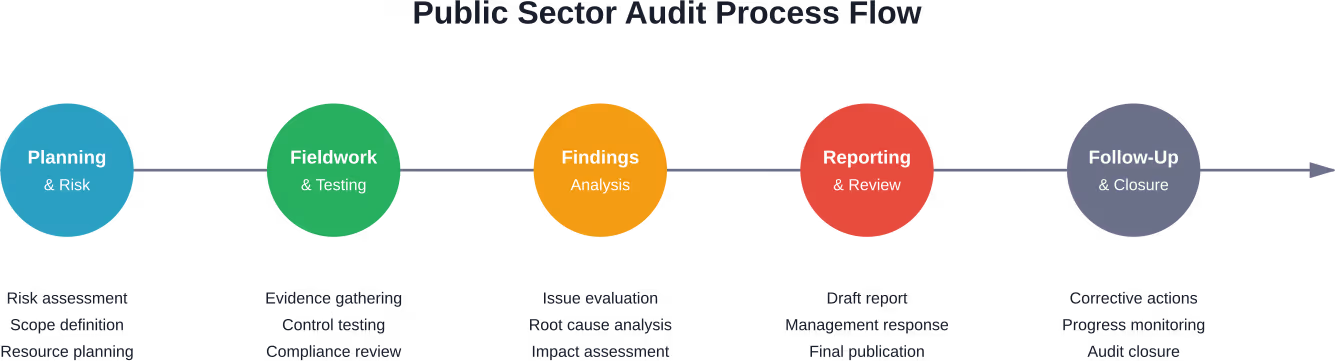
Audit findings require management responses outlining corrective action plans. Organizations must implement remediation steps and demonstrate progress addressing identified issues. Federal agencies monitor corrective actions for single audit findings and may impose sanctions for unresolved compliance issues. Serious findings can affect future grant eligibility and organizational reputation.
Organizations should maintain strong internal controls, organized documentation, and regular financial reconciliations throughout the year. Conducting internal audits or pre-audit assessments helps identify issues early. Ensuring staff understand compliance requirements and establishing clear policies reduces audit findings and streamlines the external audit process.