
ISO auditor services provide independent assessment of management systems against international standards like ISO 9001, ISO 14001, and ISO 27001. These services include internal audits, certification audits, gap assessments, and compliance verification to help organizations demonstrate credibility, meet regulatory requirements, and drive continuous improvement.
Organizations pursuing ISO certification face a complex journey. Standards like ISO 9001 for quality management and ISO 14001 for environmental systems demand rigorous documentation, process alignment, and ongoing verification. That's where professional ISO auditor services become essential.
But here's the thing—not all auditing services deliver the same value. The right auditor brings expertise, objectivity, and practical guidance that transforms compliance from a checkbox exercise into genuine business improvement.
Understanding ISO Auditor Services
ISO auditor services encompass several distinct types of assessment activities. Internal audits evaluate an organization's management system against chosen standards before external review. Third-party certification audits, conducted by accredited certification bodies, result in official ISO certification. Supplier audits assess vendors and partners for compliance.
According to ISO's Committee on Conformity Assessment (CASCO), certification serves as a credibility tool by demonstrating that products or services meet customer expectations. For some industries, certification isn't optional—it's a legal or contractual requirement that opens doors to new markets and partnerships.
The ISO 19011 standard provides comprehensive guidelines for auditing management systems. This framework establishes audit principles, manages audit programs, and defines competence requirements for auditors. Following these guidelines ensures consistency and reliability across different auditors and organizations.
Types of ISO Auditing Services
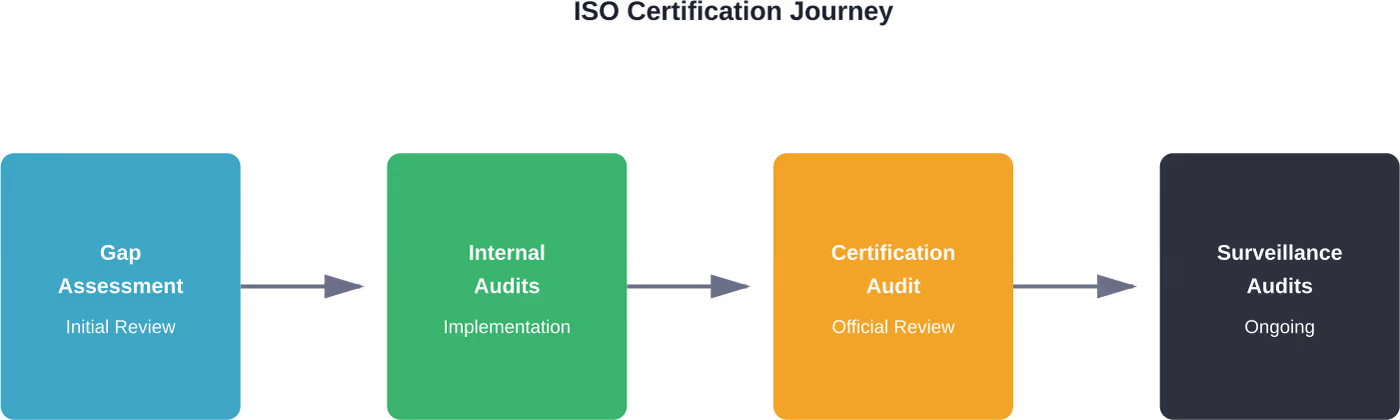
Different audit types serve specific purposes throughout the certification lifecycle:
- Gap Assessments: Initial evaluations identifying areas where current practices fall short of ISO requirements
- Internal Audits: Regular systematic reviews ensuring ongoing compliance and identifying improvement opportunities
- Pre-Certification Audits: Final readiness checks before engaging a certification body
- Certification Audits: Official third-party assessments leading to ISO certification
- Surveillance Audits: Periodic reviews maintaining certification validity
- Supply Chain Audits: Vendor assessments ensuring partners meet quality and compliance standards
Choosing the Right ISO Auditor
Selection criteria matter significantly when engaging auditor services. Accreditation status tops the list—certification bodies should hold accreditation from recognized national accreditation bodies that participate in the International Accreditation Forum (IAF) Multilateral Recognition Arrangement.
Industry expertise makes a measurable difference. Auditors familiar with specific sectors understand nuanced requirements and common challenges. According to academic programs at institutions like NC State University and Georgia Tech, proper auditor training requires extensive instruction hours covering standard requirements, audit techniques, and practical exercises.
Real talk: outsourcing auditing needs has become increasingly common. Many smaller organizations can't afford to interrupt operations for extended periods focusing on certification. Professional auditing services offer industry-tested expertise without the overhead of maintaining internal specialists.
Key Auditor Competencies
ISO/IEC 17021 and ISO 19011 establish clear competence requirements for auditors. Effective auditors demonstrate:
| Competency Area | Description |
|---|---|
| Standard Knowledge | Deep understanding of ISO requirements and interpretation |
| Auditing Skills | Systematic assessment techniques and evidence gathering |
| Industry Expertise | Sector-specific knowledge and regulatory awareness |
| Communication | Clear reporting and stakeholder engagement abilities |
| Objectivity | Impartial assessment free from conflicts of interest |

Pass ISO Audits Without Last-Minute Issues
ISO audits often become a problem when organisations scale, add new systems, or operate across multiple locations. Requirements stay the same, but structures get more complex. Acumon is a UK firm of chartered accountants and registered auditors working with companies, charities, and international groups. The team supports organisations that deal with multi-entity reporting, cross-border structures, and regulatory expectations, bringing experience from statutory audit, group audits, and work with regulated entities.
Prepare for Certification With a Structured Approach
Acumon focuses on what matters for ISO audit readiness:
- Experience working with organisations operating across multiple jurisdictions
- Structured audit methodology aligned with international standards
- Senior audit professionals involved throughout the engagement
- Understanding of how reporting, governance, and controls connect
Speak with Acumon and prepare your organisation for ISO audit requirements without disruption.
Common ISO Standards for Auditing
Different standards address specific management system areas. ISO 9001 focuses on quality management systems, providing a framework that helps organizations deliver consistent products and services while improving efficiency. ISO 14001 covers environmental management, helping organizations minimize environmental impact.
ISO 27001 addresses information security management—increasingly critical as cybersecurity threats evolve. ISO 45001 tackles occupational health and safety. ISO 30301 specifies requirements for records management systems supporting organizational strategy and goals.
Each standard follows similar high-level structures but includes specific requirements relevant to its domain. Professional auditors often specialize in particular standards while maintaining broad awareness across the ISO family.
The Certification Process
ISO itself doesn't perform certification—an important distinction many organizations miss. The International Organization for Standardization develops standards, while independent certification bodies conduct audits and issue certificates.
Certification typically follows a two-stage process. Stage one reviews documentation and readiness. Stage two involves comprehensive on-site assessment of implementation and effectiveness. Successful completion results in certification valid for three years, subject to annual surveillance audits.
Organizations can't use the ISO logo on certificates or marketing materials. However, they can reference their certification status and display certificates issued by accredited certification bodies.
Benefits of Professional Auditor Services
Many organizations report improvements in internal audit value and reductions in operational interruptions through professional auditor services. External auditors bring fresh perspectives uncovering blind spots internal teams might miss.
Experienced auditors identify improvement opportunities beyond basic compliance. They benchmark practices against industry standards and suggest practical enhancements. This transforms audits from compliance exercises into strategic improvement initiatives.
For supply chain management, third-party auditing services provide objective vendor assessments. This reduces risk while maintaining strong supplier relationships—internal audits might strain partnerships in ways external assessments don't.
Moving Forward with ISO Certification
ISO auditor services bridge the gap between organizational aspirations and internationally recognized certification. Whether pursuing initial certification, maintaining existing credentials, or improving management system effectiveness, professional auditors provide objective expertise that accelerates progress.
The investment in quality auditing services pays dividends through improved processes, reduced risks, and enhanced market credibility. Organizations serious about certification should engage accredited auditors early in their journey—gap assessments identify priorities and prevent costly missteps during formal certification audits.
Ready to start your ISO certification journey? Research accredited certification bodies in your region, verify their IAF recognition, and request consultations to find auditors with relevant industry expertise. The right partnership transforms compliance from burden to competitive advantage.
Frequently Asked Questions
ISO auditors systematically examine an organization's management system against specific ISO standard requirements. They review documentation, interview personnel, observe processes, and gather objective evidence to determine compliance levels and identify improvement opportunities.
Timelines vary based on organization size, complexity, and readiness level. Factors affecting the duration include the current state of management system documentation, organizational readiness, and the scope of the standard being pursued.
Yes. ISO standards require organizations to conduct internal audits as part of their management system. Internal audits ensure ongoing compliance between certification body surveillance visits and drive continuous improvement initiatives.
Pricing varies significantly based on organization size, standard complexity, and scope. Check with specific auditing firms for current pricing tailored to particular situations. Costs include both initial certification and ongoing surveillance audit fees.
First-party audits are internal assessments organizations conduct on themselves. Second-party audits involve customers auditing suppliers. Third-party audits are independent assessments by external certification bodies leading to official ISO certification.
No. ISO standards certify management systems within organizations, not individuals. However, individuals can become certified ISO auditors through training programs meeting international auditor competence requirements established by IAF and accreditation bodies.
Minor nonconformities typically allow conditional certification with required corrective actions within specified timeframes. Major nonconformities prevent certification until organizations address gaps and pass follow-up assessments. Reputable auditors provide clear guidance on remediation.