
Internal audit services in London help organisations strengthen governance, manage risk, and ensure compliance through independent assurance and advisory functions. Leading firms combine specialist expertise with technology-driven approaches to deliver both co-sourced and fully outsourced solutions tailored to complex regulatory environments.
Organisations face intense scrutiny around corporate governance. Boards and management teams must demonstrate robust, transparent approaches to risk management whilst navigating an evolving regulatory landscape.
That's where internal audit comes in.
London hosts a competitive market of firms offering internal audit services—from global professional services networks to specialist advisory practices. Each brings different capabilities, industry focus, and delivery models to the table.
Why Internal Audit Matters Now
Regulatory scrutiny has intensified. Operational complexity keeps growing. The risk landscape shifts faster than ever.
The Chartered Institute of Internal Auditors emphasizes that internal audit professionals should continually enhance their expertise to elevate not only individual practice but entire audit functions. This professional development focus reflects how seriously the profession takes its evolving responsibilities.
Greater shareholder expectations compound these pressures. Management teams want to avoid control failures that could trigger financial loss or reputational damage. The need for effective internal audit functions has never been clearer.
But here's the thing—implementing these functions properly requires specialist knowledge, proven methodologies, and often technology that many organisations lack in-house.
Core Internal Audit Services in London
London's internal audit providers typically offer several foundational services that address different organisational needs.
Risk Advisory and Assurance
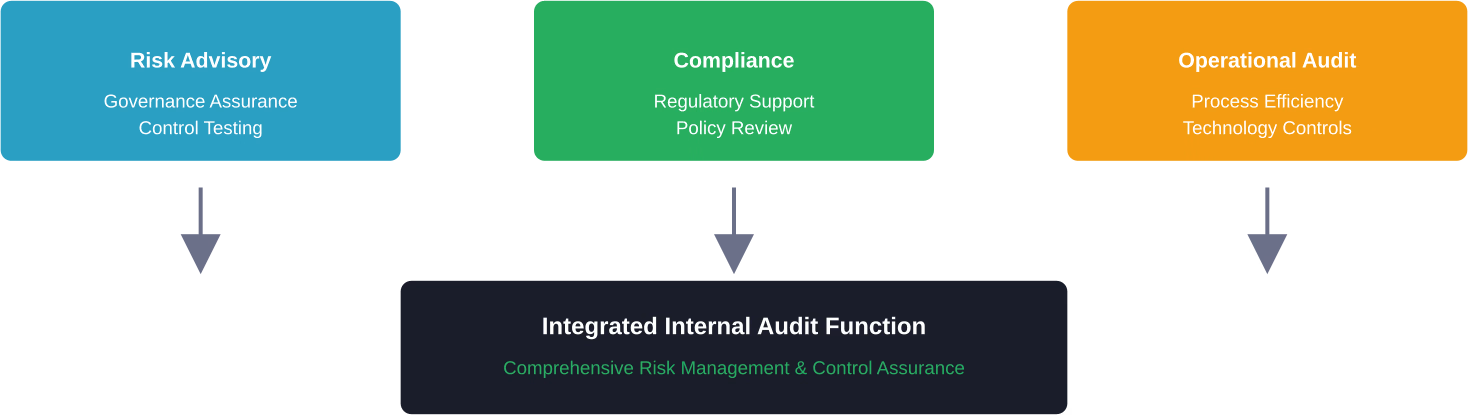
Internal audit delivers confidence to stakeholders on corporate governance effectiveness. Firms conduct independent assessments of risk management frameworks, testing whether controls actually work as intended.
This assurance function helps boards understand where vulnerabilities exist before they become problems.
Compliance and Regulatory Support
The changing regulatory environment creates ongoing compliance challenges. Internal audit services help businesses stay ahead of requirements across financial reporting, data protection, industry-specific regulations, and corporate governance codes.
Compliance work often intersects with operational reviews, ensuring policies translate into actual practice.
Financial and Operational Controls
Testing financial controls remains central to many internal audit engagements. But operational audits have grown equally important—examining process efficiency, technology controls, supply chain risks, and business continuity arrangements.
These audits identify weaknesses and recommend improvements that strengthen overall control environments.
Service Delivery Models
London firms structure their internal audit offerings through different engagement models. Choosing the right approach depends on existing capabilities, resource constraints, and strategic objectives.
| Model | Description | Best For |
|---|---|---|
| Fully Outsourced | Entire internal audit function delivered by external firm | Organisations without in-house audit teams or requiring specialist expertise |
| Co-sourced | External firm supplements existing internal audit team | Businesses needing additional capacity or specialist skills for specific projects |
| Advisory Only | Consulting on audit methodology, risk frameworks, and control design | Mature audit functions seeking to enhance capabilities |
Co-sourced internal audit solutions have gained popularity. They provide flexibility—organisations maintain core audit staff whilst accessing specialist talent for complex areas like IT security, regulatory compliance, or emerging risks.
Technology-Driven Audit Approaches
Digital transformation has reshaped how internal audit delivers value. Leading London firms leverage technology to improve efficiency and insight quality.
Data analytics now enables 100% population testing rather than sampling. Auditors can examine entire transaction sets, detect anomalies automatically, and identify thematic risk insights across the organisation.
Automation handles routine testing and evidence gathering. This reduces manual effort, improves consistency, and frees auditors to focus on judgment-intensive work—interpreting findings, assessing root causes, and advising on solutions.
Some firms apply artificial intelligence to enhance risk assessment, predict control failures, and benchmark performance against industry peers.
Choosing an Internal Audit Provider in London
The London market offers genuine choice. But that makes selection trickier.
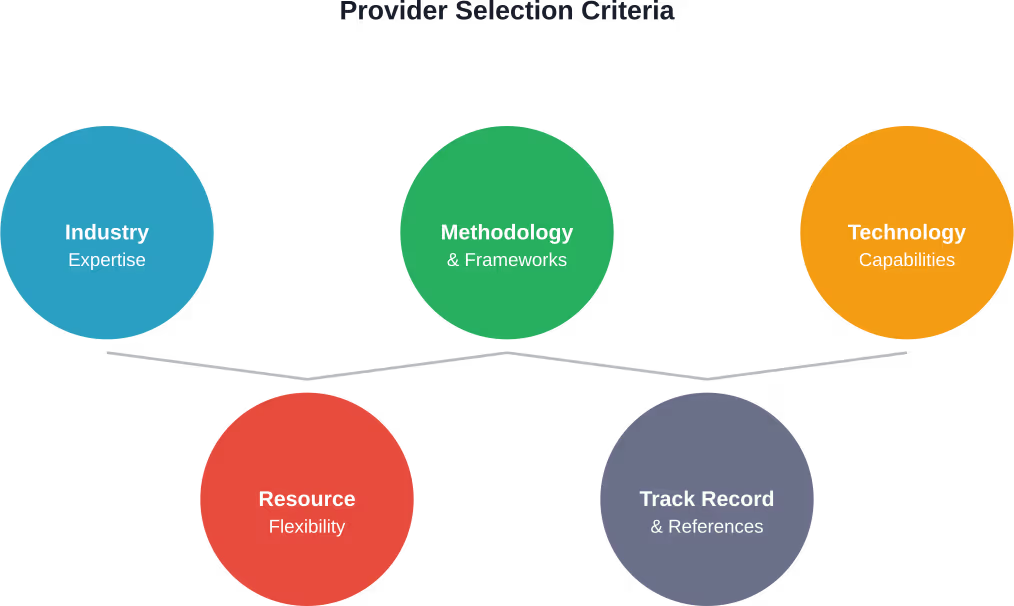
Look beyond brand recognition. Consider these factors:
- Industry expertise: Firms with sector-specific knowledge understand the unique risks, regulatory requirements, and operational challenges relevant to particular industries. Financial services, healthcare, retail, and manufacturing each have distinct audit considerations.
- Methodological approach: How does the firm structure audit planning? What frameworks do they use for risk assessment? How do they balance compliance testing with advisory insights? The Chartered Institute of Internal Auditors indicates that proven and contemporary methods drive results. Ask prospective providers to demonstrate their methodologies.
- Technology capabilities: What data analytics tools does the firm use? Can they integrate with existing systems? How do they handle data security and confidentiality?
- Resource flexibility: Can the firm scale engagement up or down based on changing needs? Do they offer both project-based and ongoing retainer arrangements?
Fix Internal Audit in London Hassle-Free

Internal audit often slows down when access to the right people and information becomes a bottleneck. Acumon is an ICAEW-registered audit firm based in West London, with regulatory authorisations including FRC approval for PIE audits and the ability to work across the UK, Jersey, and the Isle of Man. Internal audit sits alongside wider audit, risk, and assurance work, with direct access to senior audit professionals throughout the engagement.
Keep Internal Audit Moving and Under Control
Acumon supports organisations in London with:
- Direct access to senior and technical audit staff
- Ongoing communication through regular check-ins during the audit process
- Internal audit aligned with wider regulatory and reporting requirements
- Support for organisations operating across multiple jurisdictions
Contact Acumon and get your internal audit moving without delays.
Moving Forward With Internal Audit
Internal audit has evolved beyond compliance checking into strategic risk advisory. London's competitive market offers organisations access to world-class expertise, innovative methodologies, and technology-enabled approaches.
The right internal audit partner strengthens governance, provides assurance to stakeholders, and helps management identify and address risks before they materialise into problems.
Whether implementing a first-time audit function, supplementing existing capabilities, or seeking specialist expertise for complex risks, London's diverse provider landscape offers solutions tailored to specific organisational needs.
Start by clarifying objectives. What does the organisation need from internal audit? Risk assurance? Compliance verification? Operational improvement? Strategic insight?
Then evaluate providers against those specific requirements—not just their general reputation. The best internal audit partner aligns with organisational culture, understands industry-specific challenges, and delivers actionable insights that drive meaningful improvement.
Frequently Asked Questions
Internal audit serves management and the board, focusing on risk management, internal controls, and governance processes. External audit serves shareholders and regulators, providing independent opinion on financial statement accuracy. Internal audit has broader scope and ongoing engagement, whilst external audit focuses primarily on annual financial reporting.
Pricing varies significantly based on engagement scope, firm size, industry complexity, and delivery model. Organisations should request detailed proposals from multiple providers to compare value rather than just hourly rates. Check individual firm websites for current pricing structures.
Absolutely. Small businesses may not need full-time internal audit functions but often benefit from periodic reviews of key controls, risk assessments, or compliance checks. Many London firms offer scaled solutions appropriate for smaller organisations.
Professional qualifications signal competence and commitment. The Chartered Institute of Internal Auditors offers certifications including the Internal Audit Practitioner certification for entry-level professionals and the Certified Internal Auditor designation for experienced practitioners. ICAEW members can obtain the Audit Qualification after demonstrating sufficient supervised experience.
Frequency depends on risk levels, regulatory requirements, and organisational complexity. Most organisations operate annual audit plans covering different areas throughout the year. High-risk areas may receive more frequent attention, whilst lower-risk functions might be audited every two to three years.
Financial services face explicit regulatory requirements for internal audit. However, organisations across all sectors—healthcare, retail, manufacturing, technology, public sector—implement internal audit to strengthen governance and manage risk effectively, even when not legally mandated.
Artificial intelligence enhances data analysis capabilities, automates routine testing, and improves anomaly detection. Technology enables auditors to analyse complete data populations rather than samples, identifying patterns and outliers that manual reviews might miss. This shifts auditor focus toward interpretation, judgment, and advisory work.