
IFRS audit services ensure financial statements comply with International Financial Reporting Standards, now mandated in over 100 countries. These specialized audits provide reasonable assurance that companies accurately apply IFRS Accounting Standards, enabling investors to compare financial performance across international markets. Professional audit firms deliver IFRS compliance reviews, conversion support, and ongoing reporting guidance tailored to global business needs.
International Financial Reporting Standards have transformed global accounting. More than 140 countries now require IFRS Accounting Standards for all or most publicly accountable companies, according to the IFRS Foundation. That's created massive demand for specialized audit services that understand these complex standards.
But here's the thing—IFRS compliance isn't just about following rules. It's about presenting financial information that investors worldwide can trust and compare.
What IFRS Audit Services Actually Cover
IFRS audit services go beyond traditional financial statement audits. These specialized engagements focus on whether companies correctly apply international accounting standards across their operations.
Audit firms examine everything from revenue recognition under IFRS 15 to lease accounting under IFRS 16. They verify that financial statements present a true and fair view according to standards issued by the International Accounting Standards Board.
The International Auditing and Assurance Standards Board provides the audit framework. Their standards, including the ISA for Less Complex Entities effective for audits beginning on or after December 15, 2025 (in jurisdictions that adopt or permit its use), guide how auditors approach IFRS compliance reviews.
Core Service Components
Professional IFRS audit services typically include:
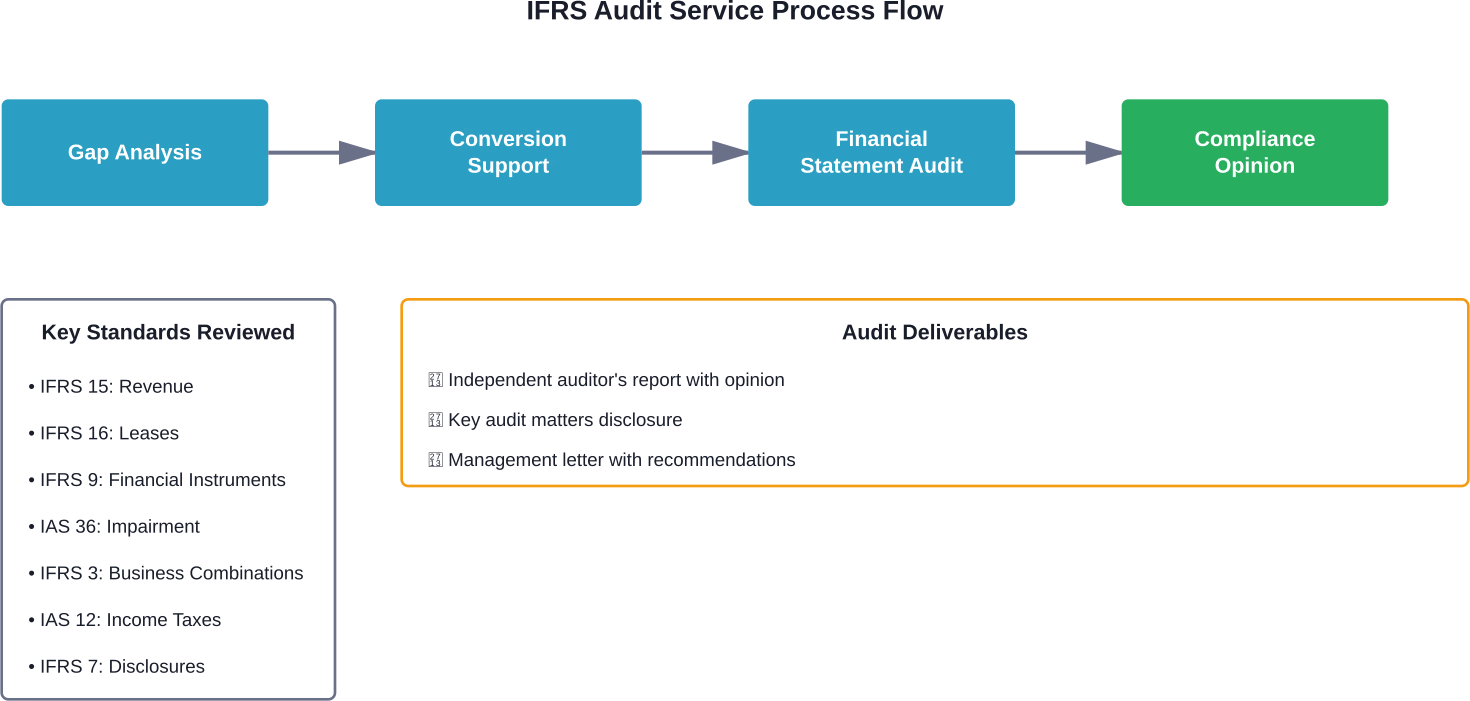
- Initial gap analysis comparing current accounting policies to IFRS requirements
- Conversion support for companies transitioning from local GAAP
- Annual financial statement audits under IFRS framework
- Compliance reviews for specific standards like IFRS 3 (business combinations) and IAS 36 (impairment)
- Key audit matter reporting as required by revised auditor reporting standards
Research on European compliance with IFRS 3 and IAS 36 found mean compliance levels of 73% (median: 75%), with only 12 of 357 sample companies providing all required disclosures. That gap demonstrates why specialized audit expertise matters.
Why Companies Need IFRS-Specific Audits
Local accounting standards differ significantly from IFRS. That creates challenges when companies expand internationally or seek foreign investment.
IFRS offers investors the ability to compare financial performance across borders. But that only works if companies actually comply with the standards—and auditors verify that compliance.
The transition to IFRS carries wider implications beyond just accounting mechanics. Organizations must consider system changes, training requirements, and potential impacts on debt covenants and compensation arrangements.
Regulatory Requirements
Many jurisdictions mandate IFRS audits for specific entity types. Public companies in European Union member states must use IFRS for consolidated financial statements. Other countries require IFRS for banks, insurance companies, or all publicly accountable entities.
The SEC accepts IFRS financial statements from foreign private issuers without reconciliation to US GAAP, provided they are prepared in accordance with IFRS as issued by the IASB. Since 2024, the SEC also requires specific climate-related disclosures that may overlap with or extend beyond standard IFRS requirements.
Selecting the Right IFRS Audit Partner
Not all audit firms possess deep IFRS expertise. Companies should evaluate several factors when choosing an audit partner.
| Evaluation Criteria | Why It Matters |
|---|---|
| IFRS technical expertise | Complex standards require specialized knowledge beyond general audit skills |
| Industry experience | IFRS application varies significantly across sectors like financial services, manufacturing, and retail |
| Global network | Multi-national operations need coordinated audit approaches across jurisdictions |
| Technology capabilities | Modern audits leverage data analytics and automation for efficiency |
| Regulatory relationships | Familiarity with local securities regulators smooths approval processes |
Firms with international networks can provide consistent IFRS interpretation across multiple countries. That matters for group audits under ISA 600 (Revised), which addresses component auditor coordination.

Run Cross-Border Audits With One Team
IFRS reporting usually comes up in international group structures, where audit work has to cover multiple entities and jurisdictions at once. Acumon is a UK-registered and ICAEW-registered audit firm providing statutory audit services for UK PLCs and limited companies, charities and international subsidiaries. The firm also holds audit licences in Jersey and the Isle of Man and supports group audit work across multiple jurisdictions.
Get Group Audit Support
Acumon provides:
- Statutory audits for UK entities and international subsidiaries
- Group audit support across multiple jurisdictions
- Audit work for regulated organisations and complex structures
- Experience with UK and international group structures
Contact Acumon to discuss your audit requirements for international structures.
Common IFRS Audit Challenges
Real talk: IFRS compliance isn't straightforward. Certain areas consistently create audit issues.
Fair value measurements under IFRS 13 require significant judgment. Auditors must evaluate management's valuation models, assumptions, and data sources. That becomes particularly complex for Level 3 inputs without observable market data.
Revenue recognition under IFRS 15 demands careful analysis of contract terms, performance obligations, and transaction prices. The standard's five-step model applies across industries but with vastly different practical implications.
Financial instruments under IFRS 9 challenge both preparers and auditors. The expected credit loss model for impairment requires forward-looking information and significant estimation.
Disclosure Compliance
IFRS standards mandate extensive disclosures. Research found substantial non-compliance with required disclosures for business combinations and impairment testing, with compliance rates around 73%.
Auditors must verify not just the accounting treatments but also the completeness and accuracy of note disclosures. That includes judgments, assumptions, and sensitivity analyses.
Looking Ahead: IFRS Developments in 2026
The IFRS Foundation continues developing standards. IIFRS 19 'Subsidiaries without Public Accountability: Disclosures', issued in May 2024, is effective for reporting periods beginning on or after 1 January 2027, with earlier application permitted.
Sustainability disclosure standards represent a major focus area. The International Sustainability Standards Board develops standards for climate-related and other ESG disclosures. These will eventually connect to financial statement audits.
Technology integration accelerates across audit processes. Data analytics, artificial intelligence, and continuous auditing capabilities transform how firms approach IFRS compliance reviews.
Making IFRS Compliance Work
IFRS audit services provide essential assurance for global financial reporting. As international standards continue evolving, specialized audit expertise becomes increasingly valuable.
Companies benefit most when they view IFRS audits as partnerships rather than compliance exercises. The right audit firm brings technical knowledge, industry insights, and practical guidance that strengthens financial reporting quality.
For organizations operating across borders or seeking international capital, IFRS compliance isn't optional—it's foundational. Professional audit services ensure that compliance translates into credible, comparable financial information that stakeholders can trust.
Ready to ensure your IFRS compliance? Connect with experienced audit professionals who understand international accounting standards and can guide your organization through complex reporting requirements.
Frequently Asked Questions
IFRS conversion timelines typically range from 12 to 24 months depending on company size and complexity. Organizations need time for gap analysis, policy development, system modifications, historical data restatement, and staff training. Companies should start planning at least two years before mandatory adoption.
Not universally. While over 140 countries require or permit IFRS, some major economies like the United States maintain separate standards for domestic companies. Japan allows IFRS for certain companies but doesn't mandate it. Companies operating internationally should verify requirements in each jurisdiction.
IFRS refers to accounting standards that dictate how companies prepare financial statements. ISA (International Standards on Auditing) refers to audit standards that guide how auditors examine those financial statements. IFRS comes from the IASB, while ISA comes from the IAASB—different organizations with different purposes.
Pricing varies significantly based on company size, complexity, number of entities, and geographic scope. First-year IFRS audits typically cost more than subsequent years due to conversion work. Contact audit firms directly for quotes specific to organizational circumstances.
Internal audit teams can support IFRS compliance through ongoing monitoring and control testing. However, external independent auditors must still provide the statutory audit opinion on financial statements. Internal and external auditors often coordinate their work for efficiency.
Auditors work with management to correct identified issues before finalizing financial statements. Material non-compliance that remains uncorrected results in qualified or adverse audit opinions. Such opinions can trigger regulatory scrutiny, investor concerns, and potential covenant breaches.
Requirements vary by jurisdiction. Many countries only mandate IFRS for publicly accountable entities. Private companies may voluntarily adopt IFRS to attract international investors or prepare for public offerings. Check local regulations and consider business objectives when deciding.