
Choosing the right tax investigation services company requires verifying professional credentials like CPA, EA, or attorney status, checking IRS representation rights, reviewing experience with similar tax issues, and confirming transparent pricing. The IRS requires all paid preparers to have a PTIN number, but credentials like Enrolled Agents and CPAs offer unlimited representation rights that basic preparers lack.
Tax investigations trigger immediate stress for most taxpayers. The stakes are high, the regulations complex, and one misstep can cost thousands in penalties.
But here's the thing—not all tax professionals can actually represent you before the IRS during an investigation. According to the IRS, while any tax professional with a preparer tax identification number (PTIN) can prepare federal tax returns, they have vastly different levels of skills, education, and crucially, representation rights.
Understanding these differences means the gap between a resolved case and a financial disaster. So how do you choose a qualified tax investigation services company?
Understanding Professional Credentials and Representation Rights
The IRS makes a critical distinction between tax professionals based on their credentials. This isn't just bureaucratic red tape—it directly impacts who can defend taxpayers during investigations.
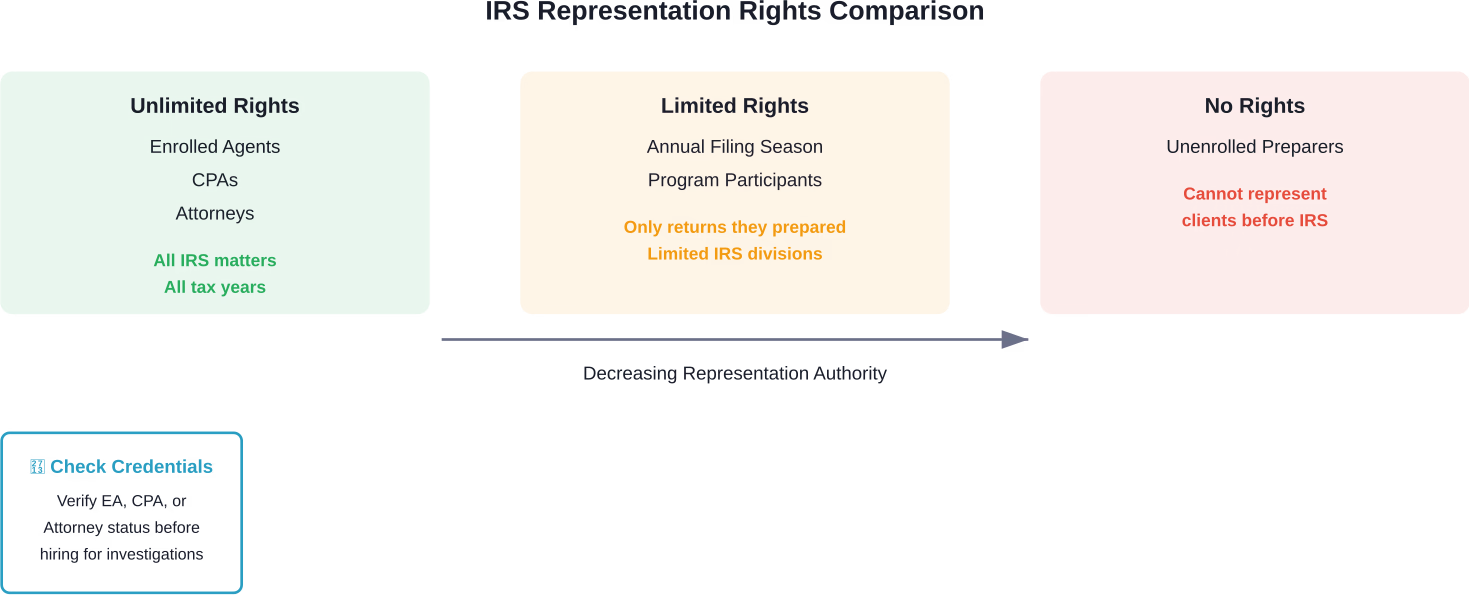
Three types of professionals have unlimited representation rights before the IRS: Enrolled Agents (EAs), Certified Public Accountants (CPAs), and attorneys. These credentials matter because they authorize professionals to represent taxpayers in all matters before the IRS, including audits, payment disputes, and appeals.
Enrolled Agents earn their credential by passing a comprehensive three-part Special Enrollment Examination demonstrating proficiency in federal tax planning, individual and business tax return preparation, and representation. After passing, they apply for enrollment using Form 23, with an application cost of $140, and must pass a suitability check, including a tax compliance check and background check.
Other preparers with PTINs can prepare returns, but their representation rights are limited. They can only represent clients whose returns they actually prepared, and only before certain IRS divisions.
Key Criteria for Selecting Tax Investigation Services
When facing a tax investigation, the selection criteria go beyond basic credentials. Experience with specific tax issues matters enormously.
Verify PTIN and Credentials
Every paid tax preparer must have a valid PTIN. But don't stop there. Request proof of EA, CPA, or attorney credentials. The IRS maintains a Directory of Federal Tax Return Preparers with Credentials and Select Qualifications that taxpayers can search.
Check credential status with the issuing organization. For Enrolled Agents, verify through the IRS Office of Enrollment or the Directory of Federal Tax Return Preparers with Credentials. For CPAs, contact the state board of accountancy.
Assess Specialized Experience
Tax investigations span diverse issues—unreported income, business deductions, international accounts, employment taxes. Find professionals with documented experience handling cases similar to yours.
Ask specific questions: How many cases like this have you handled? What were the outcomes? Which IRS divisions do you regularly work with?
Understand Fee Structures
Transparent pricing separates reputable firms from predatory ones. The Federal Trade Commission has taken action against tax preparation companies for deceptive practices, including misleading advertising about "free" services.
Legitimate tax investigation services typically charge hourly rates or flat fees based on case complexity. Be wary of firms demanding large upfront payments or guaranteeing specific outcomes—the IRS outcome depends on facts and law, not promises.
| Fee Structure | Typical Range | Best For | Warning Signs |
|---|---|---|---|
| Hourly Rate | Varies by credential | Complex investigations | No time estimates provided |
| Flat Fee | Based on case scope | Defined scope matters | Extremely low quotes |
| Retainer | Credited to services | Ongoing representation | Non-refundable retainers |
| Contingency | Percentage of savings | Offer in Compromise cases | Guaranteed results promised |
Red Flags to Avoid When Choosing Services
Some warning signs indicate firms that may cause more harm than help. The IRS explicitly warns taxpayers about choosing reputable preparers as vital to tax security.
Avoid services that guarantee refunds or specific settlement amounts before reviewing your case details. Tax outcomes depend on individual circumstances—no legitimate professional makes blanket guarantees.
Steer clear of preparers who base fees on refund percentages for standard returns. While contingency fees are acceptable for certain relief programs like Offer in Compromise, percentage-based fees for basic preparation signal potential problems.
Never sign a blank return. According to IRS requirements, preparers must sign returns and include their PTIN. If someone refuses to sign the return they prepared, walk away immediately.
Authorization and Communication Protocols
Once you select a tax investigation services company, proper authorization matters. The IRS recognizes different types of third-party authorizations, each with specific purposes and limitations.
Form 2848 (Power of Attorney) grants representation authority. Form 8821 (Tax Information Authorization) allows the IRS to disclose information to designated individuals but doesn't grant representation rights.
Taxpayers have the fundamental right to retain an authorized representative of their choice when dealing with the IRS. This right, outlined in the Taxpayer Bill of Rights, includes access to Low Income Taxpayer Clinics for those who cannot afford representation.
Questions to Ask Prospective Tax Professionals
The initial consultation reveals whether a tax professional truly understands investigation complexities. Ask these targeted questions:
- What are your credentials and representation rights? Don't settle for vague answers—get specific credential names and verification methods.
- How many cases similar to mine have you handled in the past two years? Recent experience matters more than decades-old cases under different tax codes.
- What's your typical communication schedule during an investigation? Knowing response times and update frequency prevents frustration later.
- Can you provide references from clients with similar tax issues? Reputable professionals should offer references, though client confidentiality may limit details.

Choose the Right Support for Tax Investigations Now
Not all tax advisors are equipped to handle tax investigations – these cases require experience with enquiries, disputes and working directly with tax authorities. Acumon provides tax investigation support and representation, working with individuals and businesses during tax enquiries, investigations and disputes.
Get Representation for Tax Investigations
Acumon helps clients with:
- Representation during tax enquiries and investigations
- Support in handling disputes with tax authorities
- Assistance throughout the investigation process
Contact Acumon to discuss your tax investigation case.
Making the Final Decision
Choosing tax investigation services comes down to balancing credentials, experience, communication, and cost. The professional handling your case needs both technical expertise and practical experience navigating IRS procedures.
Remember that taxpayers remain ultimately responsible for the accuracy of their returns, even when using professional help. The IRS states that although preparers sign returns, taxpayers are accountable for every item reported.
Take time to verify credentials through official channels. Check references. Review fee agreements carefully. The effort invested in selecting qualified representation pays dividends when facing serious tax matters.
Tax investigations carry real financial consequences. The right professional makes the difference between successful resolution and costly penalties. Choose wisely, verify thoroughly, and insist on transparent communication throughout the process.
FAQs
Look for Enrolled Agents, CPAs, or attorneys—these three credentials provide unlimited representation rights before the IRS. According to the IRS, these professionals can represent taxpayers in all matters including audits, payment disputes, and appeals, unlike preparers with only a PTIN who have limited or no representation rights.
For Enrolled Agents, verify through the IRS Office of Enrollment or the Directory of Federal Tax Return Preparers with Credentials. For CPAs, contact your state board of accountancy. For attorneys, check your state bar association.
Legitimate services typically charge hourly rates, flat fees based on case complexity, or retainers. Contingency fees are acceptable for specific programs like Offer in Compromise. Avoid firms demanding large upfront non-refundable payments or those basing fees on refund percentages for standard preparation.
No. While any professional with a PTIN can prepare tax returns, only Enrolled Agents, CPAs, and attorneys have unlimited representation rights. Other preparers have either limited rights (only for returns they prepared) or no representation rights at all, according to IRS guidance.
Warning signs include guaranteed outcomes before reviewing case details, refusal to sign prepared returns, extremely low fees compared to competitors, percentage-based fees for basic returns, large non-refundable upfront payments, and lack of verifiable credentials or PTIN.
Not necessarily. Enrolled Agents, CPAs, and attorneys can handle both audits and collection matters. However, some professionals specialize in specific areas. Ask about experience with your particular issue—audit defense requires different expertise than negotiating installment agreements or Offers in Compromise.
Bring all IRS correspondence, copies of relevant tax returns, documentation supporting disputed items, records of previous communications with the IRS, and any notices about deadlines. This allows the professional to assess case complexity and provide accurate fee estimates.