
Choosing the right statutory compliance services company requires evaluating expertise in your industry, scalability, technology integration, regulatory monitoring capabilities, and transparent pricing. The best providers combine deep regulatory knowledge with practical implementation support, proactive compliance tracking, and responsive communication to protect your business from penalties while enabling growth.
Navigating regulatory requirements has become increasingly complex for businesses of all sizes. According to PwC's Global Risk Survey 2023, 40% of organisations reported strengthening their compliance strategies in response to increasing regulatory demands. Yet many still struggle with inconsistent processes and fragmented oversight.
The stakes are high. Non-compliance costs frequently exceed $14 million when accounting for fines, legal fees, and reputational damage. But here's the thing—selecting the right compliance partner isn't just about avoiding penalties. It's about finding a strategic ally that removes roadblocks and enables sustainable growth.
This guide breaks down exactly what to evaluate when choosing a statutory compliance services company.
Why the Right Compliance Partner Actually Matters
Real talk: most businesses underestimate compliance complexity until they're facing penalties.
The regulatory landscape spans financial reporting, data protection, employment law, environmental standards, and industry-specific requirements. For companies operating globally, this complexity multiplies. Each jurisdiction brings unique rules, reporting timelines, and enforcement mechanisms.
The right compliance provider does more than check boxes. They integrate centralized oversight with deep local expertise, translate regulatory language into actionable steps, and adapt as regulations evolve.
According to the Securities and Exchange Commission, compliance programs must be reasonably designed to prevent violations. Records must be retained for at least five years (per Rule 38a-1). This baseline establishes the minimum threshold—effective partners exceed it.
Core Capabilities to Evaluate
Industry-Specific Expertise
Generic compliance knowledge won't cut it.
Financial services face SEC regulations and fiduciary standards under the Investment Advisers Act. Healthcare organizations navigate HIPAA requirements. Technology companies handling data must address GDPR, CCPA, and emerging privacy laws. Defense contractors require CMMC certification—with Level 2 assessments demanding extensive validation of security controls.
Ask prospective providers about their experience in your sector. Request case studies demonstrating successful compliance implementation for similar organizations. The specifics matter more than broad claims.
Regulatory Monitoring and Updates
Regulations don't stay static.
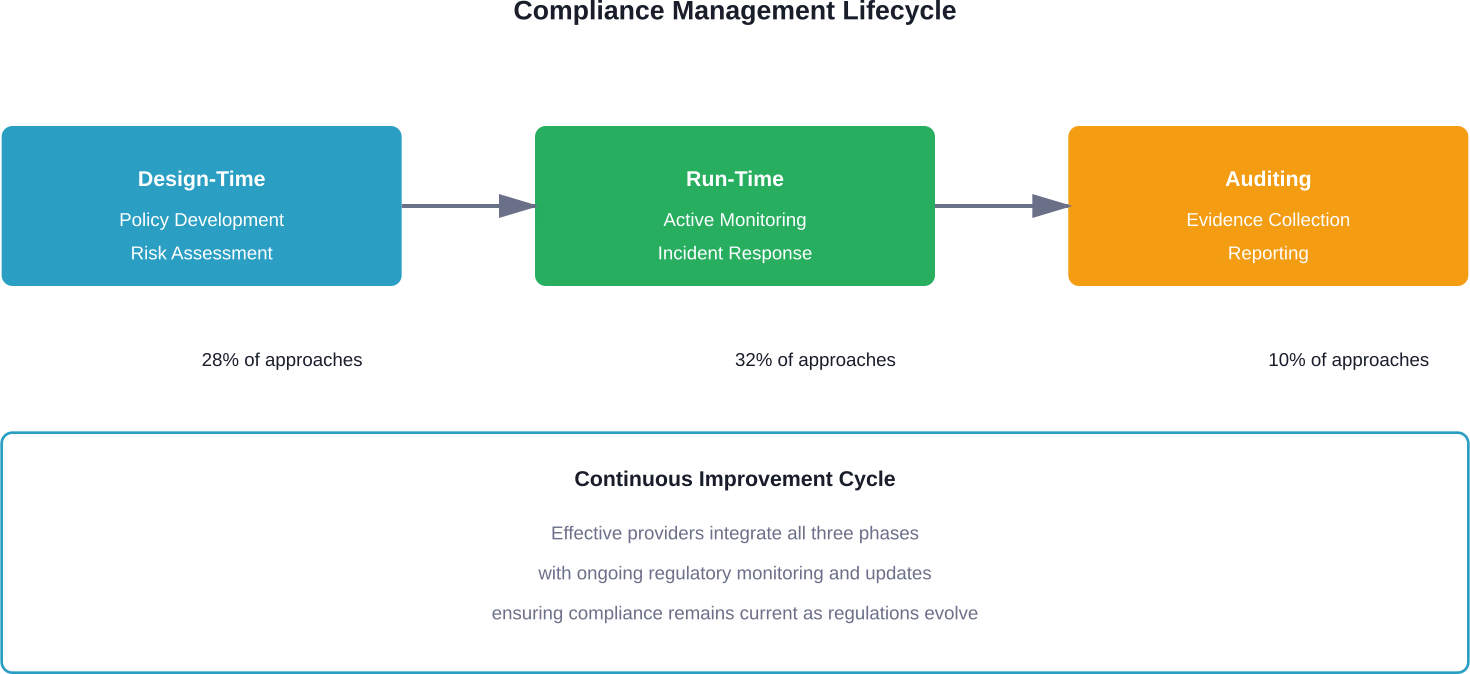
According to research analyzing compliance management approaches between 2000-2015, organizations focus on three categories: design-time compliance (28%), run-time monitoring (32%), and auditing (10%). The most effective providers cover all three phases.
A quality partner maintains active monitoring systems that track regulatory changes, assess impact on client operations, and communicate updates proactively. They shouldn't wait until audit season to flag new requirements.
Technology and Integration Capabilities
Manual spreadsheet tracking doesn't scale.
Modern compliance requires integrated technology platforms that centralize documentation, automate deadline tracking, and generate audit trails. The system should integrate with existing business tools rather than creating another data silo.
But wait. Technology alone isn't the answer. The platform is only as effective as the expertise behind it. Look for providers that combine robust software with experienced compliance professionals who interpret data and provide strategic guidance.
Critical Questions to Ask Prospective Providers
Service Scope and Deliverables
What exactly is included?
Some providers offer comprehensive packages covering policy development, training, monitoring, and audit support. Others focus narrowly on specific compliance areas. Neither approach is inherently wrong—alignment with business needs determines fit.
Request detailed service descriptions. Clarify what constitutes standard service versus additional fees. Understand response times for questions and support requests.
Global vs. Local Expertise
For companies operating across jurisdictions, this question is critical.
The ideal partner integrates centralized compliance oversight with deep understanding of local regulations. They should maintain networks of local experts who understand regional nuances while providing unified reporting and strategy.
Ask how they handle multi-jurisdictional compliance. Request examples of how they've managed conflicting requirements across different regions.
Scalability and Flexibility
Business needs evolve. Compliance support should too.
The provider should accommodate growth—whether that means expanding into new markets, adding employees, or launching new product lines. Service agreements should allow for scaling without requiring complete renegotiation.
Discuss how they've supported other clients through growth phases. Understanding their approach to change management reveals flexibility.
| Evaluation Criteria | What to Look For | Red Flags |
|---|---|---|
| Industry Expertise | Specific sector case studies, relevant certifications, regulatory knowledge depth | Generic claims, no verifiable experience, inability to discuss sector nuances |
| Technology Platform | Integrated systems, automation capabilities, user-friendly interfaces, API availability | Manual processes, disconnected tools, outdated interfaces, no integration options |
| Communication | Defined response times, dedicated contacts, proactive updates, clear escalation paths | Slow responses, rotating contacts, reactive-only approach, unclear processes |
| Pricing Structure | Transparent fees, clear scope definitions, predictable costs, value alignment | Hidden fees, vague scoping, unpredictable charges, poor value explanation |
Data Protection and Security Standards
Compliance providers handle sensitive business information.
Evaluate their data security practices rigorously. They should maintain certifications like SOC 2, ISO 27001, or industry-specific standards. Ask about data encryption, access controls, and incident response procedures.
The Federal Trade Commission has taken action against organizations for inadequate data protection. In May 2023, the FTC took action against ed tech provider Edmodo for unlawfully using children's personal information for advertising and outsourcing compliance. Providers must demonstrate commitment to protecting information entrusted to them.
Don't assume security. Verify it.
Training and Change Management Support
Compliance isn't just about policies. It requires organizational buy-in.
Effective providers offer training programs that make compliance requirements understandable and actionable for employees. They should customize training to different roles and departments rather than delivering generic presentations.
According to ISACA's certification requirements, professionals maintaining CRISC credentials must earn a minimum of 20 CPE credits annually and a total of 120 CPE credits over a 3-year period. This standard reflects the ongoing learning necessary for compliance expertise—providers should demonstrate similar commitment to keeping their teams current.
Implementation Methodology
How do they actually get you compliant?
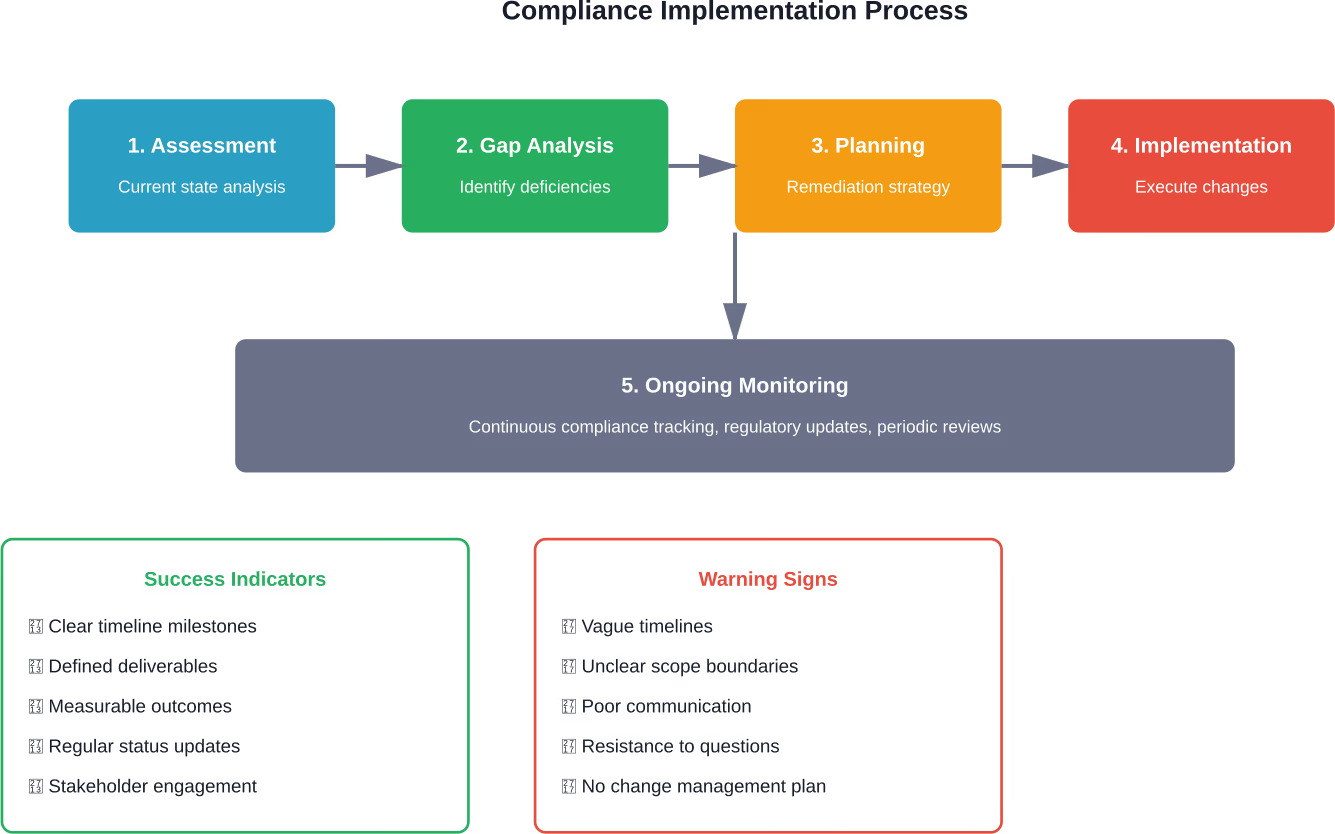
The implementation process reveals provider quality. Strong partners follow structured methodologies: initial assessment, gap analysis, remediation planning, implementation, and ongoing monitoring.
They should provide clear timelines, defined milestones, and measurable outcomes. Ask about their typical implementation duration and what factors might extend timelines.
Pricing Models and Cost Transparency
Compliance services use various pricing structures.
Some charge fixed monthly fees. Others bill hourly for services rendered. Many offer tiered packages with different service levels. Each model has advantages depending on business needs and compliance complexity.
The critical factor is transparency. Providers should clearly explain what's included at each price point, how additional services are billed, and what might trigger cost increases.
ISACA CCP and CCA certification exams cost $575.00 for members, with CRISC annual maintenance fees of $45 for members versus $85 for non-members. This transparent pricing model—while specific to professional certification—illustrates the importance of understanding both initial and ongoing costs.
Ask for detailed pricing breakdowns. Request examples of typical client costs based on company size and industry.
Communication Style and Accessibility
Here's what often gets overlooked: relationship dynamics matter.
Compliance work requires ongoing collaboration. The provider's communication style should match organizational preferences. Some businesses want detailed weekly reports. Others prefer quarterly strategic reviews with as-needed support in between.
During the evaluation process, notice response times to inquiries. Assess whether explanations are clear or filled with unnecessary jargon. Consider whether the team seems genuinely interested in understanding business needs or focused primarily on selling services.
The Securities and Exchange Commission notes that compliance programs should be reasonably designed and effectively implemented. The same principle applies to provider relationships—they should be designed around actual communication needs, not theoretical best practices.
References and Track Record Verification
Don't just take marketing claims at face value.
Request client references from similar industries and company sizes. Ask about their experience working with the provider, challenges encountered, and how those were resolved. Inquire about the relationship duration—long-term clients signal provider quality.
Check for regulatory actions or complaints. Search for the company name alongside terms like "penalty," "violation," or "settlement." A provider with compliance issues undermines credibility regardless of their expertise claims.
Community discussions reveal real user experiences that polished case studies might omit. While not definitive, patterns in feedback—positive or negative—provide valuable context.
Red Flags That Should Pause Decisions
Some warning signs demand attention:
- Guarantees of zero compliance risk—no one can promise that
- Reluctance to provide references or detailed service descriptions
- Pressure to sign long-term contracts without trial periods
- Technology platforms that seem outdated or difficult to navigate
- Staff turnover that suggests internal instability
- Inability to explain how they stay current with regulatory changes
- Generic proposals lacking business-specific analysis
These don't necessarily disqualify a provider. But they warrant deeper investigation before proceeding.
Making the Final Decision
Now, this is where it gets interesting.
After evaluating capabilities, asking questions, and checking references, decision-makers often face multiple qualified providers. At this stage, trust becomes a differentiator.
Which team demonstrated the deepest understanding of business challenges? Who provided most substantive answers rather than sales rhetoric? Which technology platform felt most intuitive? What pricing model aligned best with budget predictability needs?
Consider starting with a limited engagement—perhaps addressing one compliance area or supporting a specific project. This trial period reveals how the provider actually works before committing to comprehensive services.
The right compliance partner becomes an extension of the team. They should feel collaborative rather than transactional.

Get Statutory Compliance Support Now
Statutory compliance involves meeting ongoing legal and reporting obligations, from filings and record-keeping to governance and financial oversight. Acumon provides compliance support across audit, accounts and company secretarial services, helping organisations meet regulatory and reporting requirements.
Handle Filings, Reporting and Compliance Properly
Acumon supports organisations with:
- Statutory audit and financial reporting
- Company secretarial services, including filings and compliance
- Preparation of accounts and management reporting
Contact Acumon to discuss your statutory compliance requirements.
Moving Forward with Confidence
Choosing a statutory compliance services company represents a significant business decision with lasting implications.
The selection process requires balancing technical expertise, cultural fit, scalability, and cost considerations. There's no universal "best" provider—only the right match for specific business needs, industry requirements, and growth objectives.
Start by clarifying compliance scope and priorities. Identify must-have capabilities versus nice-to-have features. Engage multiple providers in substantive conversations that go beyond sales presentations. Check references thoroughly. Test technology platforms hands-on when possible.
The investment in careful evaluation pays dividends through reduced regulatory risk, streamlined operations, and strategic compliance management that supports rather than hinders business objectives.
Take time to choose wisely. The right partner transforms compliance from a burden into a competitive advantage.
Frequently Asked Questions
Compliance software provides tools for tracking requirements, managing documentation, and generating reports. Compliance services include human expertise—professionals who interpret regulations, develop policies, provide training, and offer strategic guidance. Many providers combine both technology platforms and expert support for comprehensive solutions.
Implementation timelines vary based on current compliance maturity, industry complexity, and scope. Initial assessments usually take 2-4 weeks. Gap remediation might require 3-6 months for straightforward situations or 12+ months for complex multi-jurisdictional compliance. Ongoing monitoring is continuous rather than time-limited.
This depends on regulatory complexity, internal expertise, and growth trajectory. Businesses in highly regulated industries typically benefit from external expertise regardless of size. Companies with dedicated compliance professionals might only need supplemental support. Fast-growing organizations often lack internal capacity to keep pace with expanding requirements, making external services valuable.
Relevant credentials vary by industry. Financial services compliance often requires securities licenses or specialized certifications. Healthcare compliance professionals might hold Certified in Healthcare Compliance (CHC) credentials. IT compliance specialists may pursue CRISC or CMMC certifications. Industry experience and regulatory knowledge often matter more than specific credentials.
According to SEC guidance, investment companies must review compliance programs at least annually. Most industries benefit from similar annual comprehensive reviews, supplemented by ongoing monitoring. Major business changes—acquisitions, new products, market expansion—should trigger immediate compliance assessments regardless of annual schedule.
No legitimate provider can guarantee approval from regulatory bodies. They can design programs that meet published requirements and follow industry best practices, significantly increasing approval likelihood. But regulatory decisions involve judgment and discretion that external providers cannot control. Be cautious of guarantees that seem unrealistic.
Review provider contracts for professional liability coverage and error-and-omission insurance. Understand limitation of liability clauses. While providers should carry insurance for mistakes, ultimate regulatory responsibility remains with the business. This underscores the importance of choosing experienced, reputable providers with strong track records.