
Choosing the right self-assessment tax return services company requires verifying credentials like PTIN and professional certifications, comparing service offerings and pricing transparency, checking reviews and complaint history, and ensuring the provider signs your return. Look for firms offering year-round support, industry-specific expertise, and secure data handling practices.
Tax season brings stress for millions. Finding someone trustworthy to handle self-assessment tax returns shouldn't add to that burden.
But here's the challenge: the tax preparation industry is crowded. Some providers deliver exceptional service. Others leave clients with errors, unexpected fees, or worse—regulatory headaches.
According to the IRS, paid tax return preparers are primarily responsible for the overall substantive accuracy of returns. That said, taxpayers remain ultimately accountable for what gets filed. This dual responsibility makes choosing wisely absolutely critical.
The Federal Trade Commission has taken enforcement action against major tax preparation companies for deceptive practices, including H&R Block's $7 million settlement in 2025 for unfairly deleting consumer data and misleading "free" filing claims. These cases highlight why due diligence matters.
Understanding Tax Return Preparer Credentials
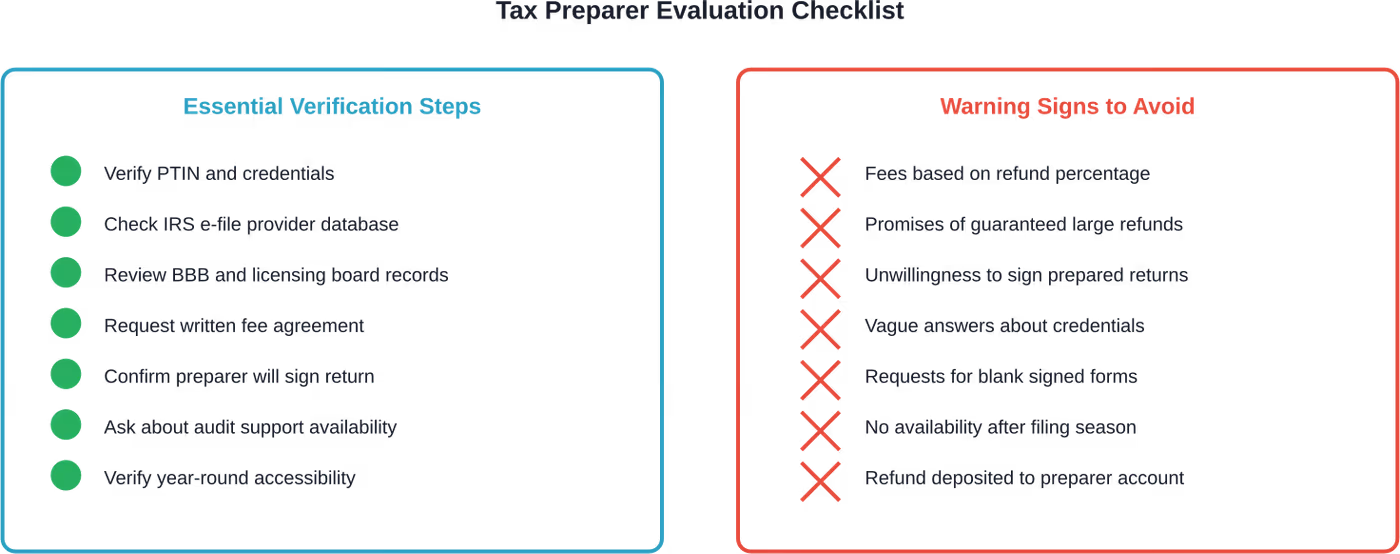
Not all tax preparers have equal qualifications. The IRS requires paid preparers to obtain a Preparer Tax Identification Number (PTIN) and sign every return they prepare.
However, PTIN registration alone doesn't indicate expertise. It's the baseline requirement—not a quality seal.
Professional Certifications That Matter
Several credentials signal advanced training:
- Certified Public Accountant (CPA): Licensed by state boards, CPAs complete rigorous exams and continuing education
- Enrolled Agent (EA): Federally authorized tax practitioners with unlimited representation rights before the IRS
- Tax Attorney: Licensed lawyers specializing in tax law, ideal for complex legal situations
- Annual Filing Season Program Participant: Non-credentialed preparers who complete voluntary IRS education
The credential level needed depends on tax situation complexity. Simple W-2 returns differ vastly from self-employment income, rental properties, or multi-state filings.
Verifying Credentials Before Hiring
The IRS provides an online directory of authorized e-file providers. This database allows verification by ZIP code or state.
For CPAs, check state board licensing databases. Enrolled Agents can be verified through the IRS Tax Pro Account system. These steps take minutes but prevent costly mistakes.
Evaluating Service Offerings and Specialization
Generic tax preparation works for straightforward situations. Complexity demands specialization.
Self-employed individuals need preparers familiar with Schedule C deductions. Rental property owners require depreciation expertise. Multi-state workers face unique filing requirements.
Questions to Ask About Expertise
During initial consultations, ask specific questions:
- How many returns similar to mine have you prepared?
- What continuing education courses have you completed recently?
- Do you handle IRS audits and correspondence?
- What's your experience with my industry or situation?
- Will you represent me if the IRS has questions?
Vague answers signal limited experience. Detailed responses demonstrate real competence.
Year-Round Availability Matters
Tax issues don't occur only during filing season. IRS notices arrive year-round. Major financial decisions need tax consultation throughout the year.
Seasonal-only preparers disappear after April. Full-service firms maintain accessibility. This distinction becomes critical when problems arise.
Understanding Pricing and Fee Structures
The FTC's actions against tax preparation companies revealed deceptive "free" filing claims. Many advertised services weren't actually free for most taxpayers.
According to IRS guidance, legitimate providers should clearly explain their fees upfront. Red flags include:
- Fees based on refund amounts
- Promises of larger refunds than competitors
- Reluctance to provide written fee agreements
- Hidden charges that appear after work begins
| Pricing Model | How It Works | Best For | Watch Out For |
|---|---|---|---|
| Flat Fee | Fixed price per return type | Predictable situations | Extra charges for forms |
| Hourly Rate | Billed by time spent | Complex or unusual cases | Unclear time estimates |
| Percentage of Refund | Fee tied to refund amount | Never recommended | Unethical incentive structure |
| Tiered Packages | Service levels with set features | Choosing service depth | Forced upgrades mid-process |
Transparent pricing demonstrates professionalism. Request detailed written estimates before engagement.
Checking Reputation and Complaint History
Past performance indicates future reliability. Multiple verification sources provide fuller pictures.
Where to Research Tax Preparers
The Better Business Bureau tracks complaint patterns. State licensing boards maintain disciplinary records for CPAs. The IRS Office of Professional Responsibility handles ethical violations.
Community discussions often reveal service quality issues not visible in official records. Patterns matter more than isolated complaints—every business occasionally has dissatisfied clients.
But consistent themes around billing disputes, missed deadlines, or communication failures warrant serious concern.
Professional Standards and Ethics
The American Institute of CPAs maintains Statements on Standards for Tax Services. These enforceable standards apply to all AICPA members providing tax services.
Preparers should explain their ethical obligations clearly. This includes confidentiality protections, accuracy standards, and when they'll advise against aggressive positions.
Data Security and Privacy Protections
Tax returns contain sensitive personal information. Social Security numbers, income details, bank accounts—everything identity thieves want.
The FTC has warned tax preparation companies about misusing consumer data collected during tax preparation for unrelated purposes. Five firms received warnings about potential civil penalties for improper data handling.
Security Questions to Ask
Reputable firms implement robust protections:
- How is client data encrypted during transmission and storage?
- Who has access to client information internally?
- What's the data retention and destruction policy?
- Has the firm experienced any data breaches?
- What cybersecurity insurance coverage exists?
Preparers should provide clear, specific answers. Hesitation or dismissiveness suggests inadequate protections.
Communication Style and Accessibility
Tax preparation involves detailed information exchange. Communication breakdowns create errors.
Some prefer in-person meetings. Others want virtual options. The best fit depends on personal preferences and complexity.
Response time matters significantly. Questions during preparation shouldn't wait days for answers. Post-filing questions need timely responses.
Assessing Client Service Quality
Initial interactions reveal much about ongoing relationships. How quickly do they return calls? Do they explain concepts clearly? Are they patient with questions?
The Consumer Financial Protection Bureau recommends choosing reputable tax preparers who file accurate returns, as mistakes could result in delayed refunds.
Free Filing Options Worth Considering
Not everyone needs paid services. Many taxpayers can prepare and file their federal tax returns for free using the IRS Free File.
This public-private partnership with the Free File Alliance provides access to leading tax software at no cost for eligible filers. Specifically, taxpayers with income of $89,000 or less can use guided tax preparation software at no cost.
Additional free options include:
- Volunteer Income Tax Assistance (VITA): VITA (Volunteer Income Tax Assistance) is generally for people who make $69,000 or less, persons with disabilities, and limited English speakers
- Tax Counseling for the Elderly (TCE): Prioritizes taxpayers aged 60 and older, specializing in pension and retirement issues
- IRS Free File Fillable Forms: Electronic versions of IRS paper forms for any income level
These programs work well for straightforward tax situations. Complex scenarios typically justify professional assistance.
Making the Final Decision
After researching credentials, checking reviews, comparing fees, and assessing communication, trust instincts alongside facts.
The right preparer relationship often lasts years. Short-term cost savings mean little if errors trigger audits or missed deductions cost more long-term.
Schedule consultations with top candidates. Most preparers offer brief initial meetings to discuss needs and approach.
During these conversations, evaluate both technical competence and personal compatibility. Tax preparation involves sharing financial details—comfort with the preparer matters.

File Your Self Assessment Without Errors
Self-assessment tax returns often involve multiple income sources, reliefs and reporting requirements, where missing details can lead to errors or penalties. Acumon provides end-to-end personal tax return preparation, covering information gathering, accurate preparation and submission, with support for individuals with employment, self-employment, property and investment income.
Avoid Missed Reliefs and Filing Issues
Acumon’s tax return service includes:
- Full preparation and submission of personal tax returns
- Review of income from employment, self-employment, property and investments
- Calculation of tax liabilities using current rates and allowances
- Claiming available tax reliefs and allowances
- Support with HMRC compliance and submissions
Speak with Acumon to get your tax return prepared and submitted correctly.
Conclusion
Choosing self-assessment tax return services requires thorough research, careful credential verification, and honest assessment of needs.
The investment in finding the right preparer pays dividends through accurate returns, maximized deductions, audit support, and peace of mind. Rushed decisions based solely on price often cost more in the long run.
Start the selection process well before deadlines. Use the IRS provider directory, verify credentials through official channels, compare fee structures transparently, and trust both data and instincts.
Whether choosing a credentialed professional or qualifying for free services, informed decisions protect financial interests and ensure compliance with tax obligations.
Frequently Asked Questions
All paid preparers must have a valid Preparer Tax Identification Number (PTIN) issued by the IRS and must sign the returns they prepare. Beyond this baseline, look for professional certifications like CPA, Enrolled Agent, or tax attorney credentials depending on the complexity of your tax situation.
Use the IRS's online directory of authorized e-file providers to verify PTIN status. For CPAs, check your state board of accountancy's licensing database. Enrolled Agents can be verified through the IRS Tax Pro Account system. These official databases confirm active, valid credentials.
Yes, this is a significant warning sign. Ethical preparers charge based on the complexity of the return, not the refund amount. Percentage-based fees create improper incentives to inflate refunds through questionable deductions, potentially exposing clients to audit risk and penalties.
Absolutely. IRS notices and tax questions arise throughout the year, not just during filing season. Year-round availability indicates a professional practice rather than a seasonal operation. This accessibility becomes critical if the IRS audits your return or sends correspondence requiring response.
The IRS Free File program provides free online tax software for many taxpayers to prepare and file their federal tax returns for free using IRS Free File. Specifically, taxpayers with income of $89,000 or less can use guided tax preparation software at no cost. VITA (Volunteer Income Tax Assistance) is generally for people who make $69,000 or less, persons with disabilities, and limited English speakers. TCE (Tax Counseling for the Elderly) focuses on taxpayers aged 60 and older.
By law, paid preparers must sign returns they prepare for compensation and include their PTIN. If a preparer refuses to sign, this indicates potential fraud or ghost preparer schemes. Never work with a preparer who won't sign returns—it's both illegal and suggests the return may contain questionable positions.
Check the Better Business Bureau for complaint patterns, your state attorney general's consumer protection division, and state licensing boards for credentialed preparers. The IRS Office of Professional Responsibility handles ethical violations. Multiple sources provide a more complete picture than any single database.