
Quick Summary: Choosing the right probate administration services company requires evaluating their experience with estate settlement, understanding their fee structure, verifying state-specific legal expertise, and assessing their communication style during a difficult time. The best providers guide families through court proceedings, debt settlement, and asset distribution while minimizing delays and reducing stress for grieving families.
When someone passes away, their estate doesn't just automatically transfer to heirs. There's a legal process involved—probate administration—that settles debts, validates the will, and distributes assets according to state law.
For families already dealing with grief, navigating this process feels overwhelming. That's where probate administration services come in. But not all providers offer the same level of expertise or care.
Here's what matters when choosing the right company to handle estate settlement.
Understanding What Probate Administration Actually Involves
Probate is the legal process of transferring a deceased person's property to heirs and resolving outstanding debts. According to the IRS, one of the probate court's first actions is to appoint an estate administrator—the legal representative of the deceased. This person carries significant responsibilities.
When a will exists, the process follows the document's instructions. When someone dies without a will (intestate), state law determines how assets get distributed. This distinction affects the entire administration timeline and complexity.
The estate administrator handles everything from filing court documents to paying creditors. They inventory assets, notify beneficiaries, settle tax obligations, and eventually distribute what remains to heirs. It's detailed work that requires both legal knowledge and organizational discipline.

Experience and Specialization Matter
Not all attorneys handle probate cases regularly. Estate law involves specific procedural knowledge that general practitioners might lack.
Look for firms that list probate administration as a primary service. Check how long they've practiced in this area specifically. A firm with decades of business law experience but minimal probate work won't navigate the process as smoothly as one focused on estate settlement.
State-specific knowledge is critical, too. Probate laws vary significantly between jurisdictions. A probate attorney familiar with local court procedures, filing requirements, and judges will resolve matters faster than someone learning the ropes.
Ask potential providers about their caseload. How many estates do they administer annually? What's the typical complexity—small estates or multi-million-dollar portfolios with business interests? Match their experience to the estate's needs.
Fee Structures and Transparency
Probate administration costs come in several forms: court fees, attorney fees, and sometimes executor compensation. Understanding how a firm charges prevents unpleasant surprises later.
Some attorneys charge hourly rates, others use flat fees for straightforward estates, and some states allow percentage-based fees tied to the estate's value. Each approach has trade-offs.
| Fee Structure | How It Works | Best For |
|---|---|---|
| Hourly Rate | Billed for actual time spent (varies by attorney and jurisdiction) | Complex estates with unpredictable issues |
| Flat Fee | Single predetermined amount for the entire process | Straightforward estates with clear asset lists |
| Percentage-Based | Percentage-based fees tied to estate value | Jurisdictions where this is standard practice |
Reputable firms explain their fee structure upfront and provide written estimates. They'll outline what services the fee covers and what might trigger additional charges. If a provider hesitates to discuss costs clearly, that's a warning sign.
The Federal Trade Commission notes that creditors can contact relatives about a deceased person's debts, but family members typically aren't personally liable unless they co-signed. A good probate administrator protects heirs from improper debt collection while ensuring legitimate creditors get paid according to priority rules.
Communication Style During a Difficult Time
Here's something that doesn't show up in credentials but matters immensely: how the firm treats grieving families.
Probate drags out for months, sometimes over a year. Families need regular updates without having to chase down their attorney. They need explanations in plain language, not legal jargon that obscures rather than clarifies.
During initial consultations, notice how the attorney listens. Do they rush through your questions? Do they interrupt or speak condescendingly? Or do they take time to understand the family dynamics and specific concerns?
Compassionate guidance matters. Stricker Law Firm, for instance, emphasizes providing "compassionate probate administration" that guides families "through every step with clarity and care." That approach reflects an understanding that estate settlement isn't just paperwork—it's deeply personal.
Support Services and Resources
The best probate administration companies don't just file court documents. They offer comprehensive support that addresses the full scope of estate settlement.
This might include coordinating with accountants for tax filings, working with appraisers to value property, connecting families with real estate professionals to sell inherited homes, or advising on retirement account beneficiary issues.
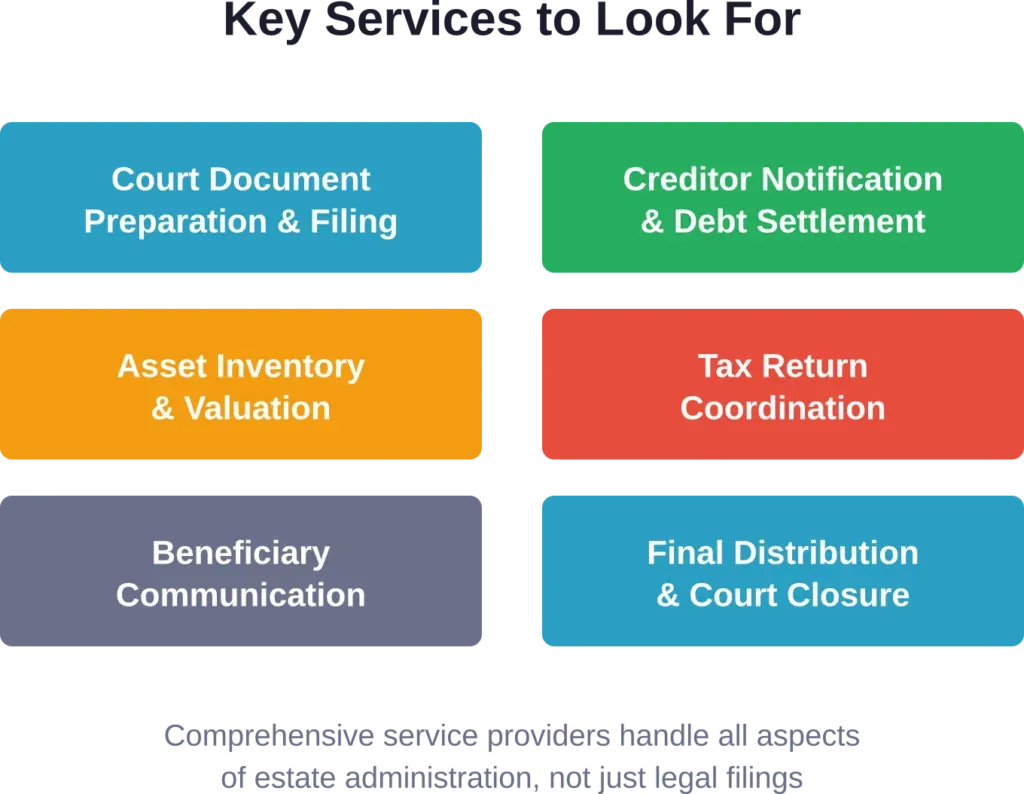
Some firms maintain networks of trusted professionals—CPAs, financial advisors, property managers—who understand estate work. These connections streamline the process and prevent families from scrambling to find specialists on their own.
Ask whether the firm assists with executor duties or just provides legal advice. There's a difference between an attorney who tells the executor what needs doing and one who actively helps complete those tasks.
Red Flags to Watch For
Certain warning signs indicate a provider might not serve the estate's best interests.
Pushy sales tactics are a major concern. Probate administration is a professional service, not a product to be aggressively marketed. Firms that pressure families into quick decisions or disparage other providers often prioritize their bottom line over client needs.
Vague answers about experience, credentials, or processes suggest the firm lacks the necessary expertise. Reputable attorneys answer questions directly and don't hide behind legal jargon.
Poor online reviews mentioning communication failures, unexpected fees, or prolonged timelines deserve attention. One negative review might be an outlier, but patterns across multiple reviews reveal systemic problems.
Finally, firms that don't carry proper malpractice insurance expose families to risk. Always verify coverage.
Questions to Ask During Consultations
Most probate attorneys offer initial consultations, often at no charge. Use this time to gather information and assess fit:
- Start with experience: How many years have they practiced probate law specifically? What percentage of their practice focuses on estate administration? Have they handled estates similar in size and complexity to this one?
- Move to logistics: What's the estimated timeline for this estate? What documents will be needed immediately? How often will the firm provide updates? Who will handle day-to-day questions—the attorney directly or a paralegal?
- Address costs head-on: What's the fee structure? What's included? Are there potential additional expenses? How does billing work if complications arise?
- Finally, ask about their approach: How do they prioritize efficiency while ensuring thoroughness? What strategies do they use to minimize family conflict? How do they handle disputes with creditors or beneficiaries?
When Timeliness Really Matters
Probate has deadlines. Missing them can result in penalties, additional court hearings, or complications that extend the process unnecessarily.
According to the IRS, probate generally opens within 30 to 90 days after death, depending on state law. The administrator must act promptly to preserve estate assets, notify creditors within statutory periods, and file required tax returns.
A competent probate administration firm understands these time-sensitive requirements. They track deadlines meticulously and complete tasks proactively rather than reactively.
Delays cost money. Assets might depreciate, maintenance expenses accumulate, and beneficiaries grow frustrated. The right provider moves the process forward efficiently without cutting corners on due diligence.
Making the Final Decision
After consulting with several providers, compare them across the factors that matter most: experience, fees, communication style, and comprehensive service offerings.
Trust also plays a role. Estate administration involves handling sensitive financial information and making decisions that affect family wealth for generations. The attorney needs to be someone the family trusts implicitly.
Don't necessarily choose the cheapest option. Low fees might reflect inexperience or a bare-minimum service approach that creates problems down the line. Similarly, the most expensive firm isn't automatically the best.
Look for the provider who demonstrates deep expertise, communicates clearly, treats the family with respect, and offers fair pricing for comprehensive services. That combination delivers the smoothest probate experience possible during an already difficult time.
Frequently Asked Questions
A probate attorney provides legal representation and advice during the probate process. An estate administrator (also called an executor or personal representative) is the person appointed by the court to manage the deceased person's estate. The administrator often hires the probate attorney to guide them through legal requirements, but the administrator holds the legal responsibility for settling the estate.
Most probate cases take six months to two years, depending on the estate's complexity, whether anyone contests the will, how quickly creditors file claims, and how efficiently the court processes filings. Simple estates with few assets and no disputes close faster, while complicated estates with business interests, real estate in multiple states, or family conflicts take longer to resolve.
Legally, yes—family members can navigate probate without an attorney in many states. However, the process involves strict procedural requirements, court deadlines, tax filings, and legal liability. Mistakes can result in personal liability for the administrator, delayed distributions to heirs, or creditor disputes. Most families find professional guidance worth the cost, especially for estates of significant value or involving complexity.
Generally speaking, attorney fees and court costs related to estate administration are deductible expenses on the estate's tax return (Form 1041), not on individual beneficiaries' returns. These deductions reduce the estate's taxable income before distributions. Consult with a tax professional for specific guidance, as rules vary based on the estate's structure and state law.
When an estate lacks sufficient assets to cover all debts, it's considered insolvent. State law establishes a priority order for paying creditors—typically funeral expenses first, followed by taxes, secured debts, and unsecured creditors. According to the Federal Trade Commission, family members generally aren't personally liable for a deceased relative's debts unless they co-signed or are otherwise legally obligated. The estate administrator distributes available funds according to legal priority, and remaining debts typically go unpaid.
Local providers offer significant advantages. Probate is governed by state law and administered through county courts, so attorneys familiar with local court procedures, judges, and filing requirements navigate the process more efficiently. They can attend in-person hearings without travel costs and maintain relationships with local professionals (appraisers, accountants, real estate agents) who assist with estate settlement. While remote representation is sometimes possible, local expertise usually delivers better outcomes.
Many firms that handle probate also assist with trust administration, but these are separate legal processes. Trust administration typically avoids probate court because assets held in a trust pass directly to beneficiaries according to the trust document. However, the administrative work—inventorying assets, paying debts, distributing property—requires similar expertise. Firms experienced in both areas can advise families on which process applies to different assets and ensure proper handling of the entire estate, whether probate or trust-based.
Moving Forward with Confidence
Choosing probate administration services means entrusting someone with significant legal and financial responsibilities during an emotionally challenging period. The right provider combines deep legal expertise with compassionate guidance, transparent fees, and efficient processes that respect both the deceased person's wishes and the family's needs.
Take time to research options, ask thorough questions, and select a firm that demonstrates the experience and approach that fit the estate's specific situation. That careful selection pays dividends in reduced stress, faster resolution, and proper protection of family assets throughout the probate process.