
Choosing the right personal tax planning services company requires verifying professional credentials, checking IRS registration status, evaluating experience with your specific tax situation, and confirming transparent pricing. Look for preparers with unlimited representation rights like CPAs, enrolled agents, or attorneys, and always verify their PTIN status through the IRS directory.
Tax planning goes well beyond filing annual returns. The right professional relationship can save thousands in tax liability, protect against audits, and build long-term financial security. But with varying credentials, service models, and pricing structures, finding the right fit gets complicated fast.
Here's the thing though—not all tax professionals are created equal. According to the IRS, any tax professional with a preparer tax identification number (PTIN) can prepare federal tax returns. Yet skill levels, education, and expertise differ dramatically between practitioners.
This guide breaks down exactly what to look for when choosing personal tax planning services.
Understanding Tax Professional Credentials
The IRS recognizes several types of tax return preparers, each with different qualifications and representation rights. This distinction matters more than most people realize.
Unlimited Representation Rights
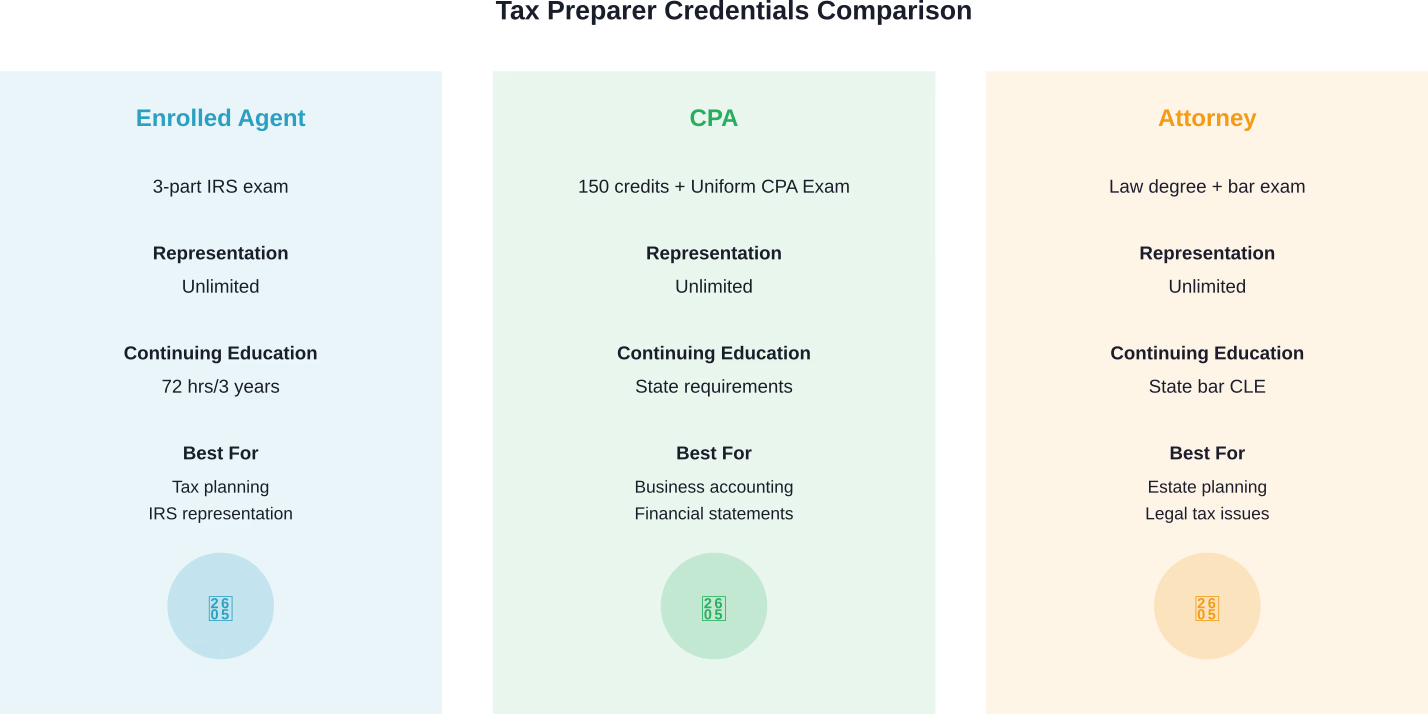
Three credentials carry unlimited representation rights before the IRS: enrolled agents, certified public accountants, and attorneys. These professionals can represent taxpayers in any tax matter, including audits, collections, and appeals.
The Enrolled Agent status is the highest credential the IRS awards. According to the IRS, individuals obtain this status either by passing a comprehensive three-part exam covering individual and business tax returns, or through experience as a former IRS employee. Enrolled agents must complete 72 hours of continuing education every three years, with a minimum of 16 hours each year (two of which must be on ethics).
CPAs generally must have 150 semester hours of college credit, which is typically 30 hours beyond a standard 120-hour bachelor's degree, one year of professional accounting experience, and must pass the Uniform CPA Examination. State requirements vary, but maintaining the designation typically requires ongoing continuing education.
Attorneys with tax expertise complete law school and pass state bar examinations, though not all attorneys specialize in tax matters.
Limited Representation Rights
Some preparers hold credentials like Annual Filing Season Program participants or state-specific certifications. These practitioners have more limited representation rights—they can only represent clients whose returns they prepared, and only for examination purposes.
Many preparers operate with no professional credentials beyond their PTIN. While legally authorized to prepare returns, they lack formal certification and have no representation rights.
Verify PTIN and Registration Status
Before engaging any tax professional, verification is non-negotiable. The IRS maintains a Directory of Federal Tax Return Preparers with Credentials and Select Qualifications—a searchable database available at IRS.gov.
This directory allows verification of preparers with specific credentials or qualifications that not all tax professionals possess. Search by name, city, or ZIP code to confirm a preparer's current status, credentials, and any professional affiliations.
Real talk: if a preparer resists providing their PTIN or seems evasive about credentials, that's a massive red flag. Legitimate professionals expect verification and welcome it.
Evaluate Experience With Your Tax Situation
Tax situations vary wildly. A self-employed consultant with cryptocurrency income faces entirely different planning needs than a retired couple managing required minimum distributions.
When evaluating tax planning services, match the preparer's expertise to specific needs. Ask direct questions about experience with situations similar to yours. How many clients do they serve with comparable tax profiles? What strategies have they implemented successfully?
Specialization matters. A preparer who primarily handles W-2 employees might lack the depth needed for complex business tax planning or international reporting requirements.
Understand Service Scope and Pricing Structure
Tax preparation and tax planning are different services, often priced differently. Basic preparation involves completing and filing returns based on information provided. Tax planning is proactive—analyzing financial situations to minimize future tax liability through strategic decisions.
Pricing models vary considerably:
| Pricing Model | How It Works | Best For |
|---|---|---|
| Flat fee per return | Fixed price based on form complexity | Simple tax situations, predictable costs |
| Hourly rate | Time-based billing | Complex situations, ongoing planning |
| Value-based pricing | Fee based on tax savings achieved | High-net-worth tax optimization |
| Monthly retainer | Ongoing advisory relationship | Business owners, complex planning needs |
Transparency matters here. Quality professionals provide clear fee structures upfront, explain what's included, and outline any additional costs for specific services like audit support or amended returns.
Check Reviews and Ask for References
Professional competence only tells part of the story. Communication style, responsiveness, and working relationship quality significantly impact the experience.
Look for reviews on multiple platforms, but read critically. One or two negative reviews among dozens of positive ones might reflect personality mismatches rather than competence issues. Pay attention to patterns—repeated mentions of missed deadlines, poor communication, or billing disputes warrant serious concern.
Don't hesitate to request references, particularly from clients with similar tax situations. Established professionals with nothing to hide welcome these conversations.
Assess Communication and Accessibility
Tax planning isn't a once-a-year transaction. Effective planning requires ongoing communication about financial changes, new tax law implications, and strategy adjustments.
During initial consultations, evaluate communication quality. Does the professional explain concepts clearly without excessive jargon? Do they ask thoughtful questions about financial goals? How quickly do they respond to inquiries?
Accessibility matters too. Some firms offer year-round support; others operate seasonally. Clarify expectations about response times, meeting frequency, and preferred communication channels.
Security and Data Protection
Tax preparers handle extraordinarily sensitive information—Social Security numbers, income details, bank accounts, investment holdings. According to the FTC, tax identity theft remains a significant threat.
Ask specific questions about data security practices. How is information stored? Is client data encrypted? What authentication methods protect online portals? How long is information retained, and what deletion protocols exist?
Legitimate professionals maintain comprehensive security protocols and carry professional liability insurance and errors-and-omissions coverage.
Red Flags to Avoid
Certain warning signs should immediately disqualify a tax preparer from consideration:
- Refusing to sign the tax return—IRS regulations require paid preparers to sign returns they prepare
- Basing fees on refund size—ethical preparers charge for services, not refund percentages
- Promising unrealistically large refunds before reviewing financial information
- Suggesting direct deposit of refunds into their own accounts
- Claiming they can obtain larger refunds than other preparers
- Failing to provide a PTIN or resisting credential verification
The IRS emphasizes that taxpayers remain legally responsible for all information on their returns, regardless of who prepares them. Choosing a preparer who cuts corners creates liability that falls squarely on the taxpayer.
The Initial Consultation
Most quality tax professionals offer initial consultations, either complimentary or at nominal cost. Use this meeting strategically.
Come prepared with questions about the preparer's experience, approach to tax planning, and specific strategies they might recommend for situations like yours. Bring documentation—recent tax returns, financial statements, or investment summaries—to facilitate meaningful discussion.
Pay attention to how the professional listens. Do they ask probing questions about financial goals beyond just minimizing taxes? Do they explain recommendations clearly? Does their planning approach align with risk tolerance and financial objectives?
This consultation works both ways. The professional evaluates whether they can serve specific needs effectively. Mutual fit matters for long-term advisory relationships.

Reduce Your Tax Liability With the Right Support
Personal tax planning depends on how income, assets and reliefs are managed over time, especially where multiple tax rules apply. Acumon provides personal tax services through its UK-qualified team, covering income tax returns, capital gains tax, non-dom tax and broader tax advice, supporting individuals with planning and compliance requirements.
Structure Your Personal Tax Position Properly
With Acumon, personal tax support typically includes:
- Preparation and filing of personal income tax returns
- Advice on capital gains and asset disposals
- Ongoing handling of personal tax compliance obligations
Talk to Acumon to discuss your personal tax requirements.
Making the Final Decision
Choosing personal tax planning services combines objective credential verification with subjective relationship assessment. The technically qualified preparer who can't explain concepts clearly or responds slowly to questions won't serve needs effectively. Conversely, a personable communicator without proper credentials creates significant risk.
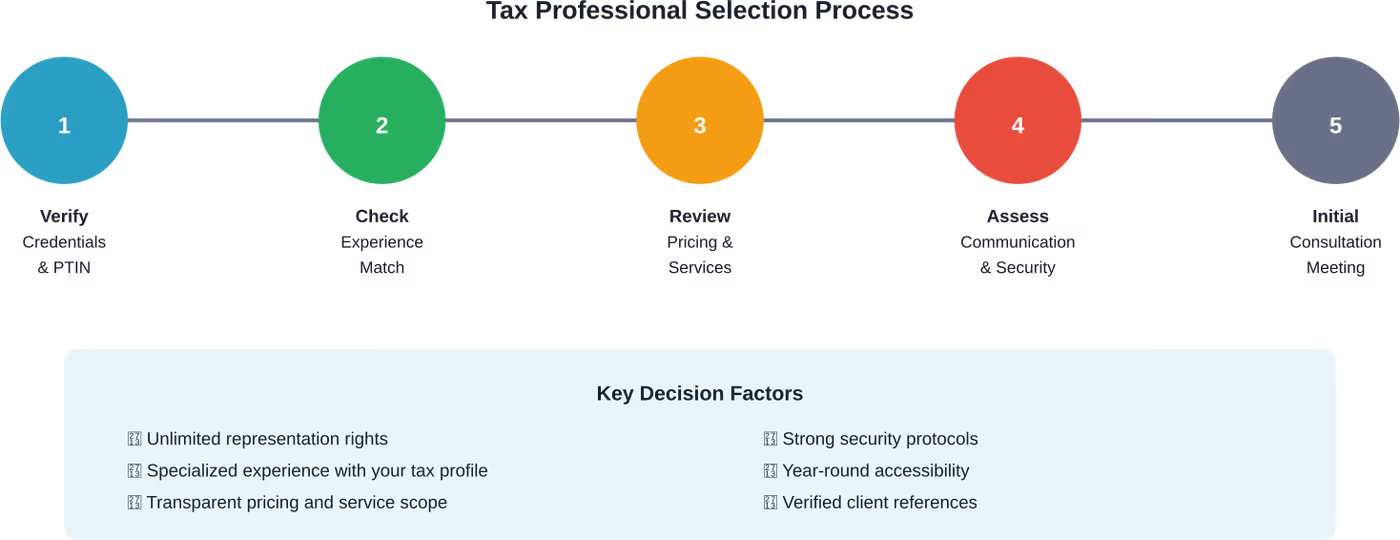
Start with non-negotiables: verified credentials, current PTIN, appropriate representation rights for tax situation complexity, transparent pricing, and robust security protocols. Then evaluate communication quality, accessibility, and cultural fit.
The right tax planning relationship delivers value far beyond annual compliance. Strategic planning reduces lifetime tax liability, provides audit protection, and aligns tax strategy with broader financial goals. Investing time in careful selection pays dividends for years.
Take the time now to verify credentials through the IRS directory, schedule consultations with multiple professionals, and ask detailed questions about experience and approach. The difference between mediocre and excellent tax planning services compounds over time—making this decision one of the most financially impactful choices individuals and business owners make.
Frequently Asked Questions
Tax preparers focus on completing and filing annual tax returns based on past transactions. Tax planners take a proactive approach, analyzing financial situations throughout the year to minimize future tax liability through strategic decisions about timing, entity structure, deductions, and investments. Many professionals offer both services, but they're priced and delivered differently.
Costs vary significantly based on complexity and service scope. Simple individual return preparation might cost a few hundred dollars, while comprehensive tax planning for business owners or high-net-worth individuals can range from several thousand to tens of thousands annually. Hourly rates for credentialed professionals typically range widely depending on location and expertise. Always request detailed fee structures before engaging services.
Absolutely. Taxpayers can change preparers at any time. Request copies of all documents and working papers from the current preparer. Some professionals charge nominal fees for file transfers. When switching, ensure the new preparer has sufficient time to prepare returns before filing deadlines, particularly if changing during tax season.
Taxpayers remain legally responsible for return accuracy regardless of who prepares it. If errors occur, file an amended return promptly. Quality preparers carry errors-and-omissions insurance and typically correct mistakes at no additional charge. If the error results from preparer negligence, they may be liable for penalties and interest, though proving this can be challenging.
It depends on the complexity of the tax situation. For straightforward W-2 income with standard deductions, limited representation rights may suffice. But for complex situations—business ownership, international income, significant investments, or higher audit risk—unlimited representation rights provide crucial protection. These professionals can represent taxpayers through all IRS proceedings, including collections and appeals.
Use the IRS Directory of Federal Tax Return Preparers with Credentials and Select Qualifications at IRS.gov. This searchable database confirms PTIN status, professional credentials, and continuing education compliance. For CPAs, check the state board of accountancy websites. For attorneys, verify standing with state bar associations. Enrolled agents can be verified through the IRS directory.
Ideally, well before year-end to implement tax-saving strategies for the current year. But tax planning is year-round work. Starting a relationship early allows time to understand financial situations, identify opportunities, and implement strategies. Waiting until March or April limits planning options to future years and may result in rushed preparation.