
Choosing an HMRC payroll services company requires evaluating compliance credentials, experience with UK tax regulations, technology capabilities, and cost structure. The right provider should offer HMRC-recognised software, handle Real Time Information (RTI) submissions accurately, and provide support for PAYE, National Insurance, and pension scheme administration while maintaining data security and transparent pricing.
Payroll management isn't just about calculating wages. It's about staying compliant with HMRC regulations, filing accurate Real Time Information submissions, and keeping employees paid on time without errors.
According to HMRC guidance, payroll agents calculate Income Tax and National Insurance contributions due from employees and determine net pay after permitted deductions like pension scheme contributions. Businesses provide their payroll provider with employee details, hours worked, and rates of pay to enable accurate processing.
But here's the thing—not all payroll service providers operate with the same level of compliance or expertise. Some cut corners. Others lack the technology to handle complex scenarios like off-payroll working rules or benefits-in-kind reporting.
This guide covers what matters when selecting a payroll services company that keeps your business compliant and your employees paid correctly.
Understanding HMRC Payroll Provider Options
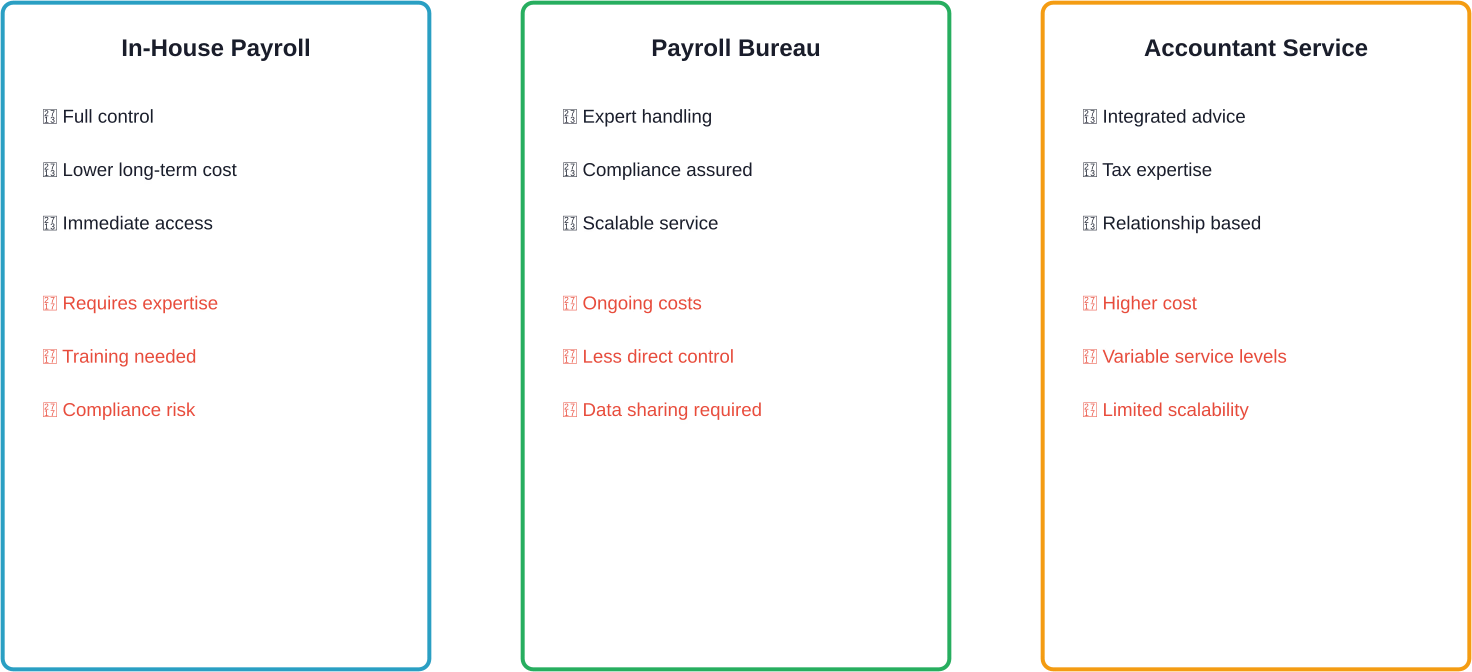
Three main routes exist for handling payroll: in-house with software, outsourcing to a payroll bureau, or hiring an accountant who offers payroll services.
Running payroll yourself means using HMRC-recognised software to calculate deductions, generate payslips, and submit RTI reports. According to GOV.UK, employers must use payroll software to record employee pay, calculate PAYE and National Insurance deductions, provide payslips, and report to HMRC on or before each payday.
Outsourcing transfers the operational burden to specialists. Payroll providers handle calculations, compliance, and submissions while you retain legal responsibility as the employer.
The decision depends on workforce size, payroll complexity, and internal capabilities. Smaller businesses often benefit from outsourcing, while larger organisations may justify dedicated payroll staff.
Key Compliance Requirements for Payroll Providers
HMRC compliance isn't optional—it's fundamental. The right provider demonstrates a clear understanding of current tax regulations and maintains processes that prevent non-compliance risks.
HMRC-Recognised Software
Any legitimate payroll provider should use software that appears on HMRC's recognised payroll software list, updated as recently as March 27, 2026. This ensures their systems can properly submit Full Payment Submissions (FPS) and Employer Payment Summaries (EPS) through PAYE Online.
Ask potential providers which software they use and verify it against HMRC's official list. Free options exist alongside commercial solutions, but functionality varies significantly.
Real Time Information (RTI) Expertise
RTI requires employers to submit payroll information to HMRC on or before each payday. According to HMRC guidance, you must send an EPS if you haven't paid any employees in a tax month, which runs from the 6th of one month to the 5th of the next.
Your provider should handle RTI submissions automatically as part of their standard service. Late or inaccurate submissions can trigger penalties.
Off-Payroll Working Rules (IR35)
The off-payroll working rules ensure contractors pay broadly the same Income Tax and National Insurance as employees when working through intermediaries. These regulations apply to medium and large organisations in both private and public sectors.
If your business engages contractors, your payroll provider should understand status determination and help manage compliance obligations. Some providers offer tools for making employment status decisions, though HMRC notes that organisations should verify decisions for high-value contracts.
Essential Questions to Ask Potential Providers
The right questions reveal whether a provider truly understands compliance and can handle your specific requirements.
Service Scope and Limitations
What exactly does the service include? Some providers offer basic payroll processing only, while others bundle pension administration, benefits management, and HR support.
Clarify whether they handle auto-enrolment pension schemes, P11D submissions for benefits-in-kind, and year-end reporting. Mandatory payrolling of benefits in kind (BiKs) in the UK has been delayed by HMRC until 6 April 2027. From this date, employers must report most taxable benefits and pay Class 1A NICs in real-time through payroll, effectively ending the annual P11D reporting cycle for most, excluding loans and accommodation.
Technology and Integration
Can their system integrate with your existing accounting software or HR systems? Manual data entry between disconnected systems creates errors and wastes time.
Ask about reporting capabilities, employee self-service portals, and mobile access. Modern payroll platforms offer dashboards that give real-time visibility into payroll costs and liabilities.
Support and Communication
How quickly do they respond to queries? What happens if an error occurs close to payday?
Reliable providers assign dedicated account managers and maintain clear escalation procedures. Check whether support is available via phone, email, or online portal—and what their typical response times look like.
Cost Structures and Pricing Models
Payroll service pricing varies significantly based on employee count, payment frequency, and service complexity.
Many providers charge per employee per month, with a minimum monthly fee. Additional costs may apply for features like pension administration, P11D processing, or employee self-service access.
HMRC guidance notes that if employers usually pay less than £1,500 per month in PAYE, they may qualify to pay quarterly instead of monthly. This affects how often a provider processes payroll and may influence pricing.
| Cost Factor | Typical Impact | What to Check |
|---|---|---|
| Base Fee | Variable minimum monthly fees | Included employee count |
| Per Employee | Per-employee pricing varies by provider | Tiered pricing at scale |
| Setup Fee | Setup fees vary by provider | Sometimes waived |
| Additional Services | Varies significantly | Pension, P11D, HR support |
| Software Access | Often included | Portal features and limits |
Request detailed quotes from multiple providers. The cheapest option rarely delivers the best value—focus on service quality, compliance assurance, and support responsiveness.
Data Security and Confidentiality
Payroll data contains sensitive personal and financial information. Providers must demonstrate robust security measures that comply with UK GDPR requirements.
Ask about data encryption, access controls, backup procedures, and disaster recovery plans. Where are servers located? How is data transmitted? Who has access to your information?
HMRC's Guidelines for Compliance, published in 2022, emphasise that businesses should implement practices that lower tax non-compliance risks. Choosing providers with strong security and compliance frameworks reduces exposure.
Verify whether the provider holds relevant certifications like ISO 27001 for information security management. Professional indemnity insurance is another important indicator of a serious, established operation.
Checking Provider Credentials and Experience
Not all payroll providers maintain the same standards. Professional qualifications signal commitment to compliance and ongoing development.
The Association of Accounting Technicians (AAT) offers licensed membership for bookkeepers and accountants. AAT members must meet fit and proper requirements, maintain professional development, and adhere to ethical standards.
Ask whether the provider's staff hold relevant qualifications. Experience with your industry matters too—certain sectors like construction, hospitality, or healthcare involve specific payroll complexities.
Request client references and check online reviews. How long have they been operating? What's their client retention rate?
Warning Signs: Spotting Potential Fraud
HMRC published guidance on outsourced labour payroll fraud, last updated February 4, 2026. This occurs when illegitimate payroll companies operate schemes that defraud workers, employers, and HMRC.
Red flags include providers offering unusually low fees, promising tax savings that seem too good to be true, or operating through complex supply chain arrangements without transparent ownership.
Legitimate providers operate transparently, explain exactly how they calculate deductions, and provide clear documentation for all transactions.
Making the Final Decision
After gathering quotes and conducting due diligence, narrow your shortlist to two or three strong candidates:
- Schedule detailed discussions with each: Walk through specific scenarios relevant to your business—seasonal workers, statutory payments, complex benefits arrangements, or contractor management.
- Pay attention to how providers explain their processes: Do they communicate clearly? Do they proactively identify potential compliance issues?
- Consider running a parallel payroll for one cycle before fully transitioning: This tests accuracy and gives your team confidence in the new provider's capabilities.
Remember that while you can outsource payroll processing, legal responsibility for accurate tax payments and reporting remains with you as the employer. Choose a provider who understands this and takes their role seriously.
The right payroll services company becomes a strategic partner, not just a vendor. They should help you navigate regulatory changes, optimize payroll processes, and ensure employees get paid correctly every single time.

Run Payroll Without HMRC Issues
Payroll errors usually show up during HMRC reporting – missed submissions, incorrect PAYE or late filings can lead to penalties. Acumon provides UK-based payroll services through CIPP-qualified professionals, supporting employers with PAYE, RTI submissions, auto-enrolment, CIS and HMRC compliance.
Keep Payroll Accurate and HMRC-Compliant
Acumon’s payroll services cover:
- PAYE setup, returns and compliance
- RTI submissions and end-of-year returns
- Auto-enrolment and pension requirements
- CIS support for contractors and subcontractors
- HMRC liaison and communication
Speak with Acumon to handle your payroll and HMRC reporting correctly.
Conclusion
Choosing the right HMRC payroll services provider comes down to more than cost or convenience. Accuracy, compliance and consistency matter far more in the long run. A reliable provider should handle PAYE, RTI submissions and reporting without errors, while staying aligned with current HMRC requirements.
It’s also worth paying attention to how a provider manages communication, data security and ongoing support. Payroll isn’t a one-time setup—it’s an ongoing process that needs to run smoothly every pay cycle. The right choice is the one that reduces risk, keeps everything compliant and gives you confidence that payroll is being handled properly.
Frequently Asked Questions
Payroll software is a tool for processing payroll yourself, while a payroll bureau is a service provider that handles payroll processing on your behalf. Bureaus use software as part of their service but also provide expertise, compliance management, and support. Software requires in-house knowledge; bureaus offer outsourced expertise.
Costs vary based on employee count and service scope. Small businesses typically experience monthly base fees and per-employee pricing that vary by provider and service scope. Additional services like pension administration or P11D processing may cost extra. Always request detailed quotes that outline exactly what's included.
Providers don't need specific HMRC licensing, but they must use HMRC-recognised software for RTI submissions. Professional qualifications like AAT membership indicate credibility. Check that providers understand current regulations and maintain compliance with PAYE, National Insurance, and reporting requirements.
Yes, switching mid-year is possible though it requires careful transition management. The new provider needs accurate year-to-date figures for all employees. Plan transitions during quieter periods rather than near year-end. Most providers offer migration support to ensure continuity and accuracy.
Responsibility for accurate tax payments remains with the employer even when outsourcing. However, reputable providers carry professional indemnity insurance and should correct errors promptly. Contracts should specify error resolution procedures, liability limits, and compensation arrangements. Check these terms before signing.
HMRC provides reporting channels for suspected payroll fraud, including outsourced labour schemes. Report concerns through the HMRC fraud hotline or online reporting service. According to HMRC guidance on outsourced labour payroll fraud, workers, employers, and agencies can all report suspicious arrangements confidentially.
Many payroll providers offer pension administration as part of comprehensive packages. This simplifies compliance with auto-enrolment duties, including assessing workers, calculating contributions, and submitting data to pension schemes. Confirm whether pension services are included or cost extra when comparing providers.