
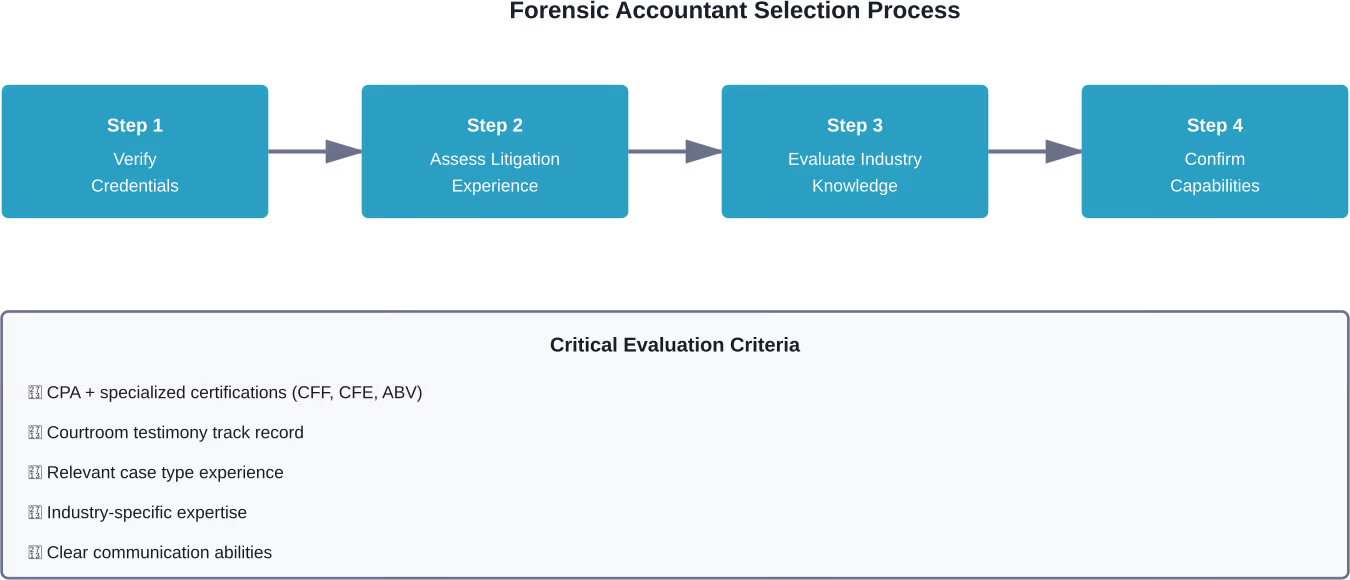
Choosing the right forensic audit services company requires verifying credentials (CPA certification, specialized training), evaluating litigation and expert witness experience, assessing industry-specific knowledge, and confirming investigative capabilities. The ideal firm combines technical accounting expertise with strong communication skills and a proven track record in your specific case type.
Fraud costs organizations an estimated 5% of revenues each year, according to the Association of Certified Fraud Examiners. When financial irregularities surface—whether through suspected employee theft, shareholder disputes, or commercial damages—bringing in the wrong forensic accounting firm can derail investigations and weaken legal cases.
The stakes are high. Financial reporting fraud and asset misappropriation can destroy businesses, especially smaller organizations that lack the resources to absorb significant losses. Selecting a forensic audit services company isn't just about finding someone who can crunch numbers. It's about identifying professionals who can uncover evidence, withstand courtroom scrutiny, and communicate complex financial findings clearly.
Here's what matters most when making this critical decision.
Verify Professional Credentials and Certifications
Not all accountants possess the specialized training needed for forensic work. Start by confirming the firm employs certified public accountants (CPAs) as the foundation. But that's just the baseline.
Look for additional credentials that signal specialized forensic training. The Certified in Financial Forensics (CFF) designation indicates CPAs have undergone rigorous additional education in fraud detection and litigation support. Other relevant certifications include the Certified Fraud Examiner (CFE) and the Accredited in Business Valuation (ABV) for cases involving damage quantification.
According to AICPA membership information, members have access to professional solutions including expert guidance on accounting profession changes and knowledge development through an on-demand learning portal. This continuous education matters when financial reporting standards evolve and new fraud schemes emerge.
| Credential | Issuing Organization | Primary Focus |
|---|---|---|
| CPA | State Boards of Accountancy | General accounting and auditing |
| CFF | AICPA | Forensic accounting and litigation |
| CFE | ACFE | Fraud examination and prevention |
| ABV | AICPA | Business valuation and damages |
Don't hesitate to ask about specific training programs completed and how recently professionals updated their certifications. The forensic accounting field changes as regulations evolve and financial crimes become more sophisticated.
Assess Litigation and Expert Witness Experience
A forensic accountant who excels at investigation may struggle on the witness stand. If litigation is involved, expert witness experience becomes non-negotiable.
According to SEC guidance on auditor independence and fraud detection, auditors have specific responsibilities regarding fraud detection and must maintain independence standards. When forensic accountants serve as expert witnesses, they face intense scrutiny from opposing counsel. They must explain complex financial concepts in plain language while maintaining credibility under cross-examination.
Ask potential firms specific questions about their litigation experience:
- How many times have their professionals testified in court or depositions?
- What types of cases have they supported—shareholder disputes, fraud cases, intellectual property damages?
- Can they provide references from attorneys who've retained them?
- Have they ever been disqualified or had testimony excluded?
Real talk: A firm with dozens of investigation projects but minimal courtroom experience creates risk. The evidence uncovered matters little if it can't withstand legal proceedings.
Evaluate Industry-Specific Knowledge
Fraud schemes vary dramatically across industries. Healthcare billing fraud looks nothing like construction contract disputes or retail inventory theft. A forensic accountant familiar with Generally Accepted Government Auditing Standards (GAGAS or the Yellow Book) brings value to government contract investigations that someone specializing in private sector fraud may lack.
The Government Auditing Standards maintained by the GAO provide frameworks for financial audits, attestation engagements, and performance audits. When cases involve government entities or entities receiving government awards, familiarity with these standards becomes essential.
Match the firm's background to your situation. Ask about:
- Previous engagements in your industry
- Understanding of industry-specific regulations and accounting practices
- Familiarity with common fraud schemes in your sector
- Access to industry benchmarking data for comparison
A forensic accountant who recently completed a healthcare fraud investigation brings fresh knowledge of billing irregularities and compliance requirements that someone who hasn't worked in healthcare for five years might miss.
Confirm Investigative Capabilities and Resources
Forensic accounting requires more than analyzing financial statements. Complex cases demand data analytics capabilities, digital forensics skills, and sometimes coordination with law enforcement or regulatory agencies.
According to SEC guidance on auditor independence and fraud detection, auditors have specific responsibilities regarding fraud detection and must maintain independence standards. The 2024 revision to Government Auditing Standards emphasizes quality management systems that ensure audit organizations' people, audits, and reports adhere to professional standards.
Ask about the firm's investigative toolkit:
- What data analytics software do they use?
- Can they handle electronic discovery and digital forensics?
- Do they have relationships with law enforcement or regulatory agencies?
- What's their approach to preserving the evidence chain of custody?
Larger firms often provide deeper resources and wider experience across multiple professionals. Smaller boutique firms may offer more personalized attention and potentially lower costs. Neither is inherently better—the right choice depends on case complexity and specific needs.
Test Communication and Responsiveness
Technical expertise means nothing if the forensic accountant can't explain findings clearly. Attorneys need experts who can translate complex financial analysis into compelling narratives. Business owners need professionals who can explain what happened without drowning them in jargon.
During initial consultations, pay attention to how the firm communicates:
- Do they ask clarifying questions about your situation?
- Can they explain their approach in understandable terms?
- How quickly do they respond to inquiries?
- Do they provide clear engagement letters and fee structures?
But wait. There's another communication aspect that matters: report writing. Request sample reports (with confidential information redacted). Strong forensic accounting reports present findings logically, support conclusions with evidence, and anticipate counterarguments.
Understanding Engagement Structure and Costs
Forensic accounting fees vary based on case complexity, professional experience, and geographic location. Most firms bill hourly, with senior professionals commanding higher rates than junior staff.
Transparency matters here. The firm should clearly explain:
- Hourly rates for different team members
- Estimated total costs and factors that might increase them
- Billing increments and expense policies
- Retainer requirements
Some cases may qualify for contingency arrangements or alternative fee structures, though these are less common in forensic accounting than other professional services. Discuss options upfront and get everything in writing.
| Cost Factor | Impact on Total Fees |
|---|---|
| Professional experience level | Senior partners cost more but work more efficiently |
| Case complexity | Multi-year investigations with extensive records increase hours |
| Geographic location | Major metropolitan areas typically have higher rates |
| Expert testimony requirements | Court appearances and deposition prep add significant costs |
| Timeline urgency | Expedited investigations may require premium fees |
Check References and Track Record
Professional credentials tell part of the story. References complete the picture. Request contacts for attorneys, businesses, or other clients who've worked with the firm on similar matters.
When speaking with references, ask targeted questions:
- Did the forensic accountant uncover information that made a difference?
- How did they perform under pressure or tight deadlines?
- Were final costs aligned with initial estimates?
- Would they hire this firm again?
Also research whether the professionals have published articles, presented at conferences, or contributed to industry knowledge. Active participation in professional organizations like the AICPA suggests commitment to staying current in the field.

Get Financial Investigations Done Properly
When financial data doesn’t add up, a standard audit is no longer enough – issues need to be examined in detail, with evidence that can be relied on. Acumon is an ICAEW-registered audit firm that includes forensic audit within its audit services, carrying out detailed financial investigations into discrepancies and fraud, providing evidence for legal proceedings and regulatory actions.
Examine Financial Issues With Evidence-Based Analysis
Acumon approaches forensic audit work by focusing on:
- Detailed review of financial records where discrepancies are identified
- Investigation of fraud and financial discrepancies
- Evidence-based analysis
- Reporting for legal proceedings and regulatory actions
Speak with Acumon to discuss your forensic audit requirements.
Making the Final Decision
Choosing a forensic audit services company ultimately comes down to matching credentials, experience, and capabilities to specific needs. The right firm combines technical accounting expertise with investigative skills, industry knowledge, and communication abilities.
Don't rush this decision. The forensic accountant becomes a crucial partner in uncovering truth and supporting legal or business objectives. Take time to interview multiple firms, check credentials thoroughly, and verify track records.
Financial fraud and irregularities cause real damage to businesses and individuals. Selecting qualified forensic audit services provides the best chance of uncovering evidence, quantifying damages accurately, and achieving favorable outcomes whether through settlement negotiations or courtroom proceedings.
Ready to move forward? Contact potential forensic accounting firms with your specific situation details and start evaluating which professional brings the right combination of expertise, experience, and approach to address your needs effectively.
Frequently Asked Questions
Regular accountants focus on financial reporting, tax preparation, and general bookkeeping. Forensic accountants specialize in investigating financial irregularities, uncovering fraud, quantifying damages, and providing litigation support. They combine accounting knowledge with investigative skills and often serve as expert witnesses.
Timelines vary dramatically based on case complexity, transaction volume, and cooperation from involved parties. Simple employee theft investigations might conclude in weeks, while complex multi-year fraud schemes could require months of analysis. Discuss expected timelines during initial consultations.
No reputable forensic accountant guarantees specific outcomes. They can investigate thoroughly, apply proven methodologies, and uncover evidence if it exists. But absence of evidence doesn't always mean evidence of absence—sophisticated fraud can be difficult to detect even with expert analysis.
Either can retain forensic accountants depending on the situation. Attorneys often hire them for litigation support, which may provide attorney-client privilege protections. Businesses may hire directly for internal investigations. Discuss privilege implications with legal counsel before engaging.
Gather financial statements, bank records, contracts, correspondence related to suspected issues, and a timeline of concerning events. Document specific red flags or irregularities noticed. The more organized information provided upfront, the more efficiently the forensic accountant can assess the situation.
Many forensic accountants have experience coordinating with law enforcement, regulatory agencies like the SEC, and prosecutors on criminal fraud cases. This experience proves valuable when civil investigations may escalate to criminal proceedings.
Standard audits assess whether financial statements fairly represent a company's position. Forensic accountants investigate specific suspected wrongdoing, quantify damages, or provide litigation support. If fraud is suspected, damages need calculation, or expert testimony is needed, forensic accounting expertise is appropriate.