
Choosing the right financial risk management services company requires evaluating regulatory compliance, expertise in your sector, technology infrastructure, and risk assessment methodologies. Prioritize firms with transparent fee structures, proven track records, and robust third-party oversight capabilities. Verify credentials, assess cultural fit, and ensure the provider can scale with your organization's evolving risk landscape.
Financial risk management has become increasingly complex. Regulatory requirements expand, third-party relationships multiply, and new risk categories emerge faster than internal teams can address them.
Organizations face a crucial decision: which external partner can genuinely protect assets, ensure compliance, and provide strategic guidance? The wrong choice exposes firms to regulatory penalties, operational disruptions, and reputational damage.
According to the Federal Reserve's 2023 interagency guidance, banking organizations must conduct thorough due diligence when engaging third-party service providers. The Securities and Exchange Commission similarly emphasizes the importance of oversight in its compliance program requirements.
This guide breaks down the essential factors for selecting a financial risk management services company that aligns with organizational needs, regulatory obligations, and strategic objectives.
Understanding Financial Risk Management Services
Financial risk management services encompass a broad range of specialized functions. These include compliance monitoring, third-party risk assessment, enterprise risk framework implementation, and ongoing regulatory advisory.
Service providers help organizations identify, assess, and mitigate risks that could threaten financial assets or regulatory standing. The scope varies significantly—some firms offer comprehensive enterprise risk management, while others specialize in specific areas like cybersecurity risk or investment compliance.
Here's the thing though—not all risk management services operate under the same regulatory framework. Investment advisers face different requirements than community banks. Fintech companies navigate distinct compliance landscapes compared to traditional financial institutions.
According to Stanford University's financial risk management framework, effective risk management focuses on protecting financial assets and resources while ensuring they're used to support organizational objectives. This dual purpose—protection and strategic enablement—separates sophisticated risk management from basic compliance checking.
Core Service Categories
Financial risk management providers typically offer services across several domains:
- Regulatory Compliance: Ensuring adherence to SEC, Federal Reserve, and other regulatory requirements
- Third-Party Risk Management: Assessing and monitoring vendors, service providers, and partners
- Investment Risk Advisory: Portfolio risk analysis, market risk assessment, and strategic guidance
- Operational Risk: Internal control evaluation, process improvement, and fraud prevention
- Technology Risk: Cybersecurity assessment, data governance, and system resilience
- Compliance Program Development: Building frameworks that meet regulatory expectations
The Federal Reserve's third-party risk management guide for community banks emphasizes that organizations engage external parties to compete effectively and respond to evolving market demands. The right service provider becomes a strategic partner, not just a checkbox for compliance.
Evaluating Regulatory Compliance and Credentials
Regulatory compliance forms the foundation of any credible financial risk management relationship. The SEC requires investment advisers to adopt and implement written policies reasonably designed to prevent violations of the Investment Advisers Act.
When evaluating potential providers, verify their understanding of applicable regulations. Investment advisers operate under different rules than banking organizations. A firm specializing in bank regulatory compliance may lack expertise in SEC marketing rule requirements adopted in December 2020.
Look for providers with demonstrated regulatory knowledge in the specific areas relevant to the organization. This means reviewing their track record with similar clients, examining case studies, and requesting references from organizations facing comparable regulatory environments.
Essential Credentials to Verify
| Credential Type | Why It Matters | What to Verify |
|---|---|---|
| Professional Certifications | Demonstrates individual expertise and ongoing education | CFA, FRM, CAMS, CPA, or relevant certifications |
| Regulatory Registration | Confirms legal authority to provide advice | SEC registration, FINRA membership, state licenses |
| Industry Experience | Indicates practical knowledge of risk scenarios | Years in financial services, specific sector experience |
| Continuing Education | Shows commitment to staying current with regulations | Recent training, conference participation, publications |
The SEC's Division of Investment Management regularly updates guidance on compliance programs. Providers should demonstrate familiarity with these updates and how they impact client obligations.
Real talk: credentials matter, but practical application matters more. A firm with impressive certifications but no experience in a specific regulatory environment may struggle to provide actionable guidance.
Assessing Industry Expertise and Specialization
Financial services encompasses diverse sectors with unique risk profiles. Community banks face different challenges than registered investment advisers. Fintech startups navigate risk landscapes that traditional institutions never encountered.
According to GARP's analysis of fintech risk management, many non-bank financial services providers found 2024 regulatory consent orders intimidating. The heightened expectations and complex requirements demand specialized expertise.
Evaluate whether potential providers have deep experience in the relevant sector. A firm that primarily serves large banking institutions may not understand the resource constraints and operational realities of a small investment advisory firm.
Sector-Specific Risk Considerations
Different financial sectors face distinct risk management priorities:
- Investment Advisers: Must navigate SEC marketing rules, custody requirements, and fiduciary obligations. Risk management services should address compliance testing, advertising review, and client communication oversight.
- Community Banks: Face extensive third-party risk management requirements as outlined in Federal Reserve guidance. Providers should understand vendor management, operational resilience, and safety and soundness examinations.
- Fintech Companies: Deal with rapidly evolving technology risks, data privacy concerns, and emerging regulatory frameworks. Service providers need current knowledge of digital asset regulations, API security, and innovation-friendly compliance approaches.
- Wealth Management Firms: Require expertise in investment suitability, fee transparency, and complex client relationship dynamics. Risk management services should cover portfolio oversight, conflicts of interest, and succession planning.
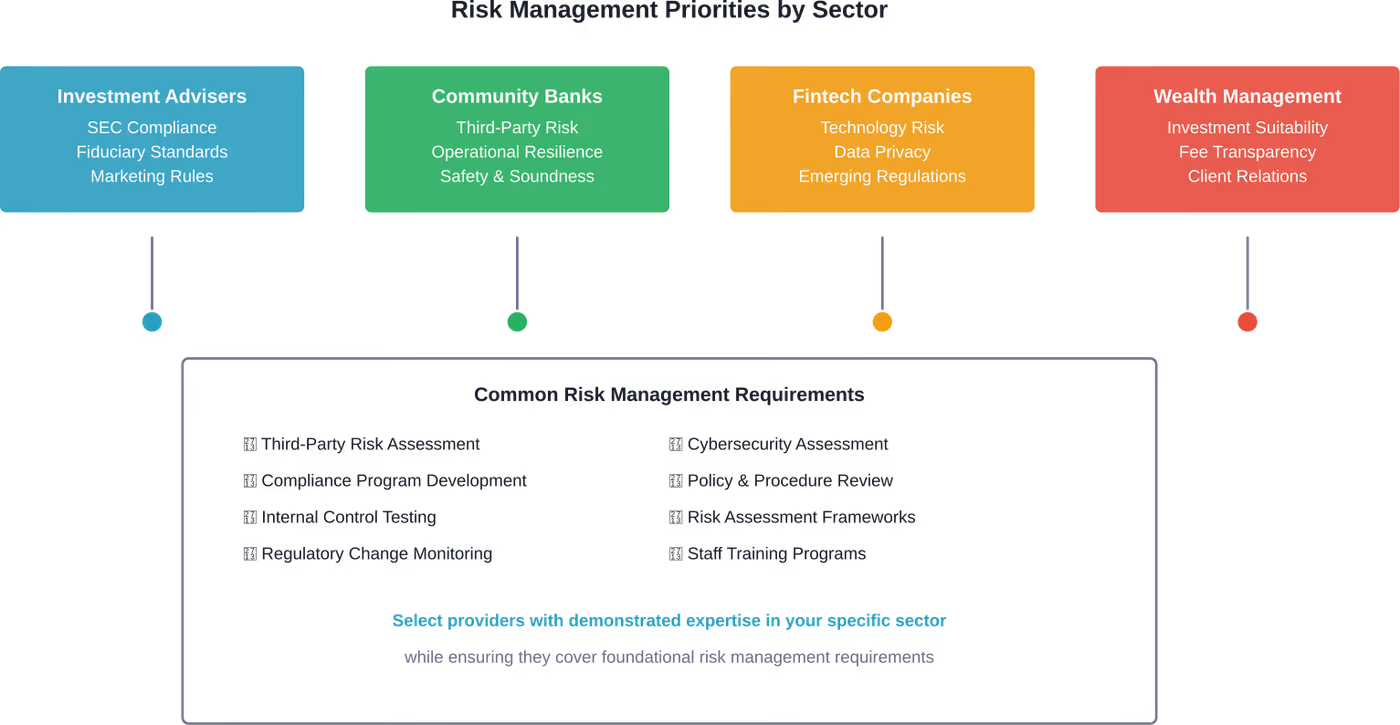
Ask potential providers for detailed case studies from organizations similar in size, structure, and regulatory environment. Generic experience across financial services doesn't substitute for specific sector knowledge.
Understanding Risk Management Methodologies and Frameworks
Risk management approaches vary significantly. Some firms follow rigid checklist compliance, while others implement comprehensive frameworks aligned with industry standards like COSO Enterprise Risk Management.
COSO released updated guidance on applying the ERM Framework to compliance risk management. This framework integrates risk management with strategy and performance rather than treating it as a separate compliance function.
Evaluate how potential providers approach risk assessment. Do they conduct one-time audits, or do they implement ongoing monitoring systems? Do they customize frameworks to organizational circumstances, or do they apply standardized templates regardless of context?
Key Methodology Questions
Organizations should understand several critical aspects of a provider's methodology:
- Risk Identification Process: How does the firm identify emerging risks? Do they rely solely on regulatory checklists, or do they conduct comprehensive environmental scans that consider industry trends, technological changes, and organizational-specific factors?
- Assessment Approach: What frameworks guide risk assessment? MIT research on supply chain financial risk demonstrates that qualitative risk assessments often overestimate true risk impact. Effective methodologies combine quantitative and qualitative analysis.
- Monitoring Frequency: How often does the provider reassess risk profiles? Regulatory environments change rapidly—annual reviews may miss critical developments. According to SEC requirements, adviser compliance records must be retained for at least five years, indicating the long-term nature of effective oversight.
- Integration with Strategy: Does the methodology treat risk management as a defensive compliance exercise, or does it integrate risk considerations into strategic decision-making? GARP emphasizes that effective risk management in fintech requires building internal expertise and fostering accountability, not just external auditing.
The Federal Reserve's interagency guidance on third-party relationships outlines a comprehensive risk management lifecycle. Providers should demonstrate familiarity with this lifecycle approach: planning, due diligence and selection, contract negotiation, ongoing monitoring, and termination.
Evaluating Technology and Infrastructure
Modern risk management requires sophisticated technology infrastructure. Manual spreadsheet tracking can't scale with organizational complexity or regulatory expectations.
According to GARP's analysis of generative AI governance, organizations increasingly face technology-specific risks. According to Cisco's 2024 Data Privacy Benchmark Study, 27% of organizations had banned generative AI use (at least temporarily) due to data privacy and security concerns.
Assess the technology platforms potential providers use for risk monitoring, compliance tracking, and reporting. These systems should offer real-time visibility into risk status, automated alerts for emerging issues, and comprehensive audit trails.
Essential Technology Capabilities
- Automated Monitoring: Continuous scanning for regulatory changes, market shifts, and operational anomalies
- Integrated Reporting: Dashboards that provide clear visibility into risk metrics for different stakeholder groups
- Documentation Management: Secure systems for maintaining compliance records, policy documentation, and audit trails
- Third-Party Assessment Tools: Platforms for evaluating and monitoring vendor relationships as required by Federal Reserve guidance
- Secure Communication: Encrypted channels for sharing sensitive risk information and compliance documentation
- Data Analytics: Capabilities for identifying patterns, trends, and correlations that indicate emerging risks
But wait. Technology sophistication doesn't guarantee effectiveness. Some organizations over-invest in complex platforms that generate extensive reports without actionable insights.
Evaluate whether the provider's technology actually improves decision-making or just creates more documentation burden. Request demonstrations showing how their systems identify specific risks, track remediation efforts, and measure program effectiveness.
Analyzing Fee Structures and Cost Models
Fee transparency separates professional service providers from those who obscure true costs. Financial risk management services typically use several pricing models.
Common fee structures include percentage of assets under management (typically 0.5%-1.5% annually for wealth management-oriented services), hourly rates for consulting engagements, fixed retainers for ongoing advisory services, and project-based fees for specific initiatives like compliance program development.
According to wealth management industry standards, firms should clearly disclose all fee components. Hidden costs, unclear billing practices, or unexplained charges indicate potential problems.
Fee Structure Comparison
| Fee Model | Best For | Typical Range | Considerations |
|---|---|---|---|
| Assets Under Management | Investment-focused risk oversight | 0.5% - 1.5% annually | Scales with portfolio size; aligns incentives with asset growth |
| Fixed Retainer | Ongoing compliance advisory | Varies by scope | Predictable costs; encourages proactive engagement |
| Hourly Consulting | Project-based engagements | Varies by expertise | Flexible for specific needs; can become expensive without controls |
| Project-Based | One-time initiatives | Defined upfront | Clear cost expectations; may not include ongoing support |
Request detailed fee disclosures that outline base fees, potential additional costs, billing frequency, and circumstances that might trigger extra charges. The SEC emphasizes fee transparency in investment adviser marketing materials.
Avoid providers who promise unrealistic results or obscure their fee structures. Complex pricing models with multiple tiers, unclear triggers for additional fees, or vague scope definitions often lead to unexpected costs.
Compare total cost of engagement, not just headline rates. A lower hourly rate becomes expensive if the provider requires extensive hours to deliver results that a more experienced (but higher-priced) firm accomplishes efficiently.
Reviewing Third-Party Risk Management Capabilities
Third-party risk management has become a regulatory priority. The Federal Reserve, FDIC, and OCC issued final joint guidance in June 2023 specifically addressing third-party relationship risk management.
Organizations increasingly rely on external service providers for critical functions. The SEC proposed new rules in October 2022 requiring registered investment advisers to conduct due diligence and ongoing monitoring of service providers for certain outsourced functions.
Evaluate whether potential risk management providers have robust capabilities for assessing and monitoring third-party relationships. GARP research emphasizes that third-party relationships can be beneficial and potentially treacherous—risks can be mitigated through actionable lifecycle management models and appropriate governance frameworks.
Third-Party Risk Assessment Components
Comprehensive third-party risk management encompasses several critical activities:
- Due Diligence: Thorough evaluation before engaging service providers, including financial stability assessment, operational capability review, cybersecurity posture evaluation, and regulatory compliance verification.
- Contract Oversight: Ensuring agreements include appropriate risk allocation, service level requirements, audit rights, data security provisions, and termination procedures.
- Ongoing Monitoring: Continuous assessment of third-party performance, risk profile changes, regulatory compliance, and financial health throughout the relationship lifecycle.
- Contingency Planning: Developing strategies for service disruption, vendor failure, or relationship termination that protect organizational operations.
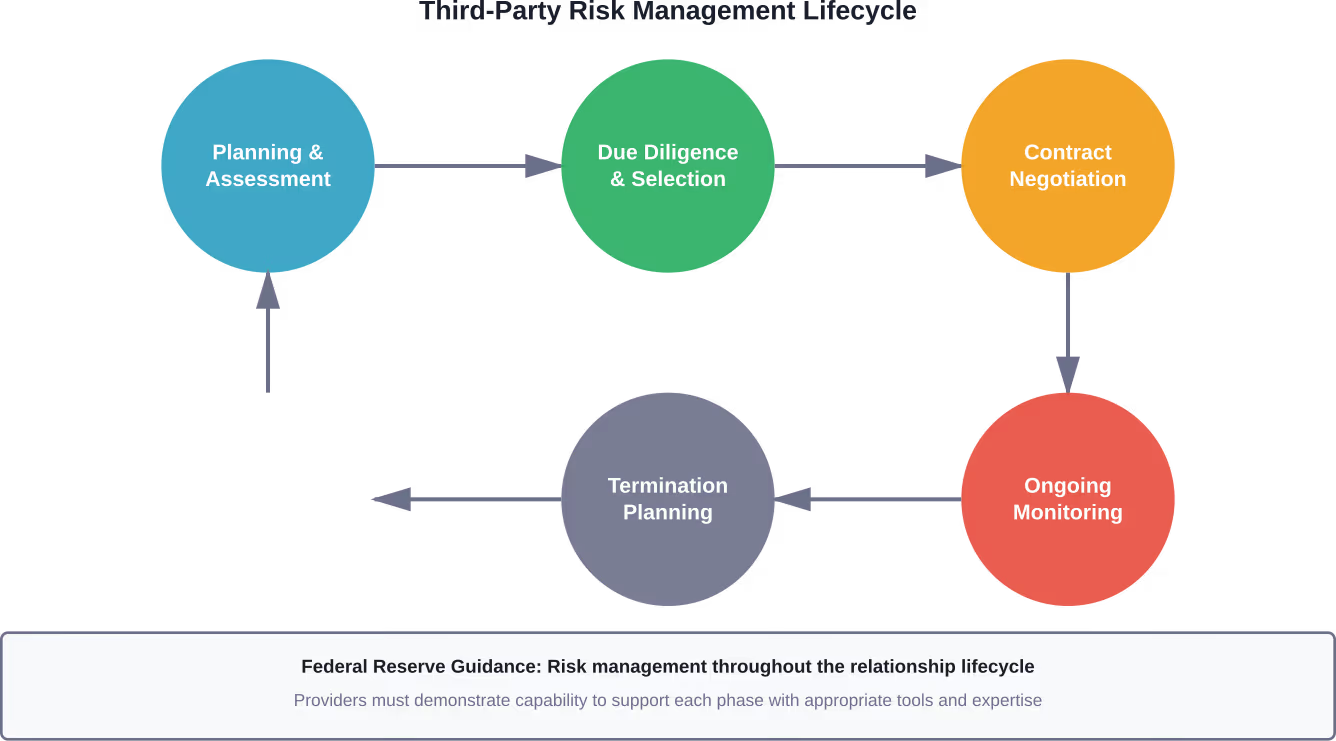
The Federal Reserve guidance emphasizes that governance frameworks should be commensurate with the level of risk and complexity of third-party relationships. Risk management providers should demonstrate understanding of this risk-based approach rather than applying uniform procedures regardless of third-party criticality.
Checking Track Record and References
Past performance provides insight into future results. Review the provider's history with similar organizations facing comparable risk challenges.
Request specific references from clients in similar industries, of similar size, and facing similar regulatory environments. Generic references from vastly different organizations offer limited value.
When speaking with references, ask pointed questions about actual experiences:
- How did the provider respond when unexpected regulatory changes occurred?
- Were projects completed on time and within budget?
- Did the provider identify risks that internal teams had missed?
- How effective was communication during challenging situations?
- Would they engage the provider again for additional services?
Review any publicly available information about the provider's regulatory standing. For firms registered with the SEC, examination history and any disclosed violations provide important context. The SEC maintains that responses provided in examination and oversight contexts are generally kept confidential, but public records exist for formal enforcement actions.
Community discussions often reveal practical experiences that formal references don't mention. While individual experiences vary, patterns in feedback across multiple sources indicate consistent strengths or weaknesses.
Assessing Communication and Service Model
Effective risk management requires clear, consistent communication. Providers who disappear between quarterly reviews or respond slowly to urgent questions create additional risk rather than managing it.
Evaluate the service model during initial conversations. How accessible will the team be? Who serves as the primary point of contact? What response times can organizations expect for routine questions versus urgent issues?
Technology plays a crucial role in modern communication. Providers should offer multiple channels—secure messaging, video conferencing, phone access, and in-person meetings when appropriate. But technology doesn't replace human judgment and relationship development.
Service Model Components
- Dedicated Team Structure: Understanding who will actually perform the work matters. Will the senior professionals involved in sales conversations remain engaged, or will less experienced staff handle day-to-day activities? Team continuity reduces the need to repeatedly explain organizational context.
- Reporting Frequency: How often will the provider deliver formal risk assessments and compliance updates? Quarterly reviews work for stable environments, but organizations facing rapid change may need monthly or even weekly touchpoints.
- Emergency Protocols: What happens when urgent issues arise? Clear escalation procedures and guaranteed response times for critical situations provide peace of mind.
- Proactive Outreach: Does the provider only respond to client requests, or do they proactively alert organizations to emerging risks, regulatory changes, or industry developments?
According to Morgan Stanley, 98% of their clients are satisfied with how their financial advisor handles questions and requests. This high satisfaction correlates with clear communication expectations and responsive service models.
Evaluating Cultural Fit and Partnership Approach
Risk management relationships work best when cultural alignment exists between the service provider and the organization. Mismatched expectations, communication styles, or organizational values create friction that undermines effectiveness.
During evaluation, assess whether the provider treats the relationship as a partnership or a vendor transaction. Partnership-oriented firms invest time understanding organizational goals, constraints, and culture. They customize approaches rather than forcing organizations into standardized templates.
Look for providers who ask thoughtful questions about strategic objectives, operational challenges, and organizational culture during initial conversations. Firms that immediately pitch standardized solutions without understanding context likely won't adapt well to specific needs.
Partnership Indicators
Several characteristics distinguish true partners from transactional service providers:
- Customization Willingness: Partners adapt methodologies, reporting formats, and communication styles to organizational preferences rather than requiring clients to conform to rigid processes.
- Educational Approach: Effective providers educate internal teams, building organizational capability over time rather than creating dependency on external expertise.
- Honest Feedback: Partners deliver difficult messages when necessary, identifying risks even when organizations may not want to hear about them. Providers who only deliver positive news aren't providing value.
- Long-Term Perspective: Partnership-oriented firms focus on sustainable risk management rather than quick fixes that create future problems.
GARP emphasizes that building internal expertise, fostering accountability, and ensuring effective execution define success in financial services risk management. Providers should enhance these capabilities rather than substituting external dependence for internal development.
Understanding Scalability and Growth Support
Organizations evolve. Service providers should scale with changing needs rather than requiring complete relationship restructuring as circumstances change.
Evaluate whether potential providers have experience supporting organizations through growth phases, regulatory transitions, or strategic shifts. Can they expand services as needs increase? Do they have specialized expertise for emerging risk areas?
Small organizations may initially need basic compliance support but eventually require sophisticated enterprise risk management frameworks. Providers who can grow with the organization provide continuity and accumulated institutional knowledge.
Conversely, organizations experiencing contraction or simplification need providers who can right-size services without abandoning the relationship. Flexibility in both directions indicates genuine partnership orientation.
Scalability Considerations
- Service Modularity: Can organizations add or remove specific services without disrupting core risk management activities?
- Geographic Expansion: If the organization opens new locations or enters new markets, can the provider support these expansions?
- Regulatory Changes: When new regulations apply to organizational activities, does the provider have expertise to guide compliance?
- Technology Integration: As internal systems evolve, can the provider's platforms integrate with new technologies?
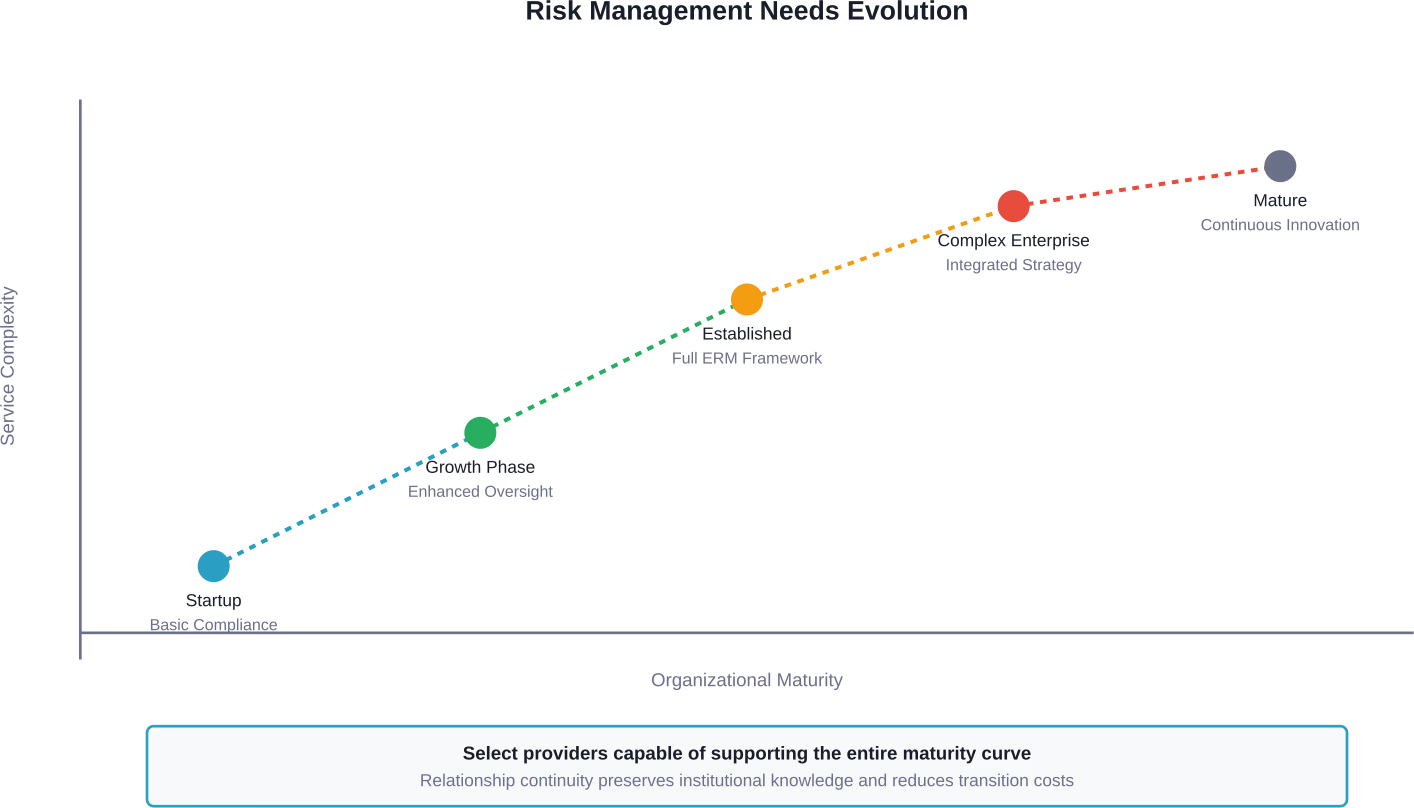
The short answer? Organizations should select providers with demonstrated capability across the maturity spectrum rather than specialists in only one phase.
Making the Final Decision
After evaluating potential providers across all relevant dimensions, organizations face the actual selection decision. This process should be systematic rather than based primarily on personal relationships or lowest cost.
Create a scoring framework that weights the factors most important to organizational circumstances. A heavily regulated investment adviser might weigh regulatory expertise and compliance methodology most heavily. A rapidly growing fintech company might prioritize scalability and technology risk capabilities.
Decision Framework
| Evaluation Category | Key Questions | Red Flags |
|---|---|---|
| Regulatory Expertise | Do they understand our specific regulations? Can they demonstrate current knowledge? | Vague responses about "general compliance"; outdated regulatory references |
| Sector Experience | Have they served similar organizations successfully? Can they provide relevant references? | No comparable client examples; generic industry knowledge |
| Methodology | Is their approach systematic and comprehensive? Does it align with recognized frameworks? | Ad hoc processes; no documented methodology; rigid templates |
| Technology | Do their systems enable effective monitoring? Are platforms user-friendly? | Manual processes; outdated systems; overly complex platforms |
| Fee Transparency | Are all costs clearly disclosed? Do fees align with market rates? | Vague pricing; hidden fees; unusually low or high costs |
| Communication | Are they responsive? Do they explain concepts clearly? | Slow responses; jargon-heavy communication; unclear escalation |
| Cultural Fit | Do they understand our organization? Do working styles align? | Dismissive of concerns; rigid approaches; poor listening |
Document the evaluation process. This creates accountability for the decision and provides a baseline for measuring provider performance after engagement.
Trust professional judgment, but verify it with objective criteria. A provider who seems personable but lacks demonstrated expertise in critical areas creates risk. Conversely, highly credentialed firms with poor communication may struggle to deliver practical value.
Now, this is where it gets interesting. Organizations sometimes discover that no single provider meets all requirements. In these cases, consider whether a multi-provider approach makes sense—using specialized firms for specific risk categories while maintaining a primary relationship for overall coordination.
The Federal Reserve guidance acknowledges that banking organizations may engage multiple third parties for different functions. The key is maintaining effective oversight across all relationships rather than fragmenting risk management so severely that comprehensive visibility disappears.
Implementing the Engagement Successfully
Selecting a provider is just the beginning. Successful implementation requires clear expectations, defined responsibilities, and ongoing communication.
Establish formal onboarding procedures that document organizational context, risk priorities, and success metrics. Providers need thorough understanding of business operations, existing control environments, and historical risk events to deliver value.
Define specific deliverables, timelines, and performance metrics in the engagement agreement. Ambiguous expectations lead to disappointment regardless of provider capability.
Implementation Best Practices
- Clear Governance Structure: Designate internal contacts responsible for managing the relationship, reviewing deliverables, and escalating issues. According to COSO guidance, effective governance is essential for enterprise risk management.
- Regular Review Cadence: Schedule consistent touchpoints for status updates, risk assessments, and strategic discussions. Monthly or quarterly reviews maintain momentum and ensure issues don't accumulate.
- Documentation Standards: Establish clear requirements for work product documentation, compliance records, and communication trails. According to SEC requirements, adviser compliance records must be retained for at least five years.
- Performance Measurement: Define metrics for evaluating provider effectiveness beyond simple activity completion. Are risks being identified before they materialize? Do compliance programs withstand regulatory scrutiny? Has the organization's risk culture improved?
- Feedback Mechanisms: Create channels for providing constructive feedback to the provider about what's working and what needs adjustment. Partnership relationships require two-way communication.
Build relationships across provider team members, not just with senior contacts. When inevitable personnel changes occur, broader relationship networks ensure continuity.

Get Financial Risk Under Control From Day One
Financial risk isn’t just about identifying issues – it requires a structured approach to assess, manage and monitor risk across the organisation. Acumon provides risk management audit and advisory services through its Risk & Tech Assurance practice, working with CFOs and finance teams to establish frameworks covering operational, financial and strategic risks.
Build a Risk Framework That Actually Works
Acumon delivers risk management support through:
- Development of risk appetite aligned with business objectives
- Implementation of risk mitigation and control processes
- Ongoing risk monitoring and reporting
- Flexible delivery models (outsourced, co-sourced or ad-hoc)
Speak with Acumon to review your current risk framework.
Conclusion: Building a Risk Management Partnership
Selecting financial risk management services represents a strategic decision with long-term implications for organizational success and regulatory standing.
The right provider brings more than compliance expertise—they become a trusted partner who helps navigate complex regulatory environments, identify emerging risks before they materialize, and build sustainable risk management capabilities.
Effective selection requires systematic evaluation across multiple dimensions: regulatory expertise, sector experience, methodology sophistication, technology capabilities, fee transparency, communication effectiveness, cultural alignment, and scalability. Organizations that invest time in thorough evaluation typically establish more productive relationships than those who select based primarily on cost or convenience.
Remember that risk management is not a one-time project but an ongoing process. The Federal Reserve, SEC, and other regulatory authorities increasingly emphasize continuous oversight, lifecycle management, and integration with organizational strategy.
Start the evaluation process by clearly defining organizational needs, risk priorities, and success criteria. This clarity guides provider selection and creates accountability for measuring relationship effectiveness over time.
Take action now. The regulatory landscape continues evolving, new risks emerge constantly, and organizations without robust risk management face increasing exposure. Whether starting fresh or re-evaluating existing relationships, apply the framework outlined here to make informed decisions that protect organizational assets and support strategic objectives.
The best risk management relationships combine external expertise with internal ownership—providers who enhance organizational capability rather than creating dependency deliver the most sustainable value.
Frequently Asked Questions
Providers should demonstrate relevant professional certifications like CFA, FRM, CAMS, or CPA depending on their service focus. More importantly, verify regulatory registrations such as SEC registration for investment adviser services or appropriate state licenses. Industry experience often matters more than credentials alone—look for providers with demonstrated expertise in specific regulatory environments and risk categories relevant to organizational needs.
Costs vary significantly based on service scope, organizational complexity, and engagement model. Asset-based fees for investment-focused services typically range from 0.5% to 1.5% of assets under management annually. Retainer-based compliance advisory arrangements vary widely depending on required support levels. Project-based engagements for specific initiatives like compliance program development are priced individually. Request detailed fee disclosures that outline all potential costs before engagement.
Risk assessment frequency depends on organizational circumstances and regulatory requirements. Rapidly changing environments require more frequent reassessment than stable situations. Generally, comprehensive risk assessments should occur at least annually, with more frequent reviews for high-risk areas or when significant changes occur. The Federal Reserve's third-party risk management guidance emphasizes ongoing monitoring throughout relationship lifecycles rather than point-in-time assessments.
Compliance consulting typically focuses on meeting specific regulatory requirements through policy development, procedure implementation, and regulatory filing support. Comprehensive risk management takes a broader view, integrating compliance obligations with strategic risk assessment, operational risk controls, third-party oversight, and enterprise-wide risk frameworks. COSO's Enterprise Risk Management framework emphasizes integration with strategy and performance rather than treating risk management as a separate compliance function.
Small organizations often benefit significantly from external risk management expertise since building comprehensive internal capabilities may not be cost-effective at a limited scale. External providers offer access to specialized knowledge, regulatory monitoring, and best practice frameworks without the overhead of full-time specialized staff. The key is selecting providers who understand resource constraints and can deliver practical, scalable solutions rather than enterprise-sized programs inappropriate for organizational size.
For providers registered with the SEC, review their Form ADV disclosures available through the SEC's Investment Adviser Public Disclosure website. This shows registration status, services offered, fee structures, conflicts of interest, and disciplinary history. For other providers, verify relevant state licenses, professional certifications, and industry registrations. Request references from current clients and research any publicly available information about regulatory actions or complaints.
Technology enables continuous monitoring, automated alerts, comprehensive reporting, and efficient documentation management that manual processes cannot match. Effective providers use platforms for tracking regulatory changes, monitoring third-party relationships, maintaining compliance records, and generating risk dashboards. However, technology alone doesn't create effective risk management—it must be combined with expert analysis, strategic thinking, and organizational context. Evaluate whether provider technology actually improves decision-making or just generates more reports.