
Choosing the right competitive analysis services company requires evaluating their industry expertise, data collection methods, analytical frameworks, reporting capabilities, and pricing structure. The best providers combine advanced technology with strategic insights, offering customizable solutions that align with your specific business goals and market position.
Competitive analysis has evolved from simple spreadsheet comparisons into sophisticated intelligence operations. According to the U.S. Small Business Administration, market research and competitive analysis help businesses find customers and create unique market positioning that drives growth.
But here's the challenge: not every organization has the internal resources to conduct deep competitive analysis. That's where specialized service providers enter the picture.
The competitive intelligence market offers everything from automated pricing tools to full-service strategic consulting. Some companies need real-time data on competitor pricing. Others require comprehensive market positioning analysis that informs multi-year strategies.
So how do businesses evaluate these providers? What separates genuinely valuable services from expensive data dumps that collect dust in shared drives?
Understanding What Competitive Analysis Services Actually Deliver
Before evaluating providers, it helps to understand what competitive analysis services actually encompass. The scope varies dramatically across different companies and price points.
Market research blends consumer behavior and economic trends to confirm and improve business strategy, as the Small Business Administration notes. Competitive analysis takes this further by examining how competitors position themselves within those same market conditions.
Some services focus narrowly on pricing intelligence. According to Pricefy's analysis of competitive pricing tools, these platforms utilize data science and machine learning to provide insights into competitor pricing strategies. They're particularly valuable for e-commerce businesses operating on Amazon, eBay, and similar marketplaces.
Other providers deliver comprehensive competitive intelligence that spans product development, marketing strategies, sales tactics, and strategic positioning. HG Insights notes that competitive intelligence tools allow businesses to peer into competitors' products, sales tactics, and market approaches.
The Spectrum of Service Models
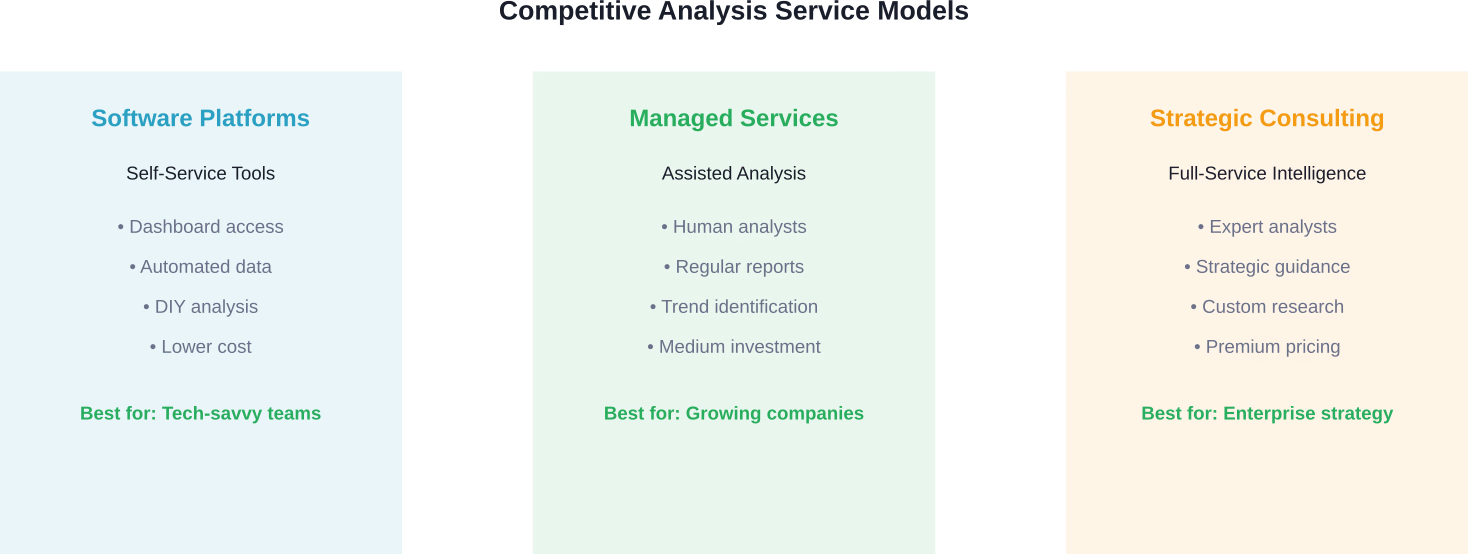
Competitive analysis services generally fall into three categories:
- Software platforms provide self-service tools where businesses access dashboards, configure competitors to track, and extract their own insights. These require internal expertise to interpret data effectively.
- Managed services combine technology with human analysts who prepare reports, identify trends, and sometimes provide strategic recommendations. The provider handles data collection and initial analysis.
- Strategic consulting involves experienced analysts who not only deliver competitive intelligence but help interpret findings within broader strategic contexts. These engagements typically include workshops, presentations, and ongoing advisory relationships.
Each model serves different needs and budgets. The right choice depends on internal capabilities, strategic maturity, and specific business objectives.
Key Evaluation Criteria for Competitive Analysis Providers
Selecting a competitive analysis services company requires systematic evaluation across multiple dimensions. The most expensive option isn't always the most effective.
Industry Expertise and Specialization
Generic competitive analysis rarely delivers actionable insights. The best providers demonstrate deep knowledge of specific industries, market dynamics, and competitive patterns.
Does the provider understand the nuances of your industry? Can they distinguish between meaningful competitive moves and market noise? Do they recognize which metrics actually matter in your sector?
Some providers specialize in e-commerce pricing intelligence. Others focus on B2B technology markets. Still others excel at retail, healthcare, or financial services analysis.
Gartner Peer Insights provides peer reviews of competitive intelligence platforms. Industry specialization is commonly cited as a critical factor in provider effectiveness. Businesses working with industry-specialized providers report higher satisfaction and better strategic outcomes.
Data Collection Methods and Sources
Competitive intelligence quality depends entirely on data quality. How does the provider actually gather information about competitors?
Legitimate methods include public financial disclosures, website analysis, social media monitoring, job postings, patent filings, customer reviews, and market research. Advanced providers use web scraping, API integrations, and data science techniques to aggregate information at scale.
But here's what matters: transparency about data sources. Reputable providers clearly explain where information comes from and acknowledge limitations. They don't make claims they can't substantiate.
Real talk: some providers oversell their capabilities. They promise comprehensive insights into competitor strategies but deliver surface-level observations anyone could find through basic Google searches.
Analytical Frameworks and Methodologies
Data without analysis is just noise. The U.S. Small Business Administration emphasizes that competitive analysis helps businesses make their offerings unique by understanding market positioning.
What frameworks does the provider use? SWOT analysis frameworks help organizations identify strengths, weaknesses, opportunities, and threats systematically.
Strong providers employ multiple analytical approaches depending on client needs. They might use Porter's Five Forces for market structure analysis, SWOT for positioning assessment, perceptual mapping for brand comparison, or scenario planning for strategic forecasting.
The framework matters less than whether analysts can apply it appropriately and extract meaningful insights that inform decisions.
Reporting and Insight Delivery
Simon-Kucher's research on competitive analysis strategies notes that most competitor analysis produces documents, not decisions. That's the critical distinction.
How does the provider deliver insights? Are reports static PDFs that arrive monthly? Interactive dashboards that update continuously? Presentations with strategic recommendations? Workshops that facilitate internal strategic discussions?
The delivery format should match how the organization actually makes decisions. A fast-moving e-commerce business needs real-time pricing alerts. A manufacturing company planning three-year product roadmaps needs quarterly strategic assessments.
Look for providers who customize reporting to specific stakeholder needs. What the CEO needs differs from what product managers need, which differs from what sales teams need.
Technology Platform and Integration
Many competitive analysis services rely on proprietary software platforms. Evaluating these platforms requires asking practical questions.
Is the interface intuitive? Can non-technical team members access insights easily? Does the platform integrate with existing business intelligence tools, CRM systems, or data warehouses?
Integration capabilities can significantly impact the usability of price monitoring tools. Platforms that connect with existing workflows get used consistently. Those that require separate logins and manual data exports often get abandoned after initial enthusiasm fades.
Questions to Ask During Provider Evaluation
Smart procurement involves asking pointed questions that reveal provider capabilities and limitations. Here are the most revealing questions based on common evaluation criteria.
| Category | Key Questions | What Good Answers Sound Like |
|---|---|---|
| Experience | How many clients do you serve in our industry? | Specific numbers, client examples (within confidentiality limits), case studies |
| Methodology | What frameworks guide your analysis? | Named frameworks, explanation of when each applies, customization approach |
| Data Sources | Where does your competitive data come from? | Specific sources, data collection methods, update frequency, quality controls |
| Customization | How do you tailor analysis to our needs? | Discovery process description, examples of customization, flexibility on metrics |
| Deliverables | What exactly do we receive? | Sample reports, dashboard demos, clear deliverable schedule |
| Team | Who will actually work on our account? | Analyst backgrounds, team structure, escalation paths, consistency |
| Technology | What technology powers your service? | Platform tour, integration options, data security measures, uptime guarantees |
The follow-up questions matter as much as initial queries. When providers give vague answers, push for specifics. When they make bold claims, ask for evidence.
Understanding Pricing Models
Competitive analysis services use various pricing structures. Understanding these models helps evaluate total cost of ownership:
- Subscription pricing charges monthly or annual fees for platform access and regular reports. This works well for ongoing competitive monitoring needs.
- Project-based pricing involves one-time fees for specific analyses. Companies use this for market entry decisions, M&A due diligence, or periodic strategic reviews.
- Tiered pricing offers different service levels at different price points. Basic tiers might include automated reports while premium tiers add analyst support.
- Custom enterprise pricing negotiates terms based on specific requirements, company size, and service scope.
According to Priceagent's comparison of pricing intelligence tools, pricing varies significantly across providers and service types. The recommendation: check official websites for current pricing since subscription tiers and features change frequently.
Matching Provider Capabilities to Business Needs
The best competitive analysis provider for one company might be completely wrong for another. Matching requires honest assessment of internal needs and capabilities.
Assessing Internal Analytical Capabilities
Does the organization have analysts who can work with raw data? Or does it need fully interpreted insights ready for executive consumption?
Companies with strong internal analytics teams might prefer data-rich platforms that feed into existing business intelligence systems. Organizations without analytical resources need providers who deliver synthesized insights and strategic recommendations.
There's no shame in either position. A small business with limited resources shouldn't try to operate like an enterprise with dedicated competitive intelligence teams.
Defining Competitive Intelligence Objectives
What decisions will competitive analysis actually inform? Competitive analysis should directly support business-level strategy and competitive positioning.
Common objectives include:
- Pricing optimization based on competitor moves
- Product development informed by competitor feature gaps
- Marketing positioning differentiated from competitor messaging
- Sales enablement with competitive battle cards
- Strategic planning incorporating competitive scenarios
- Market entry decisions based on competitive intensity analysis
Clear objectives help evaluate whether provider capabilities align with actual needs. A company focused primarily on pricing decisions doesn't need comprehensive strategic consulting.
Considering Update Frequency Requirements
How quickly does competitive information become stale in your market?
E-commerce businesses often need real-time or daily pricing updates. Technology companies might need weekly product feature monitoring. Manufacturing firms might find quarterly strategic assessments sufficient.
Update frequency directly impacts cost. Real-time monitoring requires more sophisticated technology and higher subscription fees than periodic analysis.

Get Competitor Insight That Matters
Understanding competitors often comes down to how businesses perform financially, how they are valued and how deals are structured. Acumon is a London-based firm of chartered accountants, auditors and advisors with UK-based professionals, providing due diligence, valuation and advisory services. This work supports businesses and investors in assessing company performance, value and position in the market.
Use Financial Data, Not Assumptions
Acumon works with:
- Business valuations to assess company value
- Due diligence for acquisitions and investment decisions
- Financial analysis supporting business planning
- Advisory services linked to performance and transactions
Speak with Acumon to discuss your advisory needs.
Red Flags When Evaluating Providers
Certain warning signs indicate problematic providers. Recognizing these early saves time and money:
- Overpromising access to confidential information: Legitimate providers work with publicly available data and ethical research methods. Anyone claiming they can access competitor financials, internal strategies, or proprietary data through questionable means should be avoided.
- Refusing to provide sample deliverables: Reputable providers willingly share anonymized examples of their work. Resistance to showing samples often indicates low-quality output.
- Unclear methodology: Providers should articulate how they collect data, what frameworks guide analysis, and how they generate insights. Vague explanations suggest unsophisticated approaches.
- One-size-fits-all solutions: Every business faces unique competitive dynamics. Providers pushing identical services for every client likely deliver generic analysis with limited value.
- No industry references: Established providers can connect prospective clients with current customers for reference calls. Inability or unwillingness to provide references raises serious questions.
- Pressure tactics: High-pressure sales approaches, artificial urgency, or resistance to thoughtful evaluation processes indicate provider insecurity about their actual value proposition.
Evaluating Proof of Value
Before committing to long-term contracts, smart buyers establish proof of value. Several approaches work depending on provider flexibility.
Pilot projects allow testing provider capabilities on limited scope before full deployment. A three-month trial analyzing a specific competitor or market segment reveals analytical quality and delivery reliability.
Limited initial engagements with quarterly reviews provide natural checkpoints to assess value. If the first quarter delivers genuine insights that inform decisions, continuing makes sense. If not, exit costs remain manageable.
Some providers offer tiered entry points where businesses start with basic services and expand as value becomes clear. This reduces initial commitment while building confidence.
Reference calls with existing clients provide unfiltered perspectives on provider performance. Ask about responsiveness, analytical quality, strategic value, and any disappointments or limitations.
Integration with Internal Strategic Processes
Competitive analysis only creates value when integrated into actual decision-making. The best provider relationships include clear plans for how insights will inform strategy.
Who receives competitive intelligence reports? How do findings get incorporated into product planning, pricing decisions, marketing strategies, or sales enablement?
Many experts suggest establishing regular review cadences where competitive insights get discussed by relevant stakeholders. Monthly competitive reviews, quarterly strategic planning sessions, or annual market assessments create structured opportunities to act on intelligence.
Without these processes, even excellent competitive analysis sits unused. The provider might deliver outstanding insights, but organizational value remains unrealized.
Emerging Trends in Competitive Analysis Services
The competitive intelligence field continues evolving. Understanding current trends helps evaluate whether providers offer modern capabilities or outdated approaches.
AI and Machine Learning Integration
According to Pricefy's analysis, competitive pricing tools increasingly utilize data science and machine learning to identify patterns, predict competitor moves, and automate responses.
Advanced providers now offer predictive analytics that forecast competitor behavior based on historical patterns. These capabilities move beyond reactive monitoring toward proactive strategic positioning.
Real-Time Monitoring and Alerts
Traditional quarterly reports are giving way to continuous monitoring with automated alerts when competitors make significant moves. Price changes, product launches, marketing campaigns, and strategic announcements trigger immediate notifications.
This shift requires more sophisticated technology infrastructure but delivers much higher strategic value in fast-moving markets.
Broader Data Source Integration
Modern competitive intelligence platforms integrate diverse data sources including social media sentiment, job posting analysis, patent filings, web traffic patterns, app store analytics, and customer review mining.
This comprehensive approach provides richer competitive understanding than traditional methods focused narrowly on pricing and product features.
Building Long-Term Provider Relationships
The best competitive analysis engagements mature into strategic partnerships. Initial contracts focus on deliverables and metrics, but successful long-term relationships develop deeper collaboration.
Providers who truly understand business contexts can offer increasingly valuable insights as relationships deepen. They recognize which competitors matter most, understand strategic priorities, and tailor analysis accordingly.
Regular communication strengthens these relationships. Quarterly business reviews, strategic planning sessions, and ongoing feedback loops help providers continuously improve relevance and value.
But this requires organizational commitment too. Providers deliver better results when businesses share strategic context, provide feedback on analytical quality, and engage actively with insights.
Making the Final Decision
Selecting competitive analysis services ultimately comes down to alignment. Does the provider's expertise match the industry? Do their capabilities address specific business needs? Does their delivery model fit how the organization makes decisions?
The most sophisticated provider isn't necessarily the best choice. The most expensive service doesn't guarantee the most valuable insights. The right provider delivers relevant intelligence that actually informs strategic decisions within budget constraints.
Start with clear objectives. Competitive analysis should answer specific questions: How should products be positioned? What pricing maximizes both competitiveness and margins? Which market segments offer the best growth opportunities? Where are competitors vulnerable?
Evaluate providers systematically against documented criteria. Request demonstrations, review sample deliverables, check references, and ask probing questions about methodology, data sources, and analytical approaches.
Begin with limited commitments when possible. Pilot projects and phased engagements reduce risk while building confidence in provider capabilities.
Most importantly, remember that competitive analysis creates value only when integrated into actual business processes. The best provider relationships involve ongoing collaboration, regular communication, and continuous refinement as strategic needs evolve.
Ready to find the right competitive analysis partner? Start by defining what strategic decisions need better competitive intelligence, then evaluate providers against those specific needs rather than generic capabilities.
Frequently Asked Questions
Pricing varies dramatically based on service type and scope. Self-service software platforms may start around a few hundred dollars monthly for basic features, while comprehensive managed services can range from several thousand to tens of thousands monthly. Strategic consulting engagements often involve project-based fees. For current pricing on specific platforms, check official provider websites as subscription tiers and features change frequently.
Most businesses benefit from tracking 3-7 primary competitors closely, with broader monitoring of 10-15 secondary competitors. The U.S. Small Business Administration recommends focusing competitive analysis on direct competitors who target the same customers with similar offerings. Tracking too many competitors dilutes analytical focus and makes insights less actionable.
According to the Small Business Administration, market research and competitive analysis help businesses find customers and create unique market positioning. Even small businesses benefit from competitive intelligence, though they may start with lower-cost software platforms or periodic consulting projects rather than comprehensive managed services. The key is matching service level to budget and strategic needs.
Initial insights often appear within the first month as providers establish baseline competitive landscapes. However, strategic value typically accumulates over 3-6 months as trend patterns emerge and businesses integrate insights into decision processes. Pilot engagements of 90 days provide reasonable timelines to assess provider value before committing to longer-term contracts.
The Small Business Administration notes that market research blends consumer behavior and economic trends to confirm business ideas, while competitive analysis focuses specifically on how competitors position themselves within markets. Market research examines customer needs and market opportunities. Competitive analysis examines competitor strategies, strengths, and weaknesses. The most effective strategies combine both approaches.
Yes, particularly services specializing in pricing intelligence. According to Pricefy's analysis of competitive pricing tools, these platforms track competitor prices in real-time, identify pricing patterns, and some even automate repricing responses. E-commerce businesses selling on marketplaces like Amazon and eBay particularly benefit from automated competitive pricing analysis.
Reputable providers transparently explain data sources and collection methods, focusing on publicly available information through legal means. Red flags include vague explanations about methodology, claims of accessing confidential competitor information, or resistance to discussing data sources. Established providers typically follow industry standards and can articulate their ethical guidelines clearly.