
Quick Summary: Choosing an auto-enrolment services company involves evaluating payroll integration, contribution management, compliance support, and transparent pricing. UK employers must select a pension scheme that handles automatic enrolment duties, processes contributions correctly, and meets regulatory requirements from The Pensions Regulator. The right provider simplifies ongoing compliance, re-enrolment cycles, and employee communications.
Every UK employer with at least one member of staff faces automatic enrolment duties under the Pensions Act 2008. That means picking a pension scheme and ensuring eligible workers are enrolled correctly. But which auto-enrolment services company should handle this for your business?
It's not just about ticking a compliance box. The provider you choose affects payroll efficiency, employee satisfaction, and ongoing administrative burden. Get it wrong and you'll face missed deadlines, frustrated staff, and potential fines from The Pensions Regulator.
Here's how to evaluate providers and make the right choice.
Understanding Auto-Enrolment Requirements
Before comparing providers, it's essential to understand what automatic enrolment actually demands from employers.
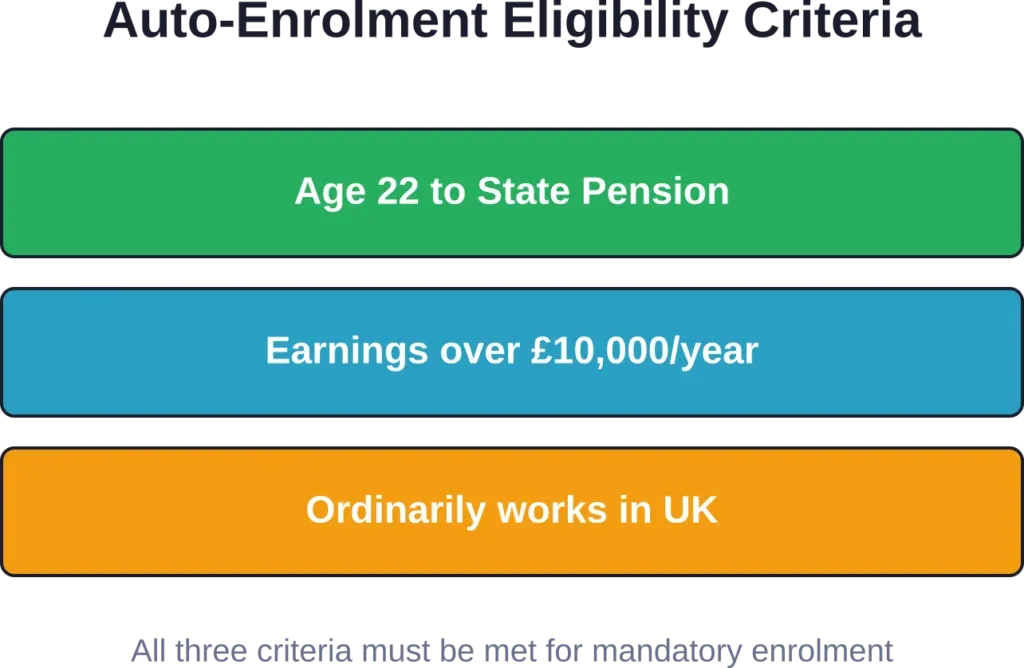
According to The Pensions Regulator, employers must automatically enrol workers who are between 22 and State Pension age, earn over £10,000 per year, and ordinarily work in the UK. Contributions must total at least 8% of qualifying earnings, split between employer (minimum 3%) and employee (minimum 5%).
The duties don't stop after initial enrolment. Employers must re-enrol eligible workers every three years, process opt-outs correctly, and provide specific information to workers at defined points. That's where a capable auto-enrolment services company becomes invaluable.
Key Features to Compare
Payroll Integration
Look, the provider needs to work seamlessly with your existing payroll software. Whether that's Xero, QuickBooks, Sage, or something else, integration prevents double-entry and reduces errors.
Ask potential providers specifically which payroll systems they support. Some work with nearly any platform via file upload, while others require proprietary software that could force you to change your entire payroll process.
Contribution Handling
The services company should calculate contributions automatically based on qualifying earnings and apply the correct thresholds.
Verify that the provider handles tax relief correctly. Most schemes operate relief at source, where the pension provider claims basic-rate tax relief directly from HMRC and adds it to the pension pot. Higher-rate taxpayers claim additional relief through their tax return.
Compliance Support
The Pensions Regulator requires specific communications at specific times. Workers must receive enrolment information within six weeks of their duties start date. Opt-out requests must be processed within strict timeframes.
A capable provider automates these communications and tracks deadlines. They'll also handle re-enrolment, which occurs every three years and requires assessing the workforce again and enrolling those who've previously opted out.
Employee Access and Support
Employees need clear information about their pension. The provider should offer online account access where workers can view contributions, investment performance, and retirement projections.
What about support channels? If an employee has questions, can they contact the provider directly, or must everything route through your HR team? Direct employee support reduces your administrative burden significantly.
| Feature | Why It Matters | What to Check |
|---|---|---|
| Payroll integration | Prevents manual data entry errors | Compatibility with your current software |
| Contribution calculation | Ensures correct deductions and tax relief | Handles qualifying earnings bands automatically |
| Compliance tracking | Avoids fines and missed deadlines | Automated reminders and communications |
| Employee portal | Reduces HR queries | Mobile access and clear dashboard |
| Re-enrolment support | Manages three-year cycle | Automated assessment and enrolment |
Keep Auto-Enrolment Running Through Acumon Payroll
Choosing an auto-enrolment services company usually means looking at how well it connects pension duties with payroll. Acumon provides outsourced payroll services that include PAYE, RTI, pension administration, and broader payroll compliance support. For employers, this can help keep workplace pension administration tied to the same payroll process that already handles employee pay, tax, and reporting.
Payroll work Acumon can support include:
- Payroll processing
- PAYE administration
- RTI reporting support
- Pension administration
- Payroll record keeping
- HMRC payroll liaison support
Get in touch with Acumon to discuss payroll and pension administration support for your business.
Cost Structures and Pricing Models
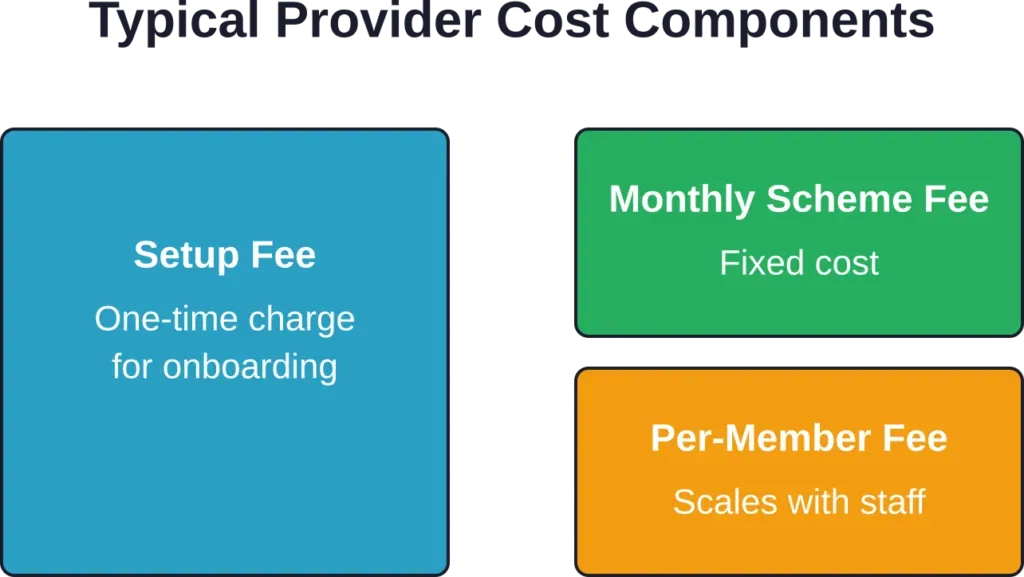
Pricing varies considerably across providers. Some charge per employee per month, others have flat monthly fees, and some combine both approaches with setup charges.
Typical structures include an initial setup fee, monthly scheme fees, and per-member charges. Larger employers often negotiate bespoke pricing.
But here's the thing — cheapest isn't always best. A provider charging £2 per employee that requires hours of manual administration each month costs more than one charging £4 with full automation.
Ask for a detailed breakdown. Watch for hidden charges like fees for changing contribution rates, generating reports, or processing opt-outs.
Evaluating Provider Reputation and Service Quality
Start with providers regulated by the Financial Conduct Authority and approved by The Pensions Regulator. This ensures they meet baseline standards for pension scheme operation.
Check their track record. How long have they operated in the auto-enrolment space? Providers established since the original 2012 rollout have experience managing various employer scenarios and regulatory changes.
Real talk: speak to current clients if possible. Ask about customer service responsiveness, how smoothly payroll integration actually works, and whether they've encountered unexpected issues or charges.
Implementation Timeline
The Pensions Regulator advises allowing plenty of time to set up a scheme. Implementation timelines vary depending on payroll system complexity and data quality requirements.
Providers should offer clear onboarding with dedicated support during setup. That includes testing payroll integration thoroughly before your duties start date and ensuring all employee communications are ready.
Questions to Ask Potential Providers
When evaluating companies, these questions reveal capability and service quality:
- Which payroll systems do you integrate with directly, and what's the process for systems you don't?
- How do you handle assessment and re-enrolment every three years?
- What employee support do you provide, and is it included or an additional cost?
- How are contribution rate changes managed if we want to increase employer contributions?
- What reports do you provide for our records and auditing purposes?
- What happens if we miss a contribution deadline — what's your recovery process?
The answers tell you whether the provider truly understands auto-enrolment complexity or just views it as a commodity service.
Making the Final Decision
After comparing features, costs, and reputation, narrow to two or three providers and request detailed proposals:
- Test their responsiveness during the sales process: If they're slow to answer questions now, that's likely how they'll handle support issues after you've signed up.
- Consider a trial period if available: Some providers allow smaller employers to pilot their service with a subset of employees before full rollout.
- Don't rush: The wrong choice creates ongoing frustration, while the right provider becomes an invisible partner that handles compliance efficiently, leaving you to focus on running your business.
Frequently Asked Questions
Yes, employers can switch pension schemes, though it requires careful planning. Workers must be notified, contribution flows redirected, and records transferred. Most switches take 2-3 months to complete properly. The Pensions Regulator must be informed of the new scheme details.
Pricing structures vary. Some providers charge the same rate for all enrolled members, while others tier pricing based on salary bands or have minimum member thresholds. Entitled workers who aren't eligible for mandatory enrolment but join voluntarily may have different fee structures.
Workers earning under £10,000 annually aren't automatically enrolled, but they can opt in to the pension scheme. If they earn between certain thresholds and £10,000, employers may have contribution obligations. For earnings below certain thresholds (£520 per month, £120 per week, or £480 over four weeks), employers need not contribute.
Integration timelines depend on the complexity of your payroll system and data requirements.
The Pensions Regulator can issue penalties for non-compliance. However, a poor provider can lead to missed deadlines, incorrect contributions, or inadequate record-keeping — all of which trigger fines.
Technically yes, but it's administratively intensive. You'll need a qualifying pension scheme that accepts direct employer contributions, payroll software capable of calculating qualifying earnings correctly, and systems to track duties and deadlines. Most employers find dedicated providers more cost-effective than internal administration.
Contact providers immediately. The Pensions Regulator recommends starting at least two months before your duties start date. If you're within weeks of the deadline, explain the urgency — some providers offer expedited onboarding, though it may cost extra or limit your choice of schemes.
Conclusion
Choosing an auto-enrolment services company isn't about finding the cheapest option or going with the biggest name. It's about matching provider capabilities to your specific needs — payroll system, workforce size, and internal administrative capacity.
Prioritise seamless payroll integration, transparent pricing, robust compliance support, and responsive customer service. These factors determine whether auto-enrolment becomes a smooth background process or an ongoing headache.
Start evaluating providers well before your duties start. The time invested in choosing correctly pays dividends in reduced administration, happier employees, and confident compliance with pension regulations.