
Housing internal audit services help housing authorities, affordable housing developers, and nonprofit housing organizations ensure compliance with HUD regulations, federal funding requirements, and financial reporting standards. These specialized audit services include compliance reviews, financial statement audits, tenant eligibility verification, and cost certification—critical for organizations managing Low-Income Housing Tax Credit (LIHTC) projects and other subsidized housing programs.
Housing organizations face layers of regulatory complexity. Federal funding from the U.S. Department of Housing and Urban Development (HUD), state housing agencies, and tax credit programs creates demanding compliance requirements.
Internal audit services designed specifically for housing entities address these challenges. But what separates housing audits from standard financial reviews?
What Housing Internal Audit Services Cover
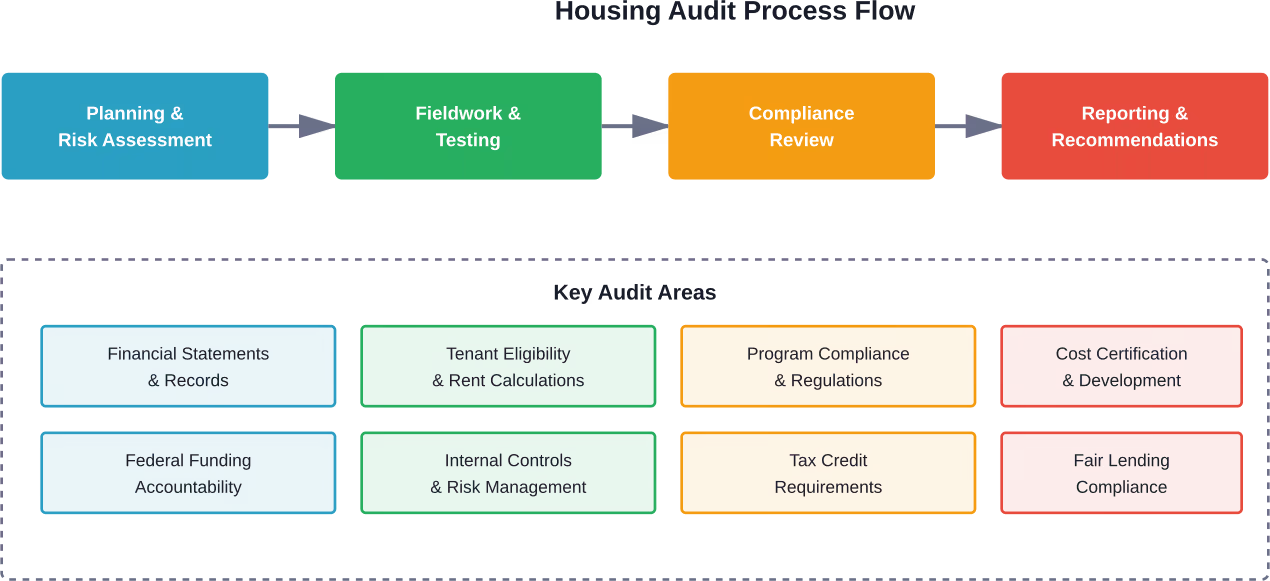
Housing internal audits extend beyond traditional financial statement reviews. These engagements examine tenant eligibility, rent calculations, program compliance, and proper fund usage.
Housing audits evaluate compliance with anti-discriminatory provisions under the Equal Credit Opportunity Act and Fair Housing Act, consistent with fair lending examination frameworks. This ensures housing programs operate with transparency and accountability.
The scope typically includes:
- Annual audits of Low-Income Housing Tax Credit projects
- HUD compliance audits for subsidized housing programs
- Tenant eligibility verification and rent calculation reviews
- Cost certification for owner and contractor submissions
- Financial records examination for federal funding compliance
- 10% carryover test engagements for tax credit allocations
Why Housing Organizations Need Specialized Audits
Standard accounting firms often lack the specialized knowledge required for housing compliance. Here's the thing though—housing regulations demand expertise in HUD guidelines, state housing finance agency requirements, and tax credit allocation rules.
Nonprofits and affordable housing developers need professionals who understand funding requirements, oversight mechanisms, and demands for increased transparency. Community development corporations particularly benefit from advisors familiar with complex funding sources and development project structures.
Common Housing Audit Challenges
Housing entities face distinct obstacles. Tenant eligibility documentation requirements change frequently. Rent calculation errors can trigger compliance violations. Financial records must satisfy multiple regulatory bodies simultaneously.
Cost certification presents another complexity. State and federal agencies including HCR, HUD, and US Rural Development may require owner and contractor cost certifications with specific documentation standards.
| Audit Type | Primary Focus | Typical Frequency |
|---|---|---|
| Financial Statement Audit | Accuracy of financial reporting and GAAP compliance | Annual |
| HUD Compliance Audit | Adherence to federal housing program requirements | Annual or as required |
| LIHTC Project Audit | Low-income housing tax credit compliance | Annual |
| Tenant Eligibility Review | Income verification and rent calculation accuracy | Ongoing/periodic |
| Cost Certification | Development costs and allowable expenses | Project completion or as required |
Selecting Housing Audit Professionals
Look for firms with dedicated affordable housing teams. Experience matters—professionals should demonstrate familiarity with HUD requirements, state housing finance agency protocols, and tax credit regulations.
The best providers offer integrated services: annual audits, tax preparation for entities and general partners, Form 990 preparation for nonprofit housing organizations, and agreed-upon procedure engagements for specific compliance needs.

Control Internal Audit in Housing Organisations
Housing organisations operate under ongoing regulatory oversight, funding requirements, and operational pressure across multiple teams and systems. Internal audit needs to reflect how the organisation actually works, not just formal policies. Acumon is a London-founded firm of chartered accountants, auditors and advisors with a UK-based team of professionals, supporting organisations across the UK and internationally. Internal audit is delivered as part of wider audit, risk, and governance work, with direct involvement from senior audit professionals and experience working with regulated and multi-entity organisations.
Strengthen Internal Audit Where It Matters
Acumon brings a structured and practical approach to internal audit:
- Senior-led audit work with direct access to experienced professionals
- Risk-based methodology aligned with how organisations actually operate
- Experience supporting regulated entities and organisations under oversight
- Ability to work across group structures and multiple jurisdictions
Contact Acumon and get your internal audit working properly.
Compliance Requirements for Different Housing Programs
Each housing program carries distinct audit requirements. Public housing authorities face different mandates than LIHTC developers. Nonprofit community development corporations operating multiple programs must satisfy various regulatory frameworks.
Federal funding sources demand rigorous accountability. Financial records must demonstrate proper use of funds, adherence to program-specific regulations, and compliance with fair lending provisions.
Moving Forward with Housing Audits
Housing internal audit services protect organizations from compliance violations, financial mismanagement, and regulatory penalties. The investment in specialized audit expertise pays dividends through reduced risk and improved operational efficiency.
Organizations managing affordable housing programs, public housing authorities, and community development corporations should prioritize partnerships with audit firms demonstrating deep housing sector knowledge. That expertise makes the difference between basic compliance and strategic risk management.
Ready to strengthen compliance? Connect with housing audit specialists who understand the unique challenges facing housing organizations today.
Frequently Asked Questions
In housing, internal audits involve systematic reviews of financial records, tenant eligibility documentation, rent calculations, and compliance with federal and local regulations. These audits ensure subsidized housing programs operate with transparency and proper fund usage.
Most housing entities require annual financial statement audits. HUD compliance audits and LIHTC project audits typically occur annually. Tenant eligibility reviews happen on ongoing or periodic schedules depending on program requirements.
Financial audits examine overall financial statement accuracy and GAAP compliance. HUD audits specifically review adherence to federal housing program requirements, including tenant eligibility, rent calculations, and proper use of HUD funding.
Specialized accounting firms with affordable housing expertise perform cost certifications. These agreed-upon procedure engagements verify development costs and allowable expenses for state and federal agencies like HCR, HUD, and US Rural Development.
The 10% test engagement verifies that a developer has incurred at least 10% of reasonably expected basis in a LIHTC project. This carryover certification allows developers to retain tax credit allocations across calendar years.
Yes. Nonprofit housing entities typically require both standard nonprofit audits addressing funding and transparency requirements, plus specialized affordable housing audits covering HUD compliance, tax credit programs, and tenant eligibility.
Fair lending reviews evaluate compliance with anti-discriminatory provisions under the Equal Credit Opportunity Act and Fair Housing Act, consistent with examination procedures. These reviews assess tenant selection, rent setting, and program access practices.