
Fraud investigation services help organizations detect, investigate, and prevent financial crimes through forensic accounting, digital analysis, and expert testimony. Professional investigators combine technology with specialized expertise to uncover embezzlement, insurance fraud, corporate misconduct, and other financial crimes while providing legally defensible evidence.
Financial crime costs businesses billions annually. When fraud strikes, organizations need specialized expertise to uncover the truth, recover assets, and build cases that hold up in court.
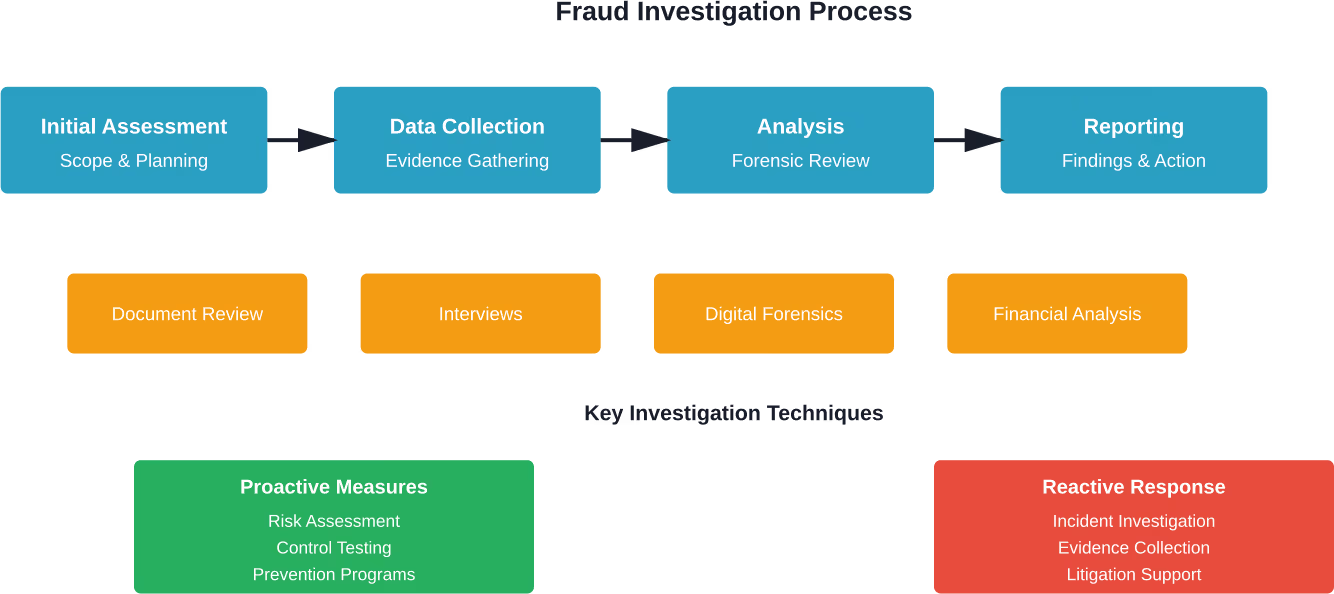
Fraud investigation services bring together forensic accounting, digital forensics, and investigative fieldwork. These professionals dig through financial records, analyze digital evidence, and conduct interviews to expose schemes ranging from embezzlement to complex corporate fraud.
What Fraud Investigation Services Include
Professional fraud investigators offer a comprehensive suite of services tailored to different types of financial misconduct.
Forensic Accounting and Financial Analysis
Forensic accounting forms the backbone of most fraud investigations. Specialists examine financial statements, transaction records, and accounting systems to identify irregularities. They trace money flows, reconstruct financial records, and quantify losses.
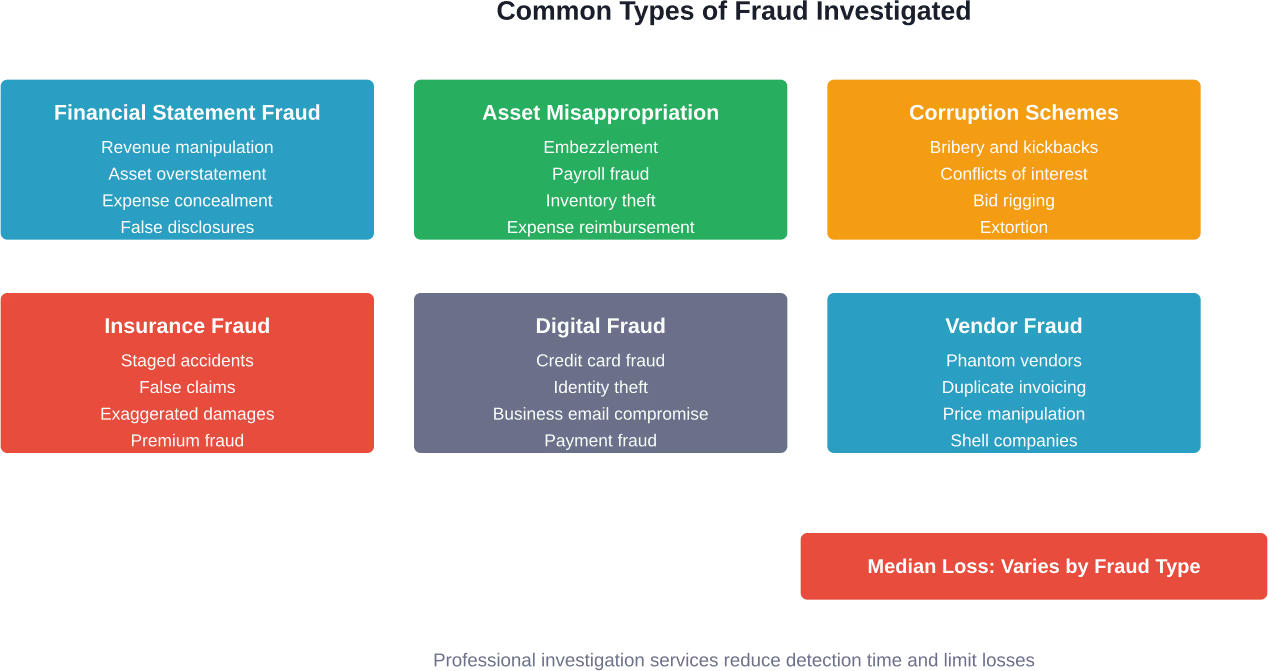
This work often reveals patterns invisible to standard audits. Duplicate payments, phantom vendors, and revenue manipulation schemes become apparent through detailed analysis.
Corporate and Business Investigations
Corporate investigative services tackle internal misconduct, vendor fraud, and conflicts of interest. Investigators conduct background checks, verify credentials, and perform due diligence on business partners.
These investigations protect companies from fraudulent executives, questionable vendors, and risky partnerships. The work often involves discreet surveillance and corporate intelligence gathering.
Insurance Fraud Detection
Insurance fraud costs the industry billions. Investigators examine claims for staged accidents, inflated damages, and phantom injuries. They interview witnesses, review medical records, and document inconsistencies.
According to government oversight, insurance fraud investigations reduce costs borne by consumers. Specialized investigators work across auto, property, workers' compensation, and disability claims.
Federal Enforcement and Investigative Authority
Government agencies play a crucial role in fraud enforcement. According to the SEC's Division of Enforcement, the agency conducts investigations into possible securities law violations and files enforcement actions including federal court filings and administrative proceedings. According to SEC Fiscal Year 2025 results, the SEC filed 456 enforcement actions during fiscal year 2025.
The Federal Trade Commission's Bureau of Consumer Protection investigates unfair and deceptive business practices. The FTC collects consumer reports, conducts investigations, and sues companies that violate federal law.
The Secret Service holds primary authority for investigating access device fraud, including credit and debit card fraud, as well as identity theft. Their mandate expanded in the 1990s to include financial institution fraud.
| Agency | Primary Focus | Investigation Types |
|---|---|---|
| SEC Division of Enforcement | Securities law violations | Market manipulation, accounting fraud, insider trading |
| FTC Bureau of Consumer Protection | Consumer fraud | Deceptive practices, scams, unfair business practices |
| Secret Service | Financial crimes | Credit card fraud, identity theft, counterfeiting |
Technology and Digital Forensics
Modern fraud investigations rely heavily on technology. Digital forensics experts recover deleted files, analyze email communications, and trace digital transactions.
Data mining techniques identify patterns in large datasets. AI-enhanced technology helps investigators anticipate threats and detect anomalies faster than manual review.
These tools examine millions of transactions to flag suspicious activity. But technology alone isn't enough—expert interpretation remains essential.
When Organizations Need Investigation Services
Several situations warrant professional fraud investigation services:
- Discovery of financial irregularities during audits
- Whistleblower allegations or anonymous tips
- Unexplained inventory shrinkage or asset losses
- Suspicious vendor relationships or procurement issues
- Employee complaints about financial misconduct
- Pre-acquisition due diligence concerns
Early engagement produces better outcomes. Once fraud is suspected, quick action preserves evidence and limits damage.
Selecting Investigation Service Providers
Choosing the right investigator matters. Look for credentials like Certified Fraud Examiner or Certified Public Accountant designations. Experience in relevant fraud types is essential.
Large accounting firms offer comprehensive fraud and forensic investigation services. Specialized investigative firms bring focused expertise. Private investigators handle field surveillance and background checks.
Check the provider's litigation support experience. Many investigations lead to legal action, requiring testimony and evidence that meets court standards.

Investigate Fraud Before It Spreads
Fraud disrupts reporting and exposes weak controls fast. It creates risk for management and oversight. Acumon works with organisations that need a clear, independent review of financial activity and control failures. The focus is on what actually happened and where controls did not hold.
Identify Where Fraud Risks Are Coming From
Acumon brings a structured and controlled approach to investigating fraud issues:
- Independent review led by experienced audit professionals
- Direct access to senior team members throughout the process
- Clear findings supported by documented evidence
- Practical steps to strengthen controls after investigation
Contact Acumon and investigate fraud issues properly.
Taking Action Against Fraud
Fraud doesn't resolve itself. Organizations facing potential financial crime need specialized expertise to uncover the truth and protect assets.
Professional fraud investigation services combine accounting expertise, investigative skills, and technology to detect and document financial misconduct. Whether dealing with internal embezzlement, vendor fraud, or complex corporate schemes, qualified investigators provide the evidence needed for recovery and legal action.
Don't let fraud continue unchecked. Contact qualified fraud investigation professionals to assess concerns and develop an investigation strategy.
FAQ
Investigation timelines vary based on complexity. Simple cases may resolve in weeks, while complex corporate fraud investigations can take months or even years. Evidence availability, cooperation levels, and the fraud's sophistication all impact duration.
Common triggers include audit findings, whistleblower reports, anonymous tips, customer complaints, regulatory inquiries, and unusual financial patterns. Internal controls sometimes flag suspicious transactions that warrant investigation.
Costs vary widely based on case complexity, investigator expertise, and time required. Specific pricing information for fraud investigation services varies by provider and case complexity. Check official provider websites for current pricing structures.
Yes, professional fraud investigators prepare reports and evidence that meet legal standards. Many investigators provide expert testimony in civil and criminal proceedings. Documentation quality and chain of custody procedures are critical for admissibility.
Internal audits assess controls and compliance systematically. Fraud investigations respond to specific allegations or suspicions with focused evidence gathering. Investigations use specialized forensic techniques and maintain stricter evidence protocols for potential legal proceedings.
Reporting requirements depend on fraud type and industry regulations. Securities fraud must be disclosed publicly. Insurance fraud often requires reporting to state authorities. Legal counsel should guide reporting decisions to balance regulatory compliance with legal exposure.
Investigators gather financial records, emails, documents, digital files, witness statements, surveillance footage, and transaction data. They document inconsistencies, trace assets, and reconstruct events. All evidence follows chain of custody protocols to preserve integrity.