
Academy trust internal audit services provide independent assurance that financial and non-financial controls operate effectively. The Academy Trust Handbook mandates internal scrutiny programmes to assess risk management, governance, and compliance. Effective internal audit services go beyond compliance, identifying improvement opportunities and strengthening operational resilience across multi-academy trusts.
The regulatory landscape for academy trusts demands robust internal scrutiny. What was once known as responsible officer services (abolished in 2010) has evolved into comprehensive internal scrutiny programmes that serve as the backbone of effective governance.
But here's the thing though—not all internal audit services deliver equal value. Some providers tick boxes whilst others genuinely strengthen trust operations.
What the Academy Trust Handbook Requires
According to GOV.UK guidance, all academy trusts must have a programme of internal scrutiny to provide independent assurance to the board that financial and non-financial controls and risk management procedures are operating effectively.
This isn't optional. The requirement applies to all academy trusts, but those with an annual income over £50 million or with more than 5,000 pupils must have a dedicated internal audit function or use an external specialist provider.
The Department for Education specifies that internal scrutiny must be independent. That means the person conducting the audit cannot be involved in the day-to-day financial management of the trust. The audit committee—or board in smaller trusts—determines the scope and frequency of internal scrutiny work.
Financial and Non-Financial Controls
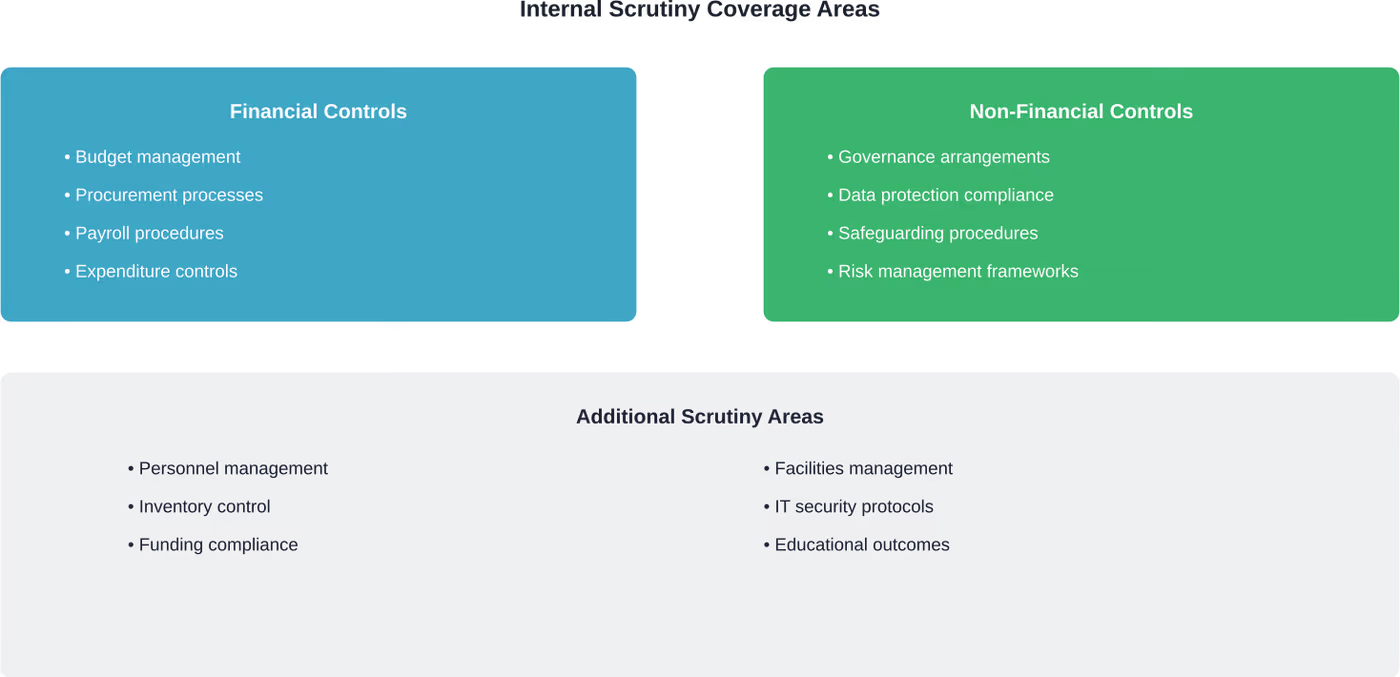
Internal audit covers both financial and non-financial areas. Financial audits examine budget management, procurement processes, payroll procedures, and expenditure controls. Non-financial audits assess governance arrangements, data protection compliance, safeguarding procedures, and risk management frameworks.
According to the Academy Trust Handbook 2025, effective from 1 September 2025, boards must demonstrate independent scrutiny of executive pay decisions and ensure proportionality in spending that represents good value for money.
Beyond Compliance: Real Value from Internal Scrutiny
Real talk: too many trusts treat internal audit as a box-ticking exercise. The auditor visits, produces a report, trustees note the findings, and nothing changes.
That's a wasted opportunity.
Effective internal scrutiny identifies operational inefficiencies, prevents financial irregularities before they become problems, and strengthens governance structures. The best audit services act as critical friends—challenging current practices whilst supporting continuous improvement.
Key Performance Indicators
How does a trust know whether its internal audit programme delivers value? Several indicators suggest effective scrutiny:
| Indicator | What Effective Audit Looks Like | Warning Signs |
|---|---|---|
| Report Quality | Specific, actionable recommendations with risk ratings | Generic findings that could apply to any trust |
| Follow-Up | Systematic tracking of implementation progress | Recommendations noted but never revisited |
| Board Engagement | Trustees discuss implications and challenge findings | Reports received with minimal discussion |
| Improvement Evidence | Measurable enhancements in controls and processes | Repeated findings year after year |
Selecting an Internal Audit Provider
The market offers various internal scrutiny providers—specialist education firms, accountancy practices, and independent consultants. Each brings different strengths.
Education-specialist providers understand sector-specific challenges. They're familiar with the Academy Financial Handbook requirements and common trust operational models. Some specialist providers work with significant numbers of academy clients across the UK.
Generalist audit firms bring broader internal audit expertise and may offer integrated services alongside external audit. The Chartered Institute of Internal Auditors Code of Practice applies across sectors, providing standardised methodology.
Essential Selection Criteria
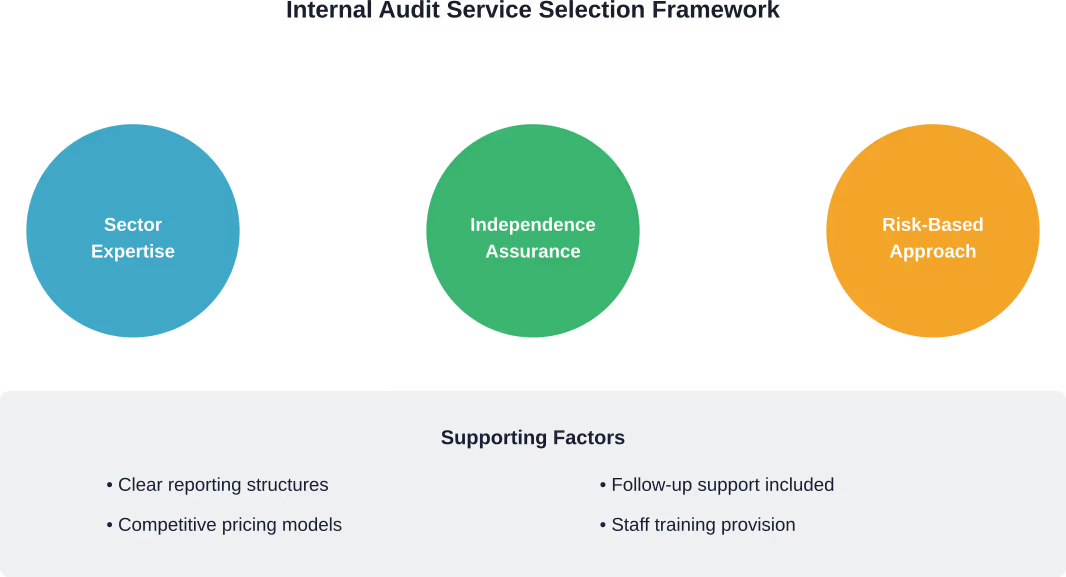
When evaluating potential providers, trusts should consider several factors. Sector knowledge matters—auditors need to understand education-specific regulations and operational contexts. Independence is non-negotiable—providers must have no conflicts of interest with trust operations.
Flexibility in scope allows trusts to focus scrutiny where risks are highest. A rigid, one-size-fits-all programme rarely delivers optimal value. Risk-based approaches that adapt to trust circumstances prove most effective.
Take Control of Internal Audit Now

As academy trusts grow, internal audit often struggles to keep up with expanding structures, reporting expectations, and trustee oversight. Acumon is a London-founded firm of chartered accountants, auditors and advisors serving clients across the UK and internationally, combining internal audit with wider audit, risk and advisory work to support governance, control frameworks, and financial reporting across complex organisations.
Bring Clarity to Internal Audit and Governance
Acumon supports academy trusts with a structured, practical approach to internal audit:
- Independent internal audit linked to wider governance and risk
- Review of controls, processes, and reporting frameworks
- Support for trustees, audit committees, and finance leadership
- Experience across charities and multi-entity organisations
- Input on strengthening oversight and internal accountability
If internal audit is no longer keeping pace with your trust’s structure or expectations, talk to Acumon and put a more reliable framework in place.
Designing an Effective Internal Scrutiny Programme
The audit committee determines the programme scope based on trust risk profiles. Larger multi-academy trusts require more extensive scrutiny than single-academy trusts. Geographic spread, financial complexity, and operational structure all influence programme design.
A typical three-year rolling programme covers all material areas whilst focusing annual attention on highest-risk domains. Financial controls often receive scrutiny annually, whilst lower-risk areas might be examined on a two or three-year cycle.
Programme Components
According to GOV.UK guidance, internal scrutiny programmes should be documented and agreed by trustees. The programme specifies which areas will be examined, when audits will occur, and what assurance trustees expect to receive.
Standard programme elements include financial operations audits examining income and expenditure processes, procurement compliance checks, governance reviews assessing board and committee effectiveness, and risk management evaluations.
Many trusts now include facilities management, data protection compliance, and IT security within their scrutiny scope. The regulatory environment has expanded beyond purely financial controls.
Implementing Audit Recommendations
Here's where theory meets reality. An audit report identifying ten control weaknesses means nothing if trustees don't ensure implementation of recommendations.
Effective trusts establish clear accountability for each recommendation. The senior leadership team assigns responsibility, sets implementation deadlines, and tracks progress through regular updates to the audit committee.
Some providers offer action planning templates and progress reporting tools. These frameworks help trusts maintain momentum between audit cycles.
Common Implementation Challenges
Resource constraints often delay implementation, particularly in smaller trusts with limited administrative capacity. Recommendations requiring policy changes typically progress faster than those demanding system upgrades or significant process redesign.
Cultural resistance can slow adoption of audit findings. When staff perceive audits as criticism rather than improvement opportunities, implementation suffers. Leadership messaging matters—framing internal scrutiny as supporting continuous improvement rather than identifying failures.
Emerging Trends in Academy Trust Internal Audit
The internal audit landscape continues evolving. The new Internal Audit Code of Practice from the Chartered Institute of Internal Auditors (effective from January 2025) aims to strengthen corporate governance and help organisations navigate complex risk environments.
Technology-enabled continuous monitoring allows more frequent assurance on key controls without increasing audit costs. Data analytics tools can identify anomalies in transactions, highlighting areas requiring deeper investigation.
Integrated assurance models coordinate internal audit with other assurance sources—external audit, regulatory inspections, and management reviews—reducing duplication whilst ensuring comprehensive coverage.
Operational resilience has emerged as a scrutiny focus. The ability to maintain educational delivery during disruptions became critical during recent years. Internal audit now often examines business continuity plans, crisis management procedures, and operational risk mitigation.
Strengthening Trust Governance Through Effective Scrutiny
Internal audit services form a cornerstone of robust academy trust governance. When implemented effectively, they provide independent assurance, identify improvement opportunities, and strengthen operational resilience.
The shift from compliance-focused box-ticking to value-adding scrutiny requires trustees to engage meaningfully with findings and ensure systematic implementation of recommendations. Selecting providers with genuine sector expertise and risk-based methodologies makes the difference between wasted expenditure and genuine governance enhancement.
As regulatory expectations evolve and operational complexities increase, effective internal scrutiny becomes ever more critical. Trusts that invest in quality audit services position themselves to manage risks proactively, demonstrate sound stewardship, and maintain stakeholder confidence.
For academy trusts reviewing their internal scrutiny arrangements, now's the time to assess whether current provisions deliver real value—or simply satisfy minimum requirements.
Frequently Asked Questions
External audit provides statutory assurance on the accuracy of financial statements. Internal scrutiny examines whether financial and non-financial controls operate effectively throughout the year. External auditors report on historical financial position; internal auditors provide ongoing assurance about control environments and risk management.
The Academy Trust Handbook doesn't mandate specific frequency. Trusts determine appropriate schedules based on risk assessment. Typical arrangements range from termly visits for larger trusts to annual or biennial reviews for smaller single-academy trusts. Risk-based approaches concentrate scrutiny where vulnerabilities exist.
Trustees who aren't involved in day-to-day financial management can theoretically conduct internal scrutiny. However, most trusts engage external providers to ensure genuine independence and bring specialist expertise. Using board members reduces objectivity and may create conflicts between governance and assurance roles.
No specific qualification is mandated. Many providers employ chartered accountants, certified internal auditors, or qualified education finance professionals. Sector knowledge and internal audit methodology expertise matter more than particular credentials. Experience working with multiple trusts provides valuable comparative insight.
Pricing varies significantly based on trust size, scrutiny scope, and provider. However, specific pricing information was not available in standard guidance.
Serious findings should be escalated immediately to the audit committee and full board. Trustees must ensure prompt remedial action and may need to inform the Education and Skills Funding Agency in cases involving potential fraud or significant financial irregularities. The internal auditor typically conducts follow-up work to verify implementation of urgent recommendations.
Reports go to the audit committee and board. They're not typically published but may be requested by the DfE during investigations or intervention. Trusts should maintain appropriate confidentiality whilst ensuring findings inform governance decisions. Summary information often appears in governance statements within annual accounts.